
Container House with AC for Living
Container houses for living can be equipped with air conditioning, but the specific configuration needs to be comprehensively determined based on the purpose, supplier, and design requirements. The following analysis is conducted from different scenarios and cases:
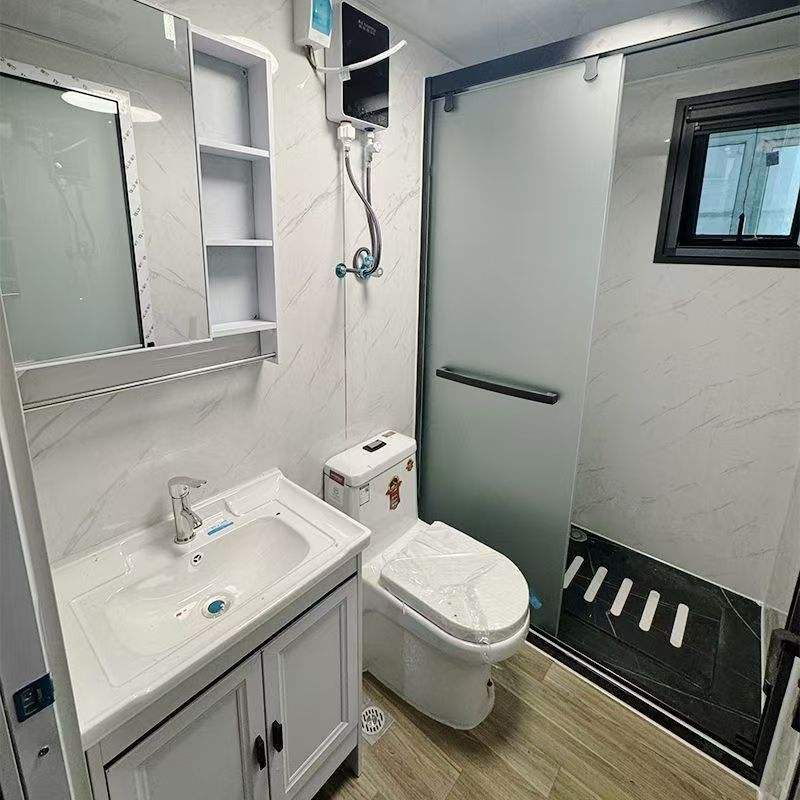
1. Commercially customized container houses usually come with standard air conditioning
Taking the residential containers from the Hangzhou Branch of Shanghai Delauce Mobile House Manufacturing Co., Ltd. as an example, their products explicitly support the installation of wall-mounted air conditioners. The interior design is spacious and bright, suitable for temporary offices, living, and other scenarios. These container houses are mostly targeted at enterprises or long-term usage needs. Air conditioning, as a basic configuration, can enhance living comfort, and the supplier will reserve circuit interfaces and installation space to ensure the stable operation of the air conditioner.
2. Large-scale renovation projects can add air conditioning systems through design
In the case of the renovation of a 12-meter large container, although air conditioning configuration is not directly mentioned, the house already has complete living functions (such as a living room, bedroom, kitchen, and bathroom). Theoretically, such renovation projects can add central air conditioning or split-type air conditioners through professional design, especially suitable for high-end homestays, mobile shops, and other scenarios. During renovation, it is necessary to focus on the container's airtightness, thermal insulation performance, and power load to avoid excessive energy consumption or uneven indoor temperature caused by air conditioning operation.
3. There may be configuration limitations for events or temporary uses
The athlete container dormitories for the 2026 Aichi-Nagoya Asian Games adopt a two-bedroom and one-living-room layout, but each unit is only equipped with one air conditioner. If the room doors are closed, the coverage area of the air conditioner is limited, which may lead to higher temperatures in local areas. This case reflects that in temporary scenarios pursuing low cost or rapid deployment, air conditioning configuration may mainly focus on "basic coverage" and is difficult to meet personalized needs.
4. Low-cost temporary dwellings may not include air conditioning design
Container-style dwellings in Shenzhen, Fuzhou, and other places mostly serve as transitional accommodations for low-income people, with a design focus on "low cost and rapid construction", and usually do not mention air conditioning configuration. Such houses may not reserve air conditioning installation conditions due to budget constraints or temporary needs, and residents need to use alternative solutions such as fans and ventilation designs for cooling.
Summary: It is highly feasible to equip container houses for living with air conditioning, but it needs to be judged based on specific scenarios. Commercially customized and high-end renovation projects are more likely to come with standard air conditioning, while event dormitories, temporary dwellings, and other scenarios may have configuration differences due to cost or design limitations. When choosing, it is necessary to focus on the container's airtightness, thermal insulation performance, and power supply to ensure the air conditioning operation effect and living comfort.



