
Container House Transportation Price
The transportation price of container houses varies significantly due to factors such as transportation distance, house specifications and configurations, and market supply and demand, making it impossible to provide a unified price directly. However, estimates can be made by analyzing cost composition and regional differences.
I. Core Factors Influencing Transportation Costs
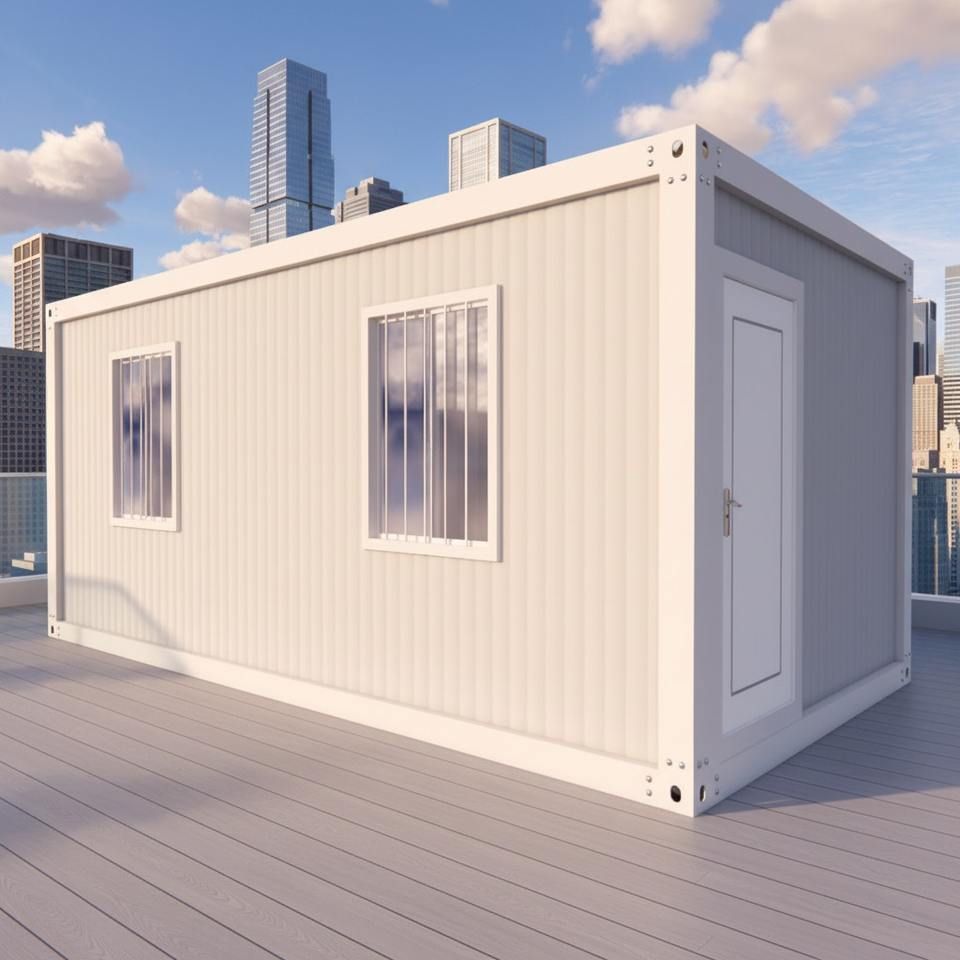
Transportation costs are a crucial component of the total price of container houses, primarily depending on transportation distance and house specifications. Taking the example of transportation from North China (e.g., Hebei) to the Khorgos Port in Xinjiang, with a distance of approximately 3000-4000 kilometers, the freight cost per container may increase by several thousand yuan or even more. For instance, the factory price of a simple basic container house in North China (including basic electrical circuits, one door, and three windows) is approximately 6000-8500 yuan per set. However, after transportation to Khorgos, the terminal selling price may rise to 8500-11000 yuan per set due to increased freight costs, representing an increase of 20%-30%. If the house specifications are larger (e.g., a 3*6-meter standard fully-furnished model with floor covering and complete water and electricity systems), the factory price in North China is approximately 8500-12000 yuan per set, while the selling price of a cold-resistant, fully-furnished model in Khorgos (including double-glazed windows and bottom freeze protection insulation) may reach 11000-15000 yuan per set, with freight costs accounting for a higher proportion.
II. Impact of Regional Differences on Transportation Prices
Industrial Base and Supply Side: North China, particularly Hebei, is a major industrial cluster for integrated housing in China, with a mature industrial chain. This results in lower factory prices and transportation costs for local procurement. In contrast, the Khorgos Port is not a major production area, necessitating long-distance transportation from the mainland, significantly increasing logistics costs and terminal selling prices.
Market Demand Structure: The demand in the Khorgos Port area primarily comes from scenarios such as foreign trade warehousing and port facilities, requiring higher configurations for insulation and wind resistance (e.g., northern Xinjiang cold-resistant models needing ≥100mm thick insulation), further driving up prices. In contrast, demand in North China is mainly for construction site dormitories, with lower prices for standardized products.
III. Suggestions for Optimizing Transportation Prices
For small-volume purchases, it is advisable to prioritize local or nearby manufacturers in Khorgos (e.g., Falilai) to reduce logistics costs. For customized or high-configuration containers, it is essential to clarify requirements with manufacturers for accurate quotes. Large manufacturers may offer more favorable prices while ensuring quality.



