
Does Container House Have Thermal Insulation?
Container houses possess thermal insulation properties, which are achieved through material selection, structural design, and process optimization, as detailed below:
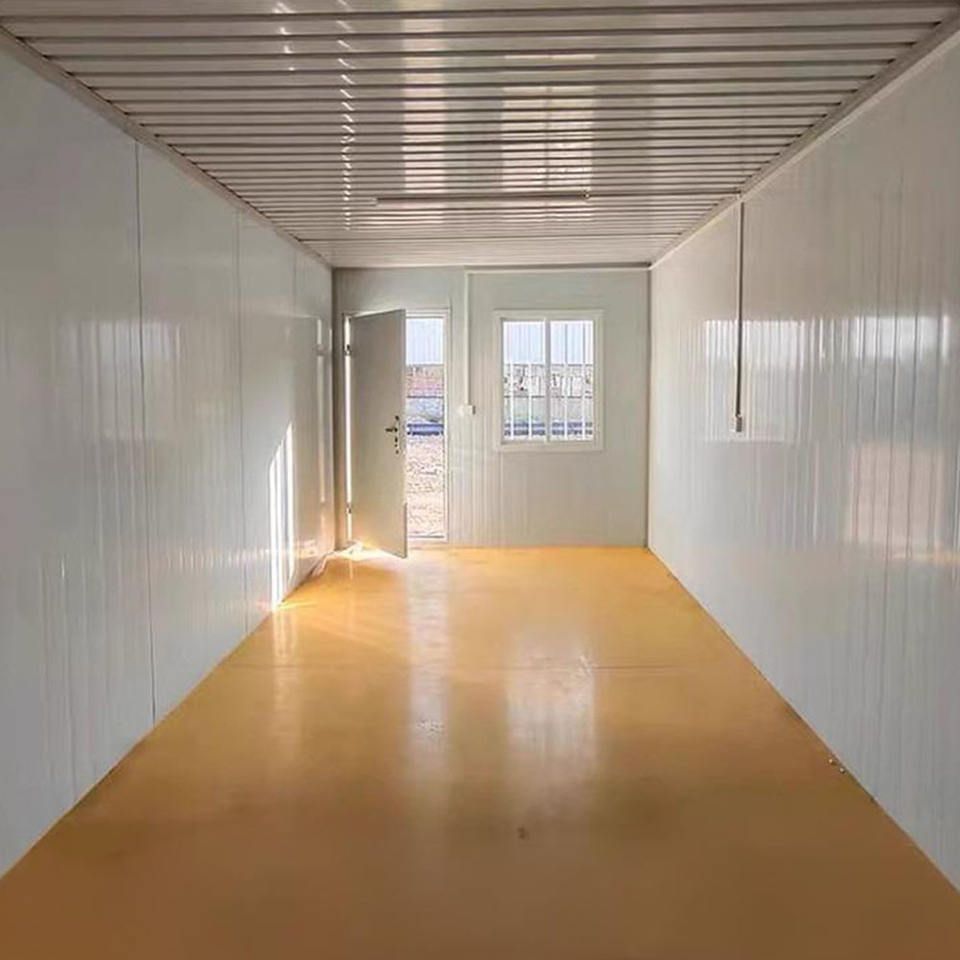
I. The Core Role of Material Selection and Structural Design
The thermal insulation performance of container houses primarily relies on the material combinations of walls, roofs, and floors. The outer layer typically employs anti-corrosion color-coated steel plates or galvanized sheets, which are resistant to wind and sand and corrosion. Additionally, surface treatments reflect some sunlight, reducing heat absorption. The middle layer is crucial for thermal insulation, often utilizing high-density rock wool, polyurethane foam boards, or glass wool sandwich panels. These materials have low thermal conductivity, effectively blocking heat transfer. For example, container houses in Hohhot use 80-100mm thick rock wool as the main insulation layer, combined with over 50mm polyurethane foam layers, achieving a wall heat transfer coefficient as low as 0.45W/(㎡·K), with thermal insulation efficiency 1.8 times that of traditional brick-concrete walls. The inner layer selects fire-resistant gypsum boards, PVC-coated steel plates, or moisture-proof films to further control indoor humidity and temperature fluctuations, forming a multi-layer protective system of 'reflection-blocking-temperature control'.
II. Process Optimization and Detail Handling Enhance Performance
In addition to materials, process details significantly impact thermal insulation effects. For instance, doors and windows use thermal-break aluminum double-glazed units with sealing strips at the edges to reduce heat leakage. Panel seams are fully sealed with waterproof membranes and sealants to prevent cold bridges. The bottom is equipped with elevated layers or ventilation slots to block ground cold transfer. Furthermore, some designs incorporate aluminum foil reflective layers, adjustable sunshades, or sloped roof drainage structures to further optimize thermal performance. Measured data shows that container houses using such processes experience a 22-minute slower temperature rise inside the cabin at noon in summer compared to the outdoors, and only a 1.3℃ temperature drop after 8 hours of closure in winter, resulting in more stable perceived temperatures.
III. Performance Adaptation for Different Scenarios
The thermal insulation design of container houses needs to be adjusted according to the usage scenario. For example, insulated container houses for cold chain logistics require support for 380V three-phase power for rapid energization and are equipped with strict technical inspection procedures to ensure indoor temperature maintenance through auxiliary heating in extreme low-temperature environments. Space capsule shops in cultural tourism scenic spots, on the other hand, use thermal-break insulation processes and high-density rock wool filling to adapt to long-term usage needs.



