
Thermal Insulation Layer of Container Houses
The thermal insulation layer of container houses mainly achieves efficient thermal insulation through the use of thermal insulation materials, optimized structural design, and the addition of temperature control equipment.
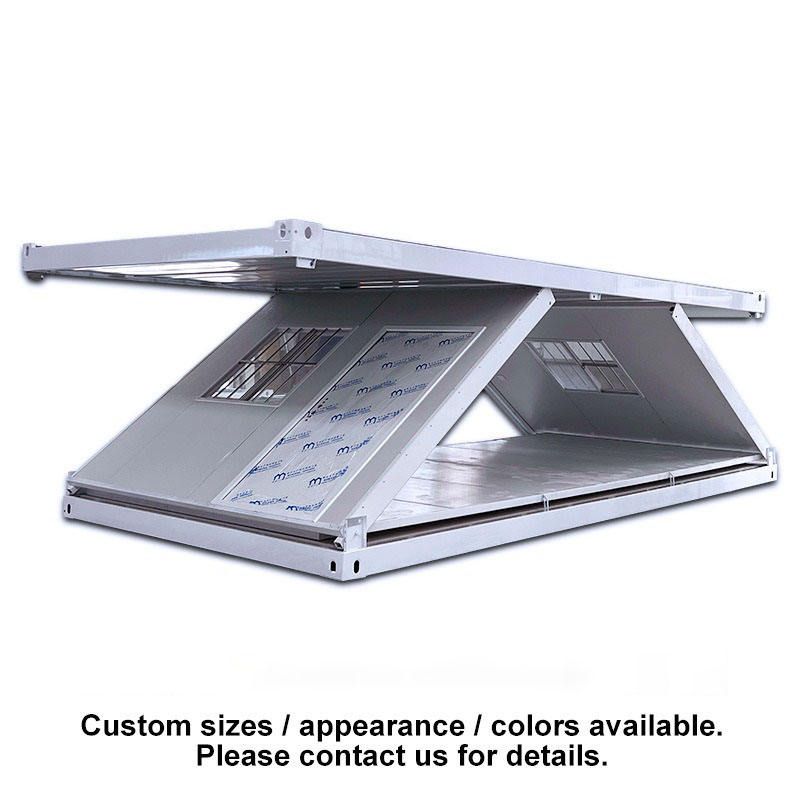
Selection and Application of Thermal Insulation Materials
Commonly used thermal insulation materials for container houses include polyurethane foam boards, polystyrene boards, and rock wool boards. These materials have low thermal conductivity and can effectively block heat transfer. For example, the thickness of the polyurethane foam layer usually needs to reach more than 50mm. Combined with an outer layer of anti-corrosion color steel plates to reflect sunlight and an inner layer of fire-resistant gypsum boards and moisture-proof films to control humidity and stabilize temperature, a complete thermal insulation system is formed. The national 'Technical Standard for Steel Structure Integrated Houses' clearly requires that the heat transfer coefficient of the walls of residential container houses be ≤0.45W/(㎡·K), which is 1.8 times the thermal insulation efficiency of traditional brick-and-concrete walls.
Structural Optimization to Enhance Thermal Insulation Performance
Modern residential container houses use sandwich-structured thermal insulation sandwich panels instead of single-layer iron sheets. The walls are supported by steel frames, with rock wool or polyurethane foam filled in the middle, forming a 'thermal insulation shield'. The floor adopts a multi-layer structure of base plates + floor leather + bottom cotton strips, and the ceiling is equipped with a ceiling + thermal insulation layer. Double-glazed windows and doors are used to reduce heat penetration through gaps. For example, a café in Mogan Mountain selected sandwich panels with aluminum foil reflective layers, combined with adjustable sunshade canopies and bottom ventilation slots, achieving an effect where the cabin warms up 22 minutes slower than the outdoors in summer and the indoor temperature only drops by 1.3℃ after being sealed for 8 hours in winter.
Detail Handling and Supplementary Temperature Control Equipment
The joints of thermal insulation materials need to be treated with sealant, and professional construction methods should be used at connection points to ensure airtightness. For extreme climate regions, additional equipment such as air conditioners and graphene floor heating can be added to assist in temperature control. For example, the container houses of Shanghai Baosteel Construction Engineering Co., Ltd. optimize the degree of factory prefabrication. When pre-installing interiors in modules, the thermal insulation layer is integrated, and a closed thermal insulation space is directly formed after on-site assembly, shortening the landing cycle while improving thermal insulation efficiency.



