
Container House Storage Box
Although container houses and storage boxes have different functions, they share a common design logic centered around efficient space utilization, and the modular storage concept of container houses can be extended to home settings. The following analysis explores three aspects: the storage logic of container houses, the application of home storage boxes, and the commonalities in their design philosophies.
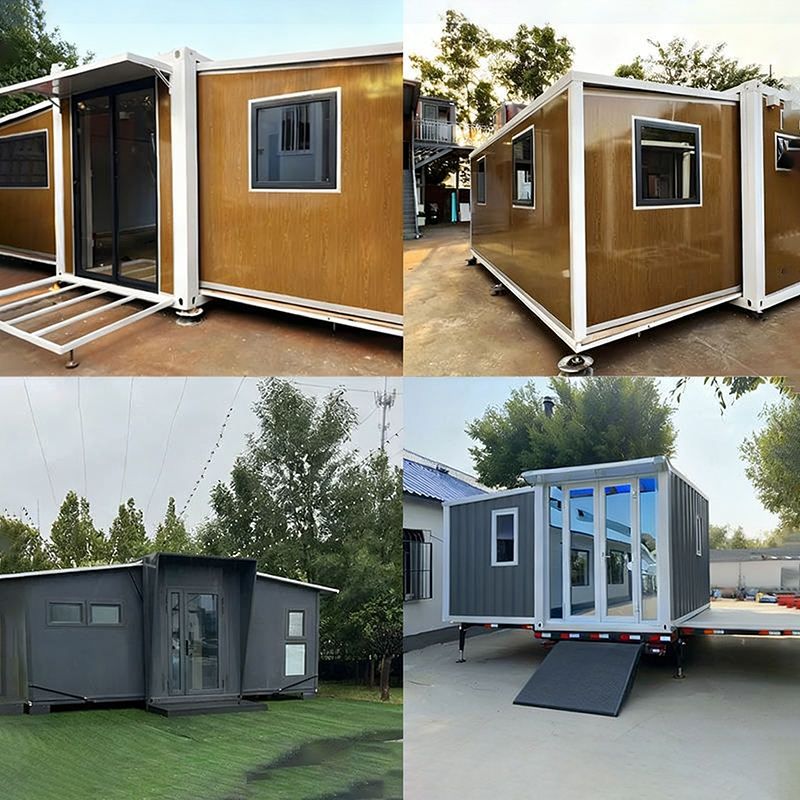
Storage Logic of Container Houses
The core of storage in container houses lies in modular design. Take a 40-foot high-cube container as an example; its interior height reaches 2.69 meters with a volume of approximately 68 cubic meters, commonly used for transporting large quantities of goods across borders. To maximize the use of vertical and deep space, standardized storage units are widely adopted in international logistics. By using uniformly sized containers or pallets, void losses during transportation are minimized, enhancing loading efficiency. This design logic is similarly applied to the interior space planning of container houses, such as through foldable and expandable modular furniture that enables flexible switching of living functions while maintaining a tidy and organized space.
Application of Home Storage Boxes
The design inspiration for home storage boxes partially stems from the modular storage concept of containers. For instance, considering the "tall and deep" characteristics of kitchen overhead cabinets, high-cabinet storage boxes with handles utilize standardized sizes that fit cabinet gaps, addressing issues of lost items and difficult retrieval. Their transparent material allows for quick identification of contents, while the handle design ensures smooth extraction, reducing search time and preventing dust accumulation. Additionally, these storage boxes can be used for organizing desktop stationery and cosmetics, achieving efficient use of small spaces through modular combinations.
Commonalities in Design Philosophies
The commonality between container houses and storage boxes lies in their deep exploration of the vertical dimension of space. Container houses divide a single space into multifunctional areas through steel structural frames and removable partitions; storage boxes, on the other hand, transform vertical space into operable storage units through layered designs or embedded structures. Both prioritize standardization and modularity as their core, enhancing usage efficiency by reducing space waste while balancing functionality and aesthetics. For example, a side-opening folding storage box employs a hinge + latch linkage mechanism, creating an unobstructed loading and unloading passage when expanded and collapsing to a thickness of only 8 cm when folded. This meets the need for rapid loading and unloading while achieving space compression, sharing similarities with the movable and expandable characteristics of container houses.



