
Container House Soft Decoration
The soft decoration of container houses needs to be designed in combination with functional adaptability, scenario requirements, and material characteristics, with a focus on modular integration, environmental protection, durability, and space utilization.
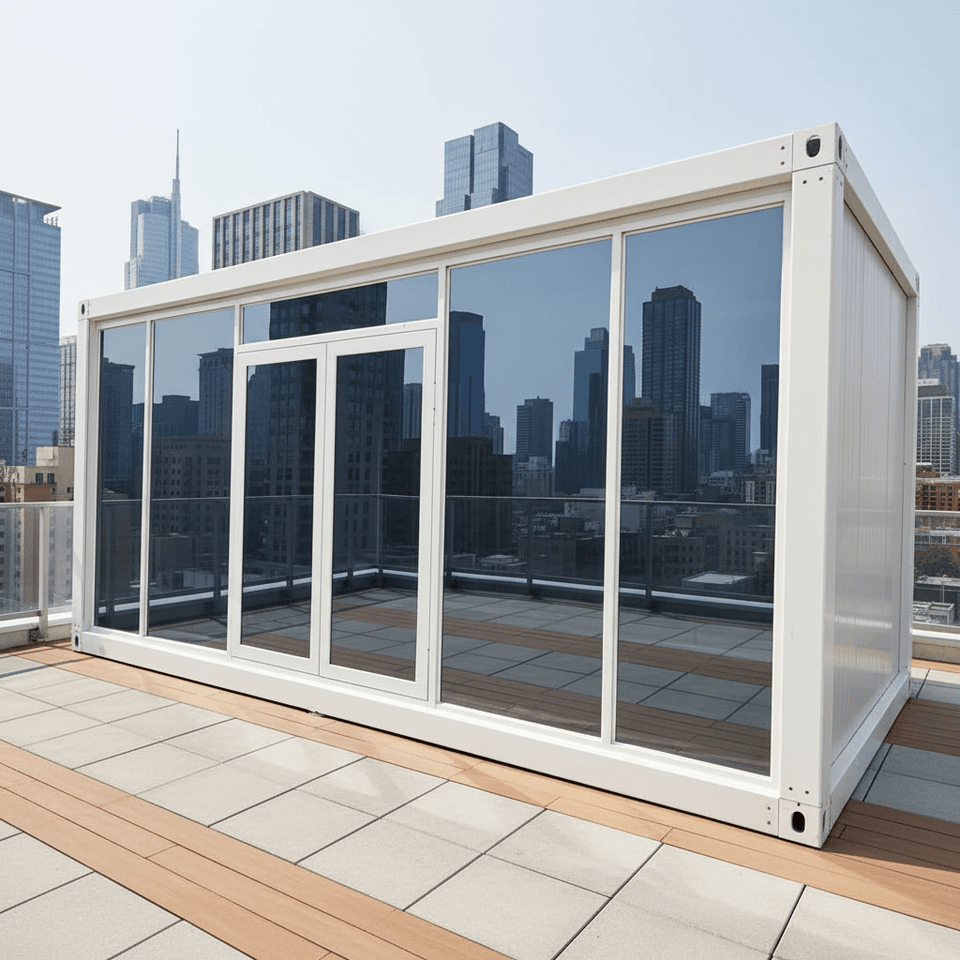
1. Soft decoration design should match the characteristics of container houses
Container houses are centered around steel structural frames. Soft decoration design should prioritize addressing the cold and heat bridge effects of metal materials and the issue of limited space. For example, in terms of thermal insulation, a broken-bridge lining structure can be adopted, which involves filling hard polyurethane foam between the steel frame and the interior wall panels and adding rubber thermal insulation pads to reduce heat conduction efficiency by about 40%. For small-sized container houses, it is recommended to use foldable furniture or built-in storage systems. For instance, the packing boxes from Suzhou Zhongnan Steel Structure Co., Ltd. increase space utilization to over 90% through pre-installed interiors and facilities, meeting the needs of temporary offices or accommodations.
2. Scenario-based soft decoration solutions require differentiated configurations
Different application scenarios have significantly different requirements for soft decoration. For example, in the cultural tourism and homestay scenario, container houses need to enhance aesthetics through customized designs such as curved walls and floor-to-ceiling glass windows. For example, the pop-up store project in Shanghai's business district uses Suzhou Zhongnan's quick-assembly containers, which support the production of special structures within 7 days to meet brand display needs. In emergency support scenarios, soft decoration should focus on portability and rapid deployment capabilities. For example, the products of CIMC Modular Building Investment Co., Ltd. achieve full assembly of walls, doors, windows, and electromechanical pipelines through standardized assembly line production, shortening the delivery cycle by more than 50%.
3. Material selection should balance environmental protection and durability
The soft decoration materials of container houses need to adapt to the frequent disassembly and assembly requirements. For example, for floor treatment, it is recommended to use wear-resistant and anti-slip PVC floors or composite wood floors to avoid tile cracking caused by lifting vibrations. For wall decoration, light steel keels with gypsum boards or bamboo-wood fiber integrated wall panels can be selected, which not only reduce the self-weight but also facilitate replacement. For outdoor scenarios, it is necessary to prioritize weather-resistant materials such as anti-corrosion wood and aluminum alloys. For example, Baotou Xinxing Color Plate Steel Structure Manufacturing Co., Ltd. sprays zinc-rich primers and polyurethane topcoats on the surface of the containers, extending the service life of the steel to more than 15 years.
4. Modular integration improves soft decoration efficiency
Modular design is the core trend in the soft decoration of container houses. For example, the hoisting villas launched by Guangdong Guose Modular Building Co., Ltd. achieve rapid on-site assembly through factory-prefabricated units such as bathroom fixtures and furniture soft decoration, reducing the installation time for a single set to within 2 hours. In addition, the use of standardized interface designs allows soft decoration modules to be interchangeable among different container houses, reducing long-term usage costs.



