
Container House Shutter Door Design
The design of shutter doors for container houses requires comprehensive consideration of functionality, space, materials, and safety. Here are the specific design points:
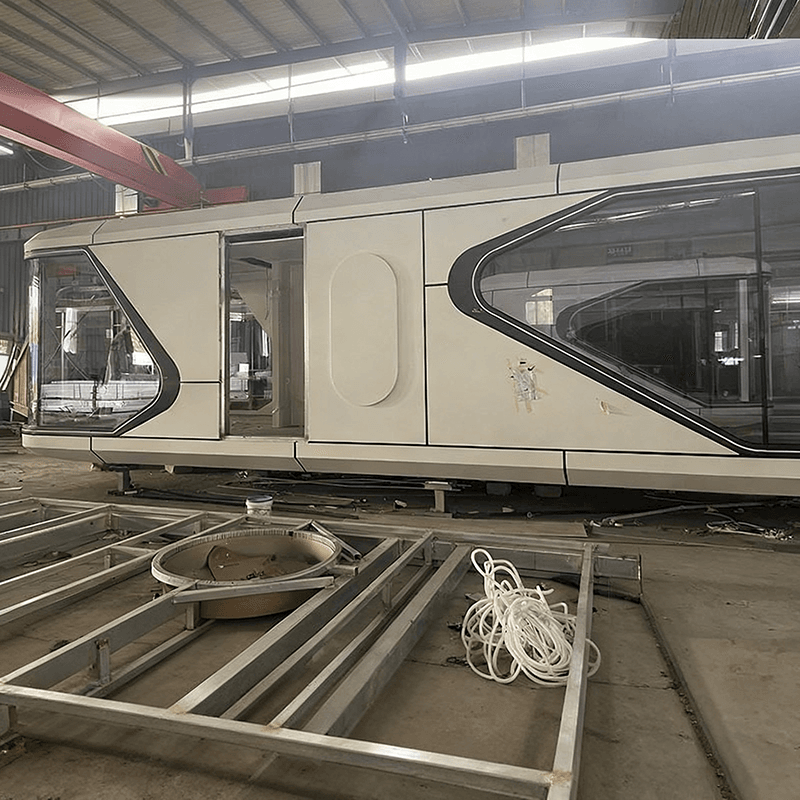
1. Selection of Shutter Door Types
Shutter doors (roller shutter doors) can be divided into manual and electric types based on their driving methods. Electric shutter doors are more suitable for container houses as they support remote control and smart integration, offering convenient operation and good noise reduction, especially for scenarios requiring frequent opening and closing (such as garages and shops). Manual shutter doors are less expensive and suitable for scenarios with limited budgets or low automation requirements. In terms of materials, aluminum alloy or galvanized steel sheet are preferred choices. The former is lightweight and corrosion-resistant, while the latter has high strength and excellent fire resistance, allowing flexible selection based on the container's purpose (residential, storage, etc.).
2. Size and Space Adaptation
The net space in container houses is limited, so the design of shutter doors must precisely match the container's dimensions. Standard single doors typically have a width of 800 millimeters and a height of 2000 millimeters, suitable for daily entry and exit. For transporting large items, double doors (1600 millimeters wide × 2000 millimeters high) can be chosen. After being rolled up, the shutter door needs to be hidden inside the top container, so sufficient space (generally not less than 300 millimeters) must be reserved to avoid occupying indoor height. Side tracks are recommended to be installed externally to reduce the occupation of internal space and facilitate maintenance.
3. Sealing and Thermal Insulation Performance
Container houses need to withstand outdoor environments, and the sealing performance of shutter doors directly affects thermal insulation. Weather-resistant sealant should be used around doors and windows, container joints, and roof gutters, and replaced regularly (every 5-7 years) to prevent rainwater leakage. Sealing strips can be added between the slats to improve dust and sound insulation. For use in cold northern regions, it is recommended to choose triple-glazed windows or internal thermal insulation layers to form double thermal insulation with the shutter door and reduce energy consumption.
4. Safety and Durability Design
Shutter doors need to have anti-theft and fire-resistant functions. Electric models can be equipped with infrared sensors or password locks to enhance security. Fire-resistant shutter doors must comply with national regulations and use flame-retardant materials, suitable for storage-type containers. Metal slats (such as aluminum alloy) have strong UV resistance and are less prone to fading and cracking, suitable for exposed areas like balconies. In addition, the roller system needs regular inspection of welds, corners, and other rust-prone parts, with timely painting. In coastal areas, it is recommended to reapply anti-corrosion coatings every 3-5 years.



