
Volver al blog
Artículo
Container House Sandwich Panel Images
Admin 17 de septiembre de 2026
Currently, we cannot directly provide images of container house sandwich panels, but we can offer a detailed introduction to their structure, types, and characteristics to help you understand their appearance and functions.
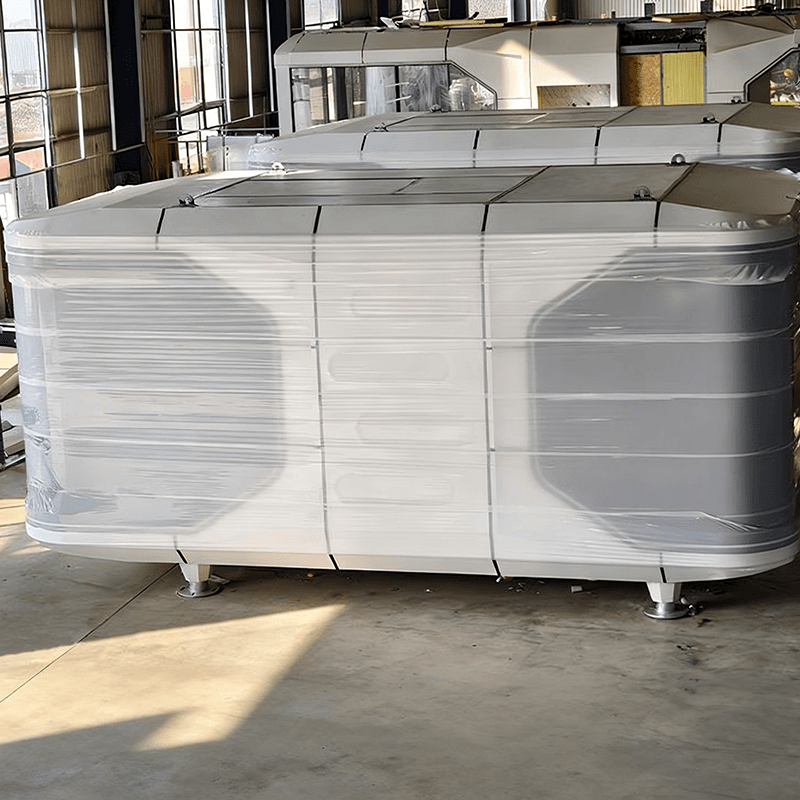
Structural Composition of Container House Sandwich Panels
Container house sandwich panels typically consist of a three-layer structure:
- Surface Panel: Usually made of metal materials (such as galvanized steel sheets, aluminum alloy sheets, or stainless steel sheets), the surface can undergo anti-corrosion treatment (such as spraying or galvanizing) or decorative treatment (such as embossing or painting). They come in various colors, commonly silver-gray, white, or blue.
- Core Layer: The filling material determines the performance of the sandwich panel. Common types include:
- Polystyrene (EPS) Foam: Lightweight and low-cost, but with poor fire resistance, suitable for dry environments.
- Polyurethane (PU) Foam: Excellent thermal insulation performance, with a fire rating up to B1, commonly used in low-temperature regions.
- Rock Wool/Glass Wool: Inorganic fiber materials with excellent fire resistance (Class A non-combustible), good sound absorption and noise reduction effects, but relatively heavy.
- Honeycomb Paper Core: Environmentally friendly and lightweight, but with weak load-bearing capacity, mostly used for non-load-bearing partitions.
- Bottom Panel: Made of the same material as the surface panel, forming a closed structure to enhance overall strength.
Common Types and Appearance Features
- Metal-faced Polystyrene Sandwich Panel: The surface is flat with a distinct metallic luster. The seams are fixed with hidden screws or rivets, commonly found in temporary buildings or warehouses.
- Metal-faced Polyurethane Sandwich Panel: The surface can be pressed into corrugations or stripes to enhance aesthetics. The edges are equipped with sealing strips to prevent water infiltration, suitable for refrigerated containers or climate-controlled houses.
- Metal-faced Rock Wool Sandwich Panel: Usually thicker (50-100mm), with a distinct rough surface. The seams are sealed with fire-resistant glue, mostly used in places with high fire safety requirements.
Functional Characteristics
- Thermal Insulation: The core layer materials (such as polyurethane and rock wool) can effectively reduce heat transfer, lowering energy consumption.
- Fire Safety: Rock wool sandwich panels have a fire resistance limit of over 2 hours, meeting building fire safety regulations.
- Lightweight and High Strength: The combination of metal panels and lightweight core layers results in an overall weight that is only one-third of that of traditional brick walls, facilitating transportation and installation.
- Moisture and Corrosion Resistance: Metal panels treated with galvanizing or spraying can resist corrosion in humid environments, extending service life.
For specific images, it is recommended to search for keywords such as "container sandwich panels" and "metal-faced sandwich panels" on construction material websites (such as Alibaba or Makepolo.com) or the official websites of container house manufacturers to obtain product images.
Relacionados



