
Volver al blog
Artículo
Container House Sand Table Model
Admin 15 de septiembre de 2026
A container house sand table model is a physical model that showcases the structure, functions, and design concepts of container houses through scaled-down production. It is commonly used in teaching, planning exhibitions, or sales scenarios.
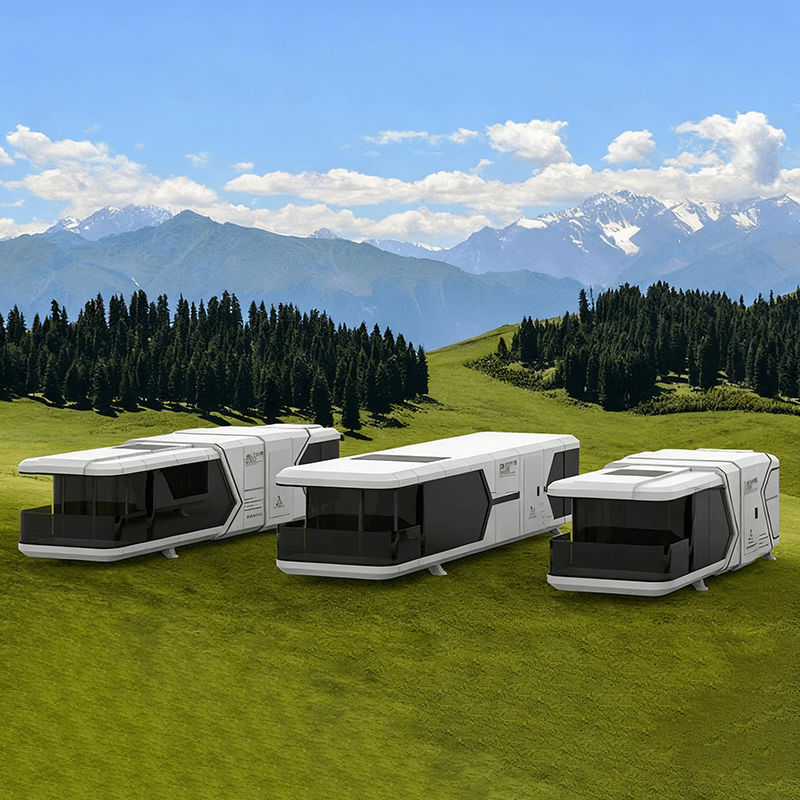
I. Core Components and Functions
Container house sand table models are typically created by scaling down real container houses as prototypes. Their core components include:
- Structural Framework: Light steel, plastic, or wooden materials are used to simulate the metal framework of container houses. Some high-end models employ acrylic laser-cut structural components, which offer high light transmittance and excellent weather resistance.
- Functional Modules: These modules replicate the internal layout of container houses, such as bedrooms, kitchens, and bathrooms, and label details like water and electricity lines and ventilation systems. For example, a sand table model of a photovoltaic-wind hybrid energy storage power station integrates subsystems such as photovoltaic power generation arrays, wind turbines, and energy storage units.
- Dynamic Demonstration: Energy flow processes are simulated through lighting, LED flow directions, or physical linkages. For instance, when simulating rainy weather, the sand table can trigger the wind turbine to accelerate operation and release stored energy, visually demonstrating the full-cycle energy flow of "fluctuations in wind and solar power output—energy storage for peak shaving and valley filling—grid interaction and regulation."
II. Application Scenarios
- Teaching and Research: Universities' energy professional laboratories and power grid dispatching training centers use sand table models for teaching new energy technologies, helping students understand abstract concepts such as electrochemical energy storage and energy scheduling logic.
- Planning Exhibitions: Government energy planning exhibition halls and new energy enterprise showrooms use sand table models to display the application of container houses in multi-energy complementary systems, verify scheduling strategies, or evaluate system resilience.
- Sales and Bidding: Real estate sales offices and design institutes use sand table models during bidding to visually present the design concepts, spatial layouts, and functional features of container houses, enhancing the customer experience.
III. Production Key Points
- Rigorous Material Selection: Industrial-grade simulation materials are used, such as nickel-plated copper conductive tracks to simulate the impedance characteristics of DC busbars and flame-retardant PC motor housings that meet safety standards, ensuring long-term stable operation of the model.
- Precision Restoration: The model restores the real system topology with engineering-level precision, such as the arrangement of lithium iron phosphate battery cell modules and the structure of PCS bidirectional converters. Every detail carries a concrete expression of technical logic.
- Dynamic Coupling: Through physical linkages and lighting/LED flow simulations, multi-system dynamic interactions are achieved, far surpassing the display effects of static display boards or two-dimensional animations.
Relacionados



