
Container House Said to Be Illegal Construction
Whether a container house is deemed illegal construction primarily depends on whether it has obtained planning permission, whether it has altered the land nature or building function, and whether it possesses the characteristics of a fixed building. The specific criteria for determination are as follows:
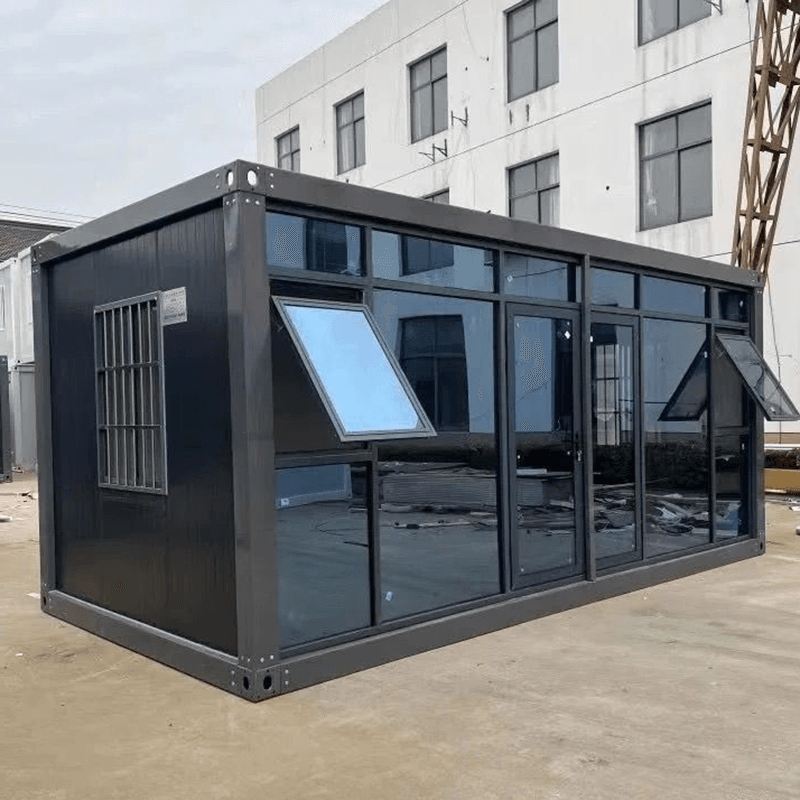
1. Planning Permission and Approval Procedures
According to the Urban and Rural Planning Law of the People's Republic of China, any construction activity must obtain a construction project planning permit. If a container house has not applied for or been granted this permit, it may be deemed illegal construction even if it has not been permanently installed. For example, a restaurant in Jinshan District placed a container as staff quarters behind its building and was identified as illegal construction due to lack of permits; a property owner in Dongguan placed a container on the second-floor balcony and was ordered to remove it for not obtaining planning permission.
2. Land Nature and Change of Use
If a container house occupies land outside the planned area or changes the land use (such as using farmland or public spaces for residential or commercial purposes), it may be deemed illegal construction even if the ground has not been hardened or utilities connected. For example, a camping business owner in Yunnan placed a container house on leased forest land to operate a coffee bar and was fined for not obtaining forestry fire safety approval; some major agricultural provinces require temporary building registration for container houses in fields, otherwise they are considered illegal construction.
3. Permanence and Building Function
If a container house has independent living space, doors, windows, utilities, and other residential functions, or forms permanent occupation through ground hardening, foundation pouring, etc., it will be classified as illegal construction. For example, a 250-square-meter container house investigated by Shimen'erlu Subdistrict was identified as illegal construction due to its connection to water and electricity and installation of air conditioning; Changhai Road Subdistrict found that a container house modified to resemble a building on the sidewalk was ordered to be removed for occupying public space and posing fire hazards.
4. Regional Policy Differences
Some regions are more tolerant of container houses, such as Shanghai and Shenzhen, which encourage their use in cultural tourism and commercial sectors; however, most regions still impose strict controls, especially in scenarios involving residence, business operations, or changes in land nature. It is advisable to consult local planning and urban management departments before placement to clarify the usage period and purpose and avoid illegal construction determinations due to policy differences.



