
Thermal Insulation for the Outer Layer of Container House Roofs
Thermal insulation for the outer layer of container house roofs can be achieved through solutions such as rock wool board insulation, polyurethane foam spraying, and reflective film insulation. Details are as follows:
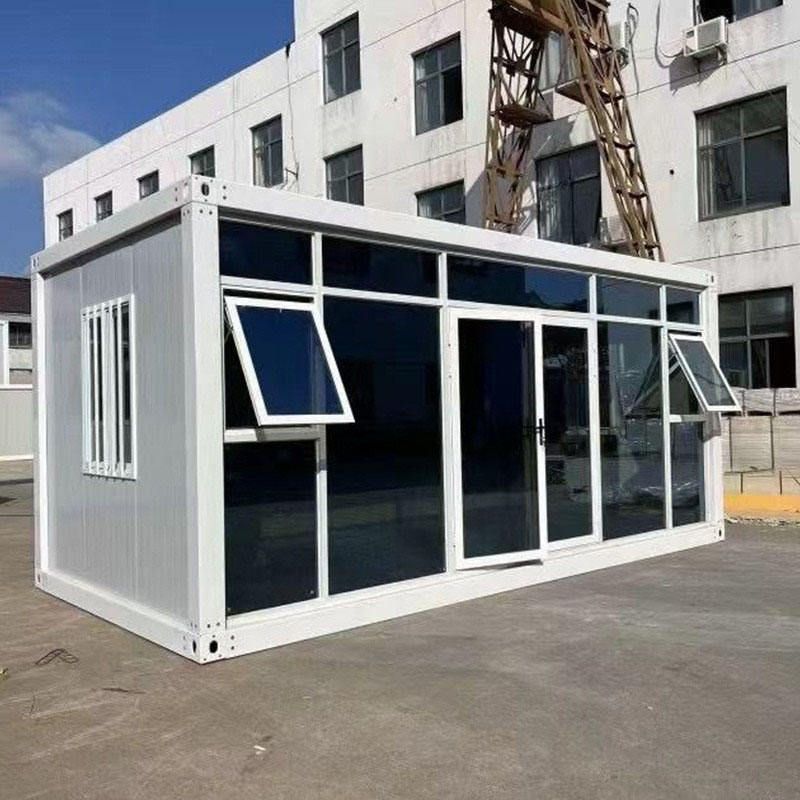
Rock Wool Board Insulation: Rock wool board is an inorganic fiberboard made by fiberizing natural rock as the main raw material after high-temperature melting. It has excellent fire resistance, classified as a Class A non-combustible material, and will not burn in high-temperature environments, effectively preventing the spread of fire and ensuring the fire safety of container houses. At the same time, rock wool board also has outstanding thermal insulation performance, with a low thermal conductivity coefficient that effectively blocks heat transfer. Whether in hot summers or cold winters, it can reduce the exchange of indoor and outdoor heat, maintaining a relatively stable indoor temperature and providing a comfortable living environment for occupants. Additionally, rock wool board has good sound insulation properties, reducing the impact of external noise on the interior and enhancing the quietness of the living space. This insulation solution is suitable for various climatic conditions, especially areas with harsh high-temperature or low-temperature environments.
Polyurethane Foam Spraying: Polyurethane foam spraying is a thermal insulation method that involves spraying polyurethane foam material onto the inner and outer surfaces of container houses using professional equipment. After spraying, the material rapidly expands and solidifies, forming a seamless thermal insulation layer. This thermal insulation layer has an extremely low thermal conductivity coefficient, as low as 0.02W/(m·K), effectively preventing heat conduction and exhibiting excellent thermal insulation performance. Moreover, the construction process is relatively convenient, without the need for complex installation procedures, allowing for quick completion of the thermal insulation layer installation and meeting the rapid installation requirements of container houses. It is suitable for projects with specific construction period requirements and a need for efficient thermal insulation.
Reflective Film Insulation: Reflective film insulation involves installing aluminum foil reflective film on the top of container houses to achieve thermal insulation. Aluminum foil reflective film has a high reflectivity, reflecting most of the sunlight back and reducing the absorption of heat by the container roof. In hot regions, this insulation method can effectively lower indoor temperatures, reducing the frequency of use of air conditioning and other refrigeration equipment, thereby saving energy. At the same time, the cost of reflective film is relatively low, and the installation process is simple, without the need for professional technicians or complex tools, making it suitable for projects with limited budgets and a certain demand for thermal insulation.



