
Container House Railings
Information about the railings of container houses needs to be determined in combination with the specific product customization. Currently, publicly available information does not directly mention standard configurations, but design points can be inferred based on the characteristics and safety requirements of container houses.
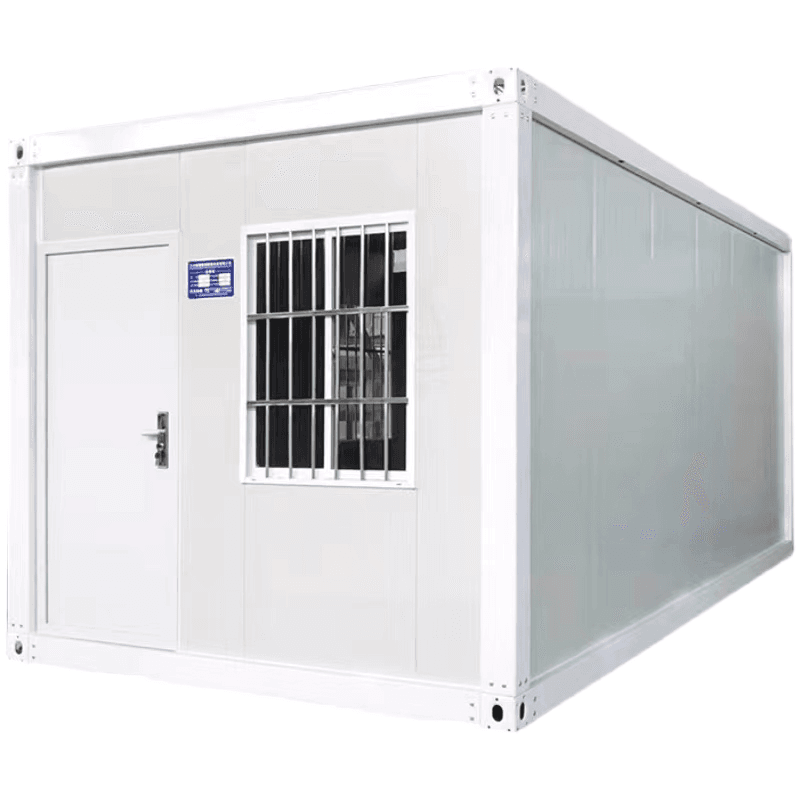
I. Material and Structural Characteristics
The main body of container houses adopts a steel structural frame. For example, products from Xi'an Tengdaxing Housing Engineering Co., Ltd. are mainly made of galvanized steel, which has high corrosion resistance, earthquake resistance, and wind resistance. As an附属 (auxiliary) structure, railings usually have the same material as the main frame and are fixed using welding or bolting processes to ensure connection strength. Some customized products may use stainless steel or aluminum alloy railings to enhance aesthetics or adapt to special environmental requirements.
II. Safety Design Standards
According to the safety regulations for container houses, railings must meet anti-fall and impact-resistant requirements. For example, products in Shaanxi emphasize 'wind and earthquake resistance,' with railing heights generally not less than 1.1 meters and spacing not exceeding 0.11 meters to prevent people or objects from slipping. The railing structure must be designed simultaneously with the main body of the house to ensure overall stability, especially in movable container houses, which need to adapt to vibrations and deformations during transportation.
III. Customization and Aesthetics
Container houses support personalized design, and railing styles can be flexibly adjusted. Common designs include:
Simple Type: Vertical steel bars or square tubes, suitable for temporary housing on construction sites;
Decorative Type: Curved or hollowed-out patterns, used in scenarios such as shops and guard posts;
Functional Type: Integrated with lighting and surveillance equipment to enhance safety.
Manufacturers such as Xi'an Jimei offer processing and customization services, allowing users to choose colors, materials, and shapes according to their needs.IV. Durability and Maintenance
The durability of railings depends on the material and surface treatment. Galvanized steel railings, after anti-rust treatment, can have a service life of more than 20 years, synchronized with the main body of the container house; stainless steel railings have lower maintenance costs but higher initial costs. Regularly checking for loose connections and peeling surface coatings can extend the service life of railings.V. Adaptation to Application Scenarios
Different uses of container houses have different requirements for railings:
- Residential Container Houses: Must comply with residential safety standards, with railing designs balancing protection and aesthetics;
- Equipment Container Houses: May omit railings or use enclosed enclosures;
- Public Facilities: Such as guard posts and sentry boxes, must comply with barrier-free design regulations, with railing spacing meeting child safety requirements.



