
Container House Quality: The Complete Buying Guide
When considering container house quality and purchasing guidelines, it is essential to focus on industrial durability, modular design, environmental standards, and supplier qualifications, making comprehensive decisions based on usage and cost.
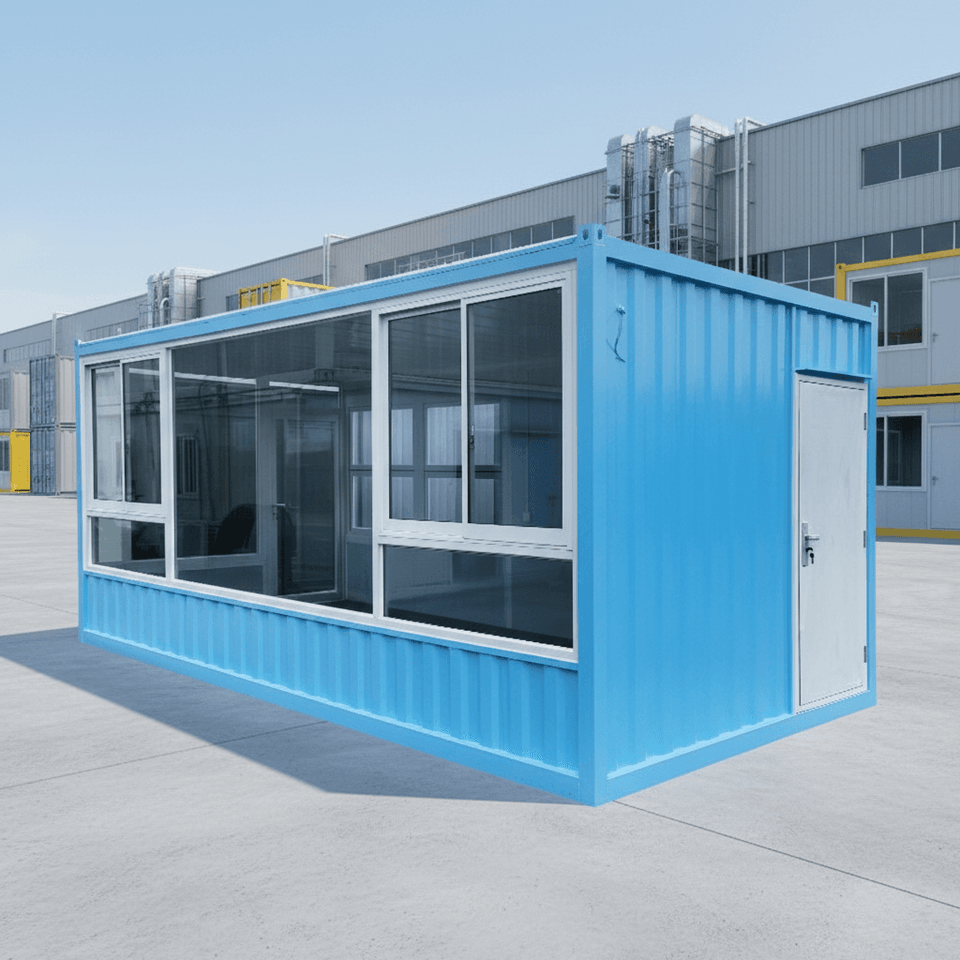
I. Core Quality Elements
Industrial Durability
Container houses, modeled after shipping containers, are constructed from high-strength steel (e.g., Q345B), offering resistance to wind (withstanding typhoons of grade 12 or higher), earthquakes (grade 8), and corrosion. Their structures are certified to ISO 1496-1/2 standards, ensuring long-term use in extreme environments. Corrosion protection is crucial, requiring hot-dip galvanizing or epoxy zinc-rich primers to extend service life beyond 30 years.Modular Design
Standardized interfaces (e.g., corner fittings, bolt connections) support rapid assembly and expansion, with single-module assembly times reduced to 4-6 hours. Structural stability relies on welding processes (e.g., CO₂ gas shielded welding) and node reinforcement designs, verified through finite element analysis for load-bearing capacity (typically ≥2.5kN/m²).Environmental Sustainability
Recycling used containers reduces construction waste by 75%, with materials being 100% reusable. Compliance with LEED or BREEAM green building standards, along with carbon footprint certifications provided by some manufacturers, supports corporate ESG goals.
II. Quality Verification Standards
Material Certification
Prioritize steel certified to ISO 9001 (quality management system) and ISO 3834 (welding quality), with a recommended thickness of ≥2.5mm. Anti-corrosion coatings must meet ISO 12944 standards, with salt spray tests lasting ≥1000 hours without rusting.Production Processes
Standardized procedures include laser cutting, automated welding, sandblasting (Sa2.5 grade), and multi-layer coating. Critical processes like welding require ultrasonic flaw detection to ensure no cracks or porosity defects.Customization Capabilities
Professional manufacturers offer structural reinforcement (e.g., adding crossbeams), thermal insulation layers (rock wool/polyurethane, with a thermal conductivity coefficient ≤0.024W/(m·K)), integrated water and electricity systems, and smart home interfaces to enhance living comfort.
III. Purchasing Decision Recommendations
Usage Matching
- Temporary housing: Choose rapid-assembly models (e.g., 20-foot standard containers, assembled by 2 people in 3 hours).
- Permanent residences: Opt for expandable double-wing designs (increasing area by 50% when unfolded) or stacked double-story structures.
- Commercial use: Foldable container houses (reducing transport volume by 60%) are suitable for exhibitions and construction site offices.
Supplier Qualifications
Evaluate factory size (recommended ≥5000㎡), number of export countries (≥10), and collaboration cases (e.g., with government post-disaster reconstruction projects). After-sales service should include a 10-year structural warranty, 24-hour response, and global logistics support.Cost and Return on Investment
Initial costs range from $15,000-$30,000 (including basic decoration), only one-third of traditional housing costs. Mobility reduces demolition costs, making them suitable for rental markets or frequent relocation scenarios, with an investment payback period of approximately 3-5 years.
IV. Market Trends for 2026
The global demand is expected to grow at an annual rate of 12%, driven primarily by the need for low-cost housing amid economic uncertainty, the promotion of green buildings by the EU's Energy Performance of Buildings Directive, and the rise of remote work culture creating demand for mobile office spaces. Technological advancements include AI-assisted design optimizing structures (reducing material usage by 15%) and smart logistics systems enabling 48-hour delivery to major global ports.



