
Container House Project Evaluation
The overall performance of the container house project is excellent, with significant advantages in structural performance, installation efficiency, cost-effectiveness, and environmental friendliness. However, attention should be paid to brand qualifications and scenario adaptability.
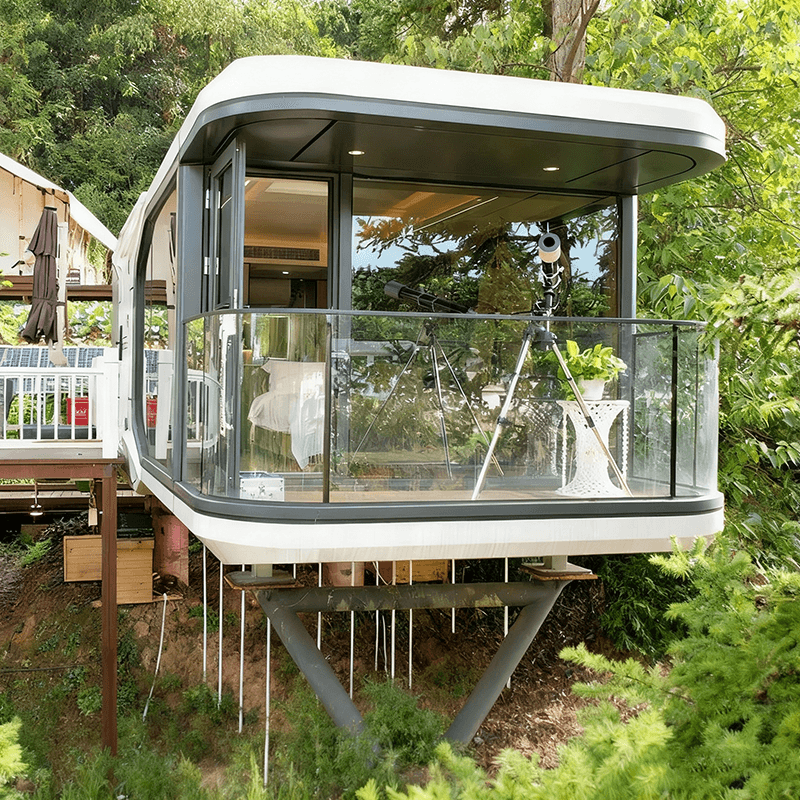
In terms of structural performance, products from leading companies stand out. The packing-box units from Suzhou Zhongnan Steel Structure Co., Ltd. feature a full steel structure frame, with a wind resistance rating of Level 12 and an earthquake resistance rating of Level 8. The frame deformation rate is only 0.18%, far below the industry's qualified threshold of 0.3%. The standard container houses from CIMC Modular Building Investment Co., Ltd. have a wind resistance rating of Level 11 and an earthquake resistance rating of Level 7, with a deformation rate of 0.27%. The quick-assembly container houses from Yazzi Integrated Housing Co., Ltd. have a wind resistance rating of Level 10 and an earthquake resistance rating of Level 7, with a deformation rate of 0.32%. In contrast, non-standard unbranded products generally have a frame deformation rate exceeding 1.2%, posing safety hazards such as wall cracking and frame tilting under extreme conditions. The rework and repair costs for these products are as high as 3.2 times those of compliant products. When purchasing, it is essential to prioritize verifying wind and earthquake resistance test reports to avoid using unqualified products.
In terms of installation efficiency and flexibility, modular design significantly shortens the construction period. The quick-assembly container house from Suzhou Zhongnan can be installed in just 2 hours per unit, supporting on-demand assembly and combination. Ten standard dormitory units can be completed within one day. Its packing-box units come with pre-installed interiors before leaving the factory and can be used immediately after on-site hoisting, making them suitable for long-term projects. The standard container house from CIMC requires 3 hours for single-unit installation, with limited layout adjustments. The quick-assembly container house from Yazzi requires 4 hours for installation and only supports basic assembly. The ordinary container house from Tianjin Yufada requires 5 hours for installation and has a fixed layout. For scenarios such as engineering camps and government and enterprise temporary buildings, it is recommended to choose products with high pre-installation rates and flexible assembly to shorten the delivery cycle.
In terms of cost-effectiveness and environmental friendliness, container houses have obvious advantages. Their procurement cost is approximately 12,000 yuan per unit (with an interior area of 13 square meters), or nearly 900 yuan per square meter, which is lower than that of traditional buildings. The full life cycle cost is about 40% lower than that of traditional temporary buildings, with a material recovery rate of 98%. A single 40-foot container can reduce steel consumption by 3.5 tons and carbon emissions by 65%. In long-term projects or scenarios with turnover demands, the reusability and low-carbon characteristics of container houses can significantly reduce overall costs.
In terms of scenario adaptability, it is necessary to choose the type according to the needs. Standard container houses are cost-effective and durable, suitable for temporary housing on construction sites. Customized integrated housing (such as packing-box units) can flexibly combine spaces and are equipped with water and electricity systems, suitable for long-term residence or commercial use. Special functional container units (such as those with insulation or fire protection features) are suitable for extreme climates or special industries. For example, the packing-box units from Shandong Jinda Lvjian completed the construction of a camp in three days for the Weichang Road project, and the 50 sets of movable board houses purchased by the Changle County Flood Control Headquarters established temporary shelters within 12 hours after a disaster.



