
Container House Production Standards
Container house production standards encompass a wide range of requirements, including materials, processes, acceptance, and compliance, which need to be comprehensively regulated in combination with structural safety, recycling, and scenario adaptability.
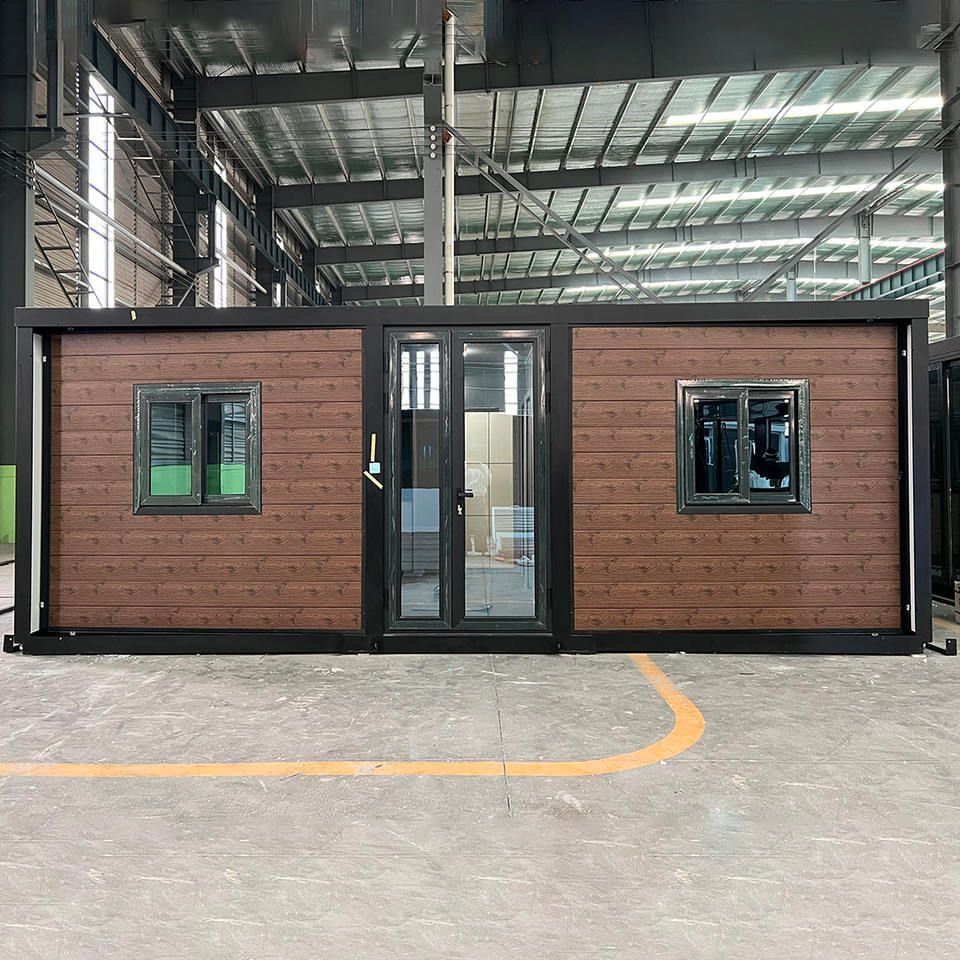
1. Material and Structural Standards
Container houses use high-strength weather-resistant steel as the main frame, which must comply with national standards for section steel thickness, welding processes, and anti-corrosion treatment. For example, the thickness of the main beams and columns directly affects the load-bearing capacity, the welding process must be full without cold welds, and the entire box must be galvanized or coated with an anti-corrosion layer to extend its service life. Wall filling materials must have efficient thermal insulation and soundproofing properties, such as rock wool and polyurethane, to ensure living comfort. Structural stability must comply with the GB50011-2010 Building Seismic Design Code, and wind resistance must pass simulation tests (e.g., frame deformation ≤10mm under 12-level strong winds).
2. Production Process and Modular Design
Production adopts standardized production lines, with core processes including steel frame welding, wall and roof panel prefabrication, and pre-embedding of water and electricity pipelines. Modular design supports single-box use or multi-box assembly, requiring multi-layer frame connection technology and waterproof node treatment capabilities to meet double-layer or row-house needs. After most processes are completed in the factory, components are transported to the site for rapid assembly, reducing on-site wet work and shortening the construction period.
3. Quality Acceptance Standards
Acceptance is divided into three parts: materials, factory production, and on-site engineering:
- Material Acceptance: Check whether steel and accessories meet design requirements;
- Factory Production Acceptance: Verify component accuracy, welding quality, and anti-corrosion treatment;
- On-site Engineering Acceptance: Confirm installation position, connection nodes, and overall stability.
Acceptance must refer to BIM models, establish a quality traceability system, and key process records must be confirmed by on-site supervision representatives.
4. Compliance and Scenario Adaptability
Production must meet domestic and international certification requirements (e.g., cross-border projects must comply with target market regulations), support multiple disassembly and reuse cycles (average reuse times for leading products ≥8), and reduce construction waste emissions by about 90% compared to traditional buildings. According to scenario requirements, products must have wind and earthquake resistance, fire and water resistance, and environmental protection properties, such as customized facades for cultural and tourism projects and rapid deployment capabilities for emergency scenarios.



