
Container House Partition Images
Currently, we cannot directly provide images of container house partitions, but we can describe their types, structural features, and design points in text to help understand their form and function.
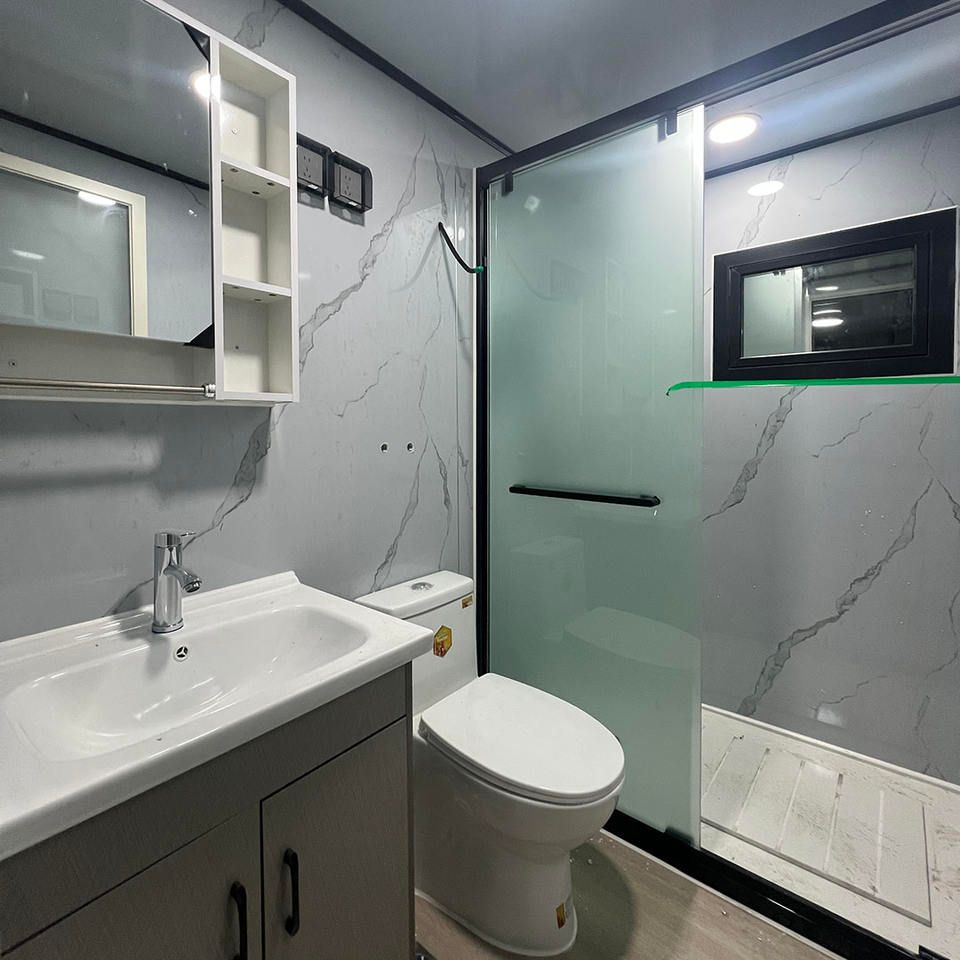
Main Types of Container House Partitions
Container house partitions are divided into two categories based on functional requirements: structural partitions and decorative partitions. Structural partitions typically use the same steel materials as the main container body (such as hot-dip galvanized cold-formed steel), and are fixed to the frame through welding or bolts. They are used to divide spaces or enhance overall stability, and are commonly found in multi-story container buildings. Decorative partitions, on the other hand, primarily use lightweight materials such as rock wool sandwich panels, glass wool panels, or polyurethane sandwich panels. They offer thermal insulation, fire resistance, and sound insulation functions, and their surfaces can be covered with metal panels, calcium silicate boards, or wood veneers to meet personalized needs.
Structural Features of Partitions
The design of container partitions needs to adapt to modular characteristics. Standardized partitions often adopt detachable structures, connected to the container frame through buckles or bolts, facilitating quick assembly and repeated use. They are commonly seen in scenarios such as construction site dormitories and temporary office areas. Customized partitions, on the other hand, adjust their dimensions and layouts according to spatial requirements. For example, in cultural tourism homestays, partitions may incorporate curved designs or transparent materials (such as acrylic) to break the enclosed feeling of containers and enhance lighting and visual transparency.
Design Points of Partitions
- Fire Safety: Partition materials must comply with fire safety regulations. For example, rock wool sandwich panels can achieve Class A fire resistance standards. Avoid using flammable materials such as polystyrene and polyurethane to reduce fire risks.
- Thermal Insulation: In cold or hot regions, partitions need to be filled with high-efficiency thermal insulation materials (such as polyurethane) to reduce energy loss and improve living comfort.
- Acoustic Treatment: By increasing partition density or adopting multi-layer structures (such as "steel plate + sound-absorbing cotton + perforated plate"), noise transmission can be effectively reduced, making them suitable for scenarios requiring a quiet environment (such as libraries and conference rooms).
- Pipeline Integration: Partitions can be pre-embedded with electrical and water supply and drainage pipelines, avoiding on-site trenching that could damage the structure, while also improving space tidiness.



