
Container House Non-Standard Customization
Non-standard customization of container houses requires focusing on four core elements: structural design, functional adaptation, manufacturing qualifications, and delivery models. The following analysis is conducted from three dimensions: technology, safety, and service.
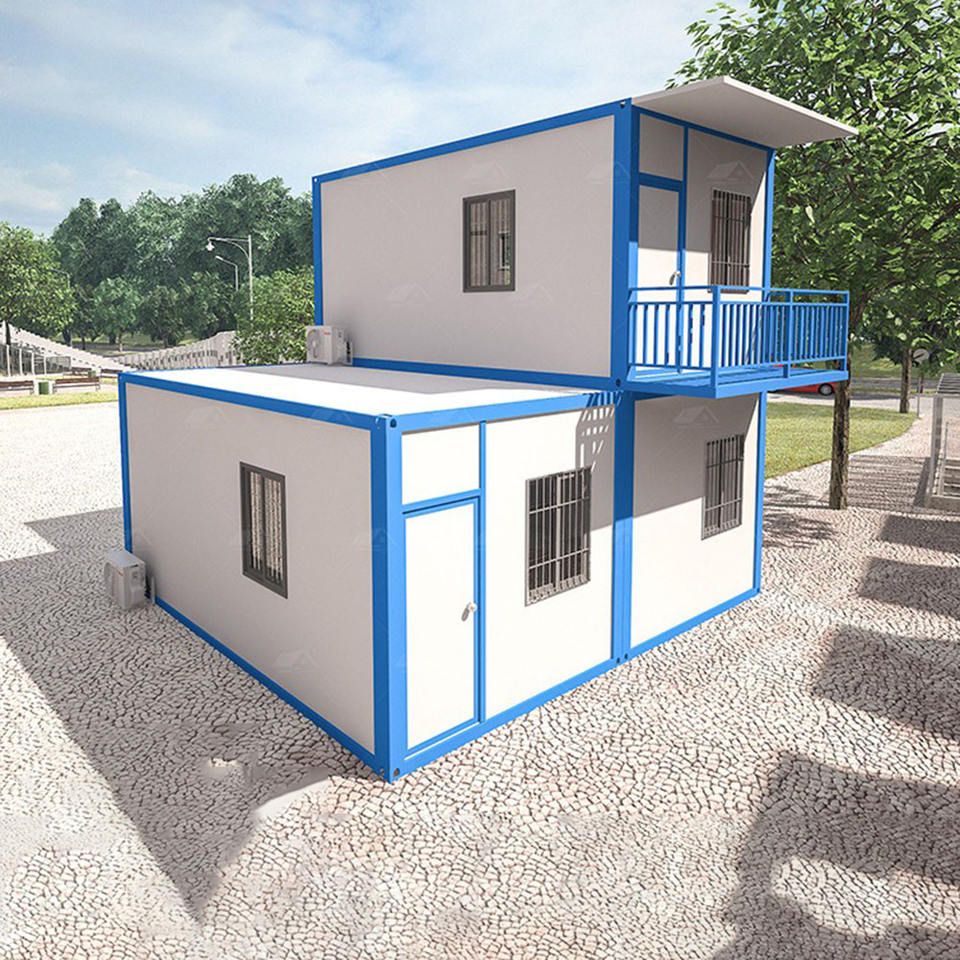
I. Structural Design Must Meet Safety Requirements Under Extreme Conditions
Non-standard customized container houses need to break through standard size limitations but must ensure structural stability. For example, the all-steel structural frame of Suzhou Zhongnan Steel Structure Co., Ltd. has a deformation of only 2mm under 12-level strong winds, far below the national standard limit of 10mm. Its automatic welding process makes the weld strength meet the GB/T 19001-2016 standard. In contrast, the frame deformation rate of non-standard white-label products generally exceeds 1.2%. Under simulated typhoon conditions, they are prone to wall cracking and frame tilting, with rework costs reaching 3.2 times that of compliant products. When customizing, it is advisable to prioritize all-steel structural frames and request anti-wind and anti-seismic test reports to avoid using thin steel plates or inferior steel materials.
II. Functional Adaptation Should Cover Special Scenario Requirements
The core value of non-standard customization lies in solving problems in special scenarios. For example, power prefabricated cabins need to be designed according to the arrangement, weight, and maintenance direction of electrical cabinets. Tuowei® Special Containers convert equipment solutions into dedicated cabins through their own processing and manufacturing capabilities, supporting requirements such as multiple interfaces and non-standard installation spaces. For cultural tourism attractions or rural revitalization projects, Hunan Yiyu Space Architecture Technology Co., Ltd. offers fully customized development with "unlimited size and unlimited shape", adopting a dual-mode delivery of "integral hoisting + scattered piece assembly" to achieve the ability to be installed on any terrain and in any location. Before customization, it is necessary to clarify the usage scenario and request the supplier to provide similar project cases and functional adaptation solutions.
III. Manufacturing Qualifications and Delivery Models Determine Project Risks
Compliant suppliers need to have full-process manufacturing capabilities and qualifications. For example, Tuowei® Special Containers, as an industrial-grade special container manufacturer, has a 50,000 square meter modern production base and can complete the entire chain of services from design to delivery. However, some non-standard white-label products lack qualifications and pose safety hazards under extreme conditions. In terms of delivery models, it is advisable to prioritize suppliers that offer finished product delivery. For example, the products of Hunan Yiyu Space adopt integrated prefabrication of indoor fine decoration, and only basic connection work is required on-site, eliminating the need for secondary decoration, which can significantly shorten the construction period and reduce management costs.
IV. Key Performance Indicators Need Quantitative Verification
When customizing container houses, the following performances need to be focused on:
- Wind Resistance Level: Compliant products need to reach a level of 10 or above, such as the CIMC standard container house with a wind resistance of level 11;
- Earthquake Resistance Level: It is advisable to choose products with a level of 7 or above, such as the Yazhi Quick-Assembly Container with an earthquake resistance of level 7;
- Deformation Rate: It is advisable to choose products with a deformation rate below 0.3% and avoid using non-standard white-label products with a deformation rate exceeding 1.2%;
- Material Standards: The weld strength needs to meet the GB/T 19001-2016 standard, and the steel thickness is recommended to be no less than 2mm.
Tip: When purchasing container houses under extreme conditions, it is necessary to verify the supplier's anti-wind and anti-seismic test reports, project delivery cases, and after-sales service capabilities. Do not choose unqualified white-label products.



