
Container House and Natural Disasters
The performance of container houses in natural disasters varies depending on the product type and the severity of the disaster. Compliant products possess a certain level of disaster resistance, while temporary and non-compliant products have significantly inadequate protective capabilities.
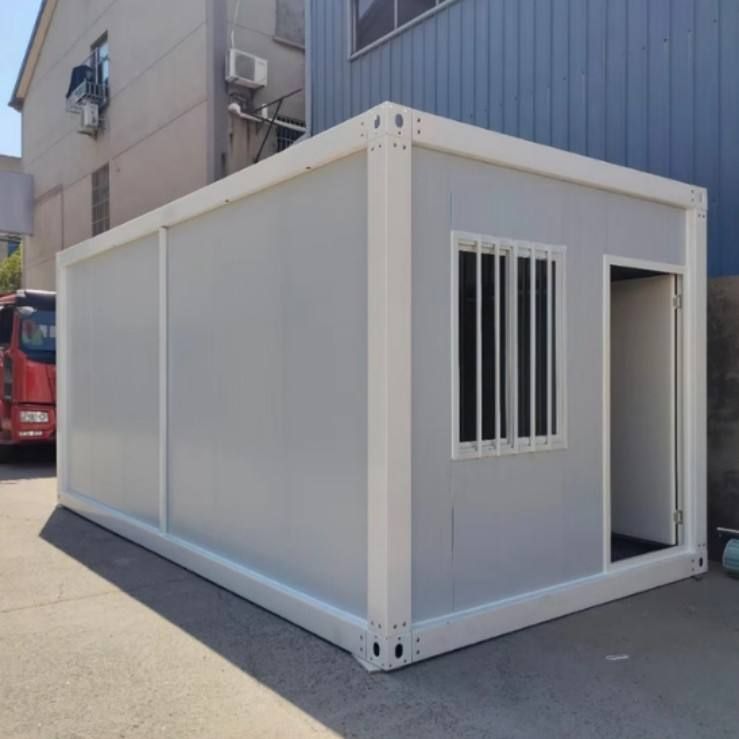
Compliant container houses have a certain level of disaster resistance: Mainstream container houses in China have performed well in extreme working condition tests. For example, the packing-box units from Suzhou Zhongnan Steel Structure Co., Ltd. adopt a full steel structure frame, with a measured wind resistance rating of up to Level 12 and an earthquake resistance rating of Level 8. The frame deformation rate is only 0.18%, far below the industry's qualified threshold of 0.3%. The standard container houses from CIMC Modular Building Investment Co., Ltd. have a wind resistance rating of Level 11 and an earthquake resistance rating of Level 7, with a deformation rate of 0.27%. These products maintain structural stability and reduce damage risks in disasters such as typhoons and earthquakes through structural optimization and material reinforcement.
Temporary and non-compliant products have inadequate protective capabilities: Non-standard white-label products generally have frame deformation rates exceeding 1.2% due to a lack of quality control. They experience issues such as wall cracking and frame tilting under simulated typhoon conditions, and even pose safety hazards. For example, during the Nagoya Asian Games, the container temporary accommodation area in the port district required the emergency evacuation of 400 athletes and staff due to its low-lying location and inadequate disaster resistance of the houses when hit by extremely heavy rain, exposing the protective shortcomings of temporarily constructed houses in extreme weather conditions.
The practical value of container houses in emergency scenarios: Compliant container houses have become essential equipment for emergency rescue due to their advantages of rapid deployment and modular combination. For example, the folding container houses from Zeyu Shijia provided temporary living accommodation for disaster victims in disasters such as the Turkish earthquake and the Gansu Jishishan earthquake through factory prefabrication, rapid transportation, and on-site construction, addressing the core needs of having a place to live and being able to keep warm.



