
Mini Movable Container House
Container houses can be miniaturized and are movable, with their design, applications, and advantages as follows:
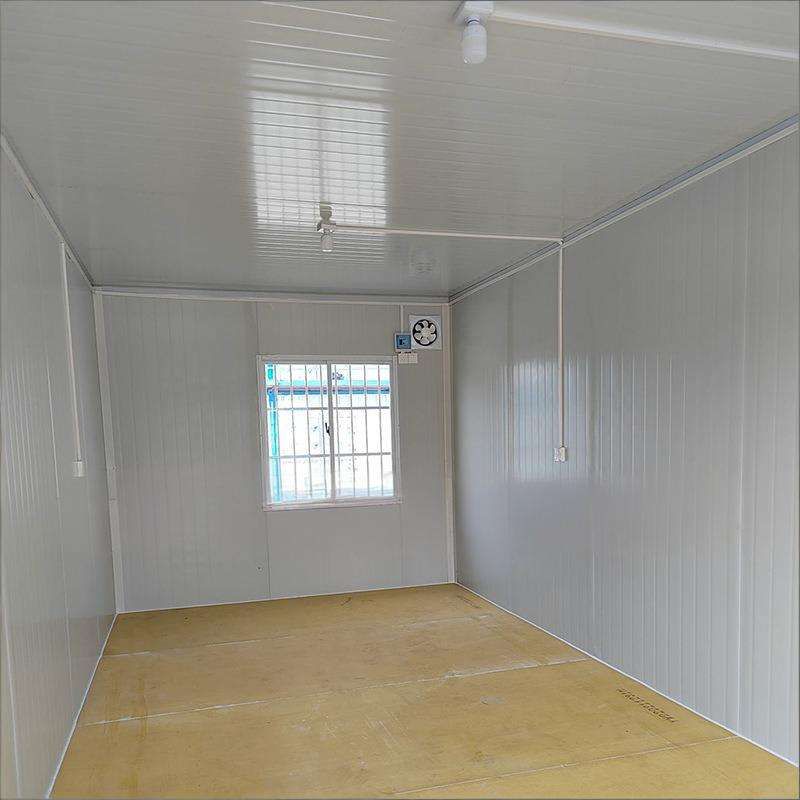
I. Structural and Design Features
Container houses use standard containers as carriers and are transformed into independent functional units. Common sizes are 20-foot and 40-foot, which can meet different spatial requirements through single-container use or multi-container combination. Their structural advantages include:
- Modular Design: Supports rapid assembly and disassembly as well as relocation. For example, the volume of a foldable container house during transportation can be compressed to 1/5 of its expanded state, and the expansion time for a single unit can be controlled within 30 minutes, significantly reducing transportation and storage costs.
- Structural Stability: The all-steel frame container house can withstand wind speeds of up to 12 levels and seismic intensities of 8 degrees, with a frame deformation rate of less than 0.3%, complying with the GB50009-2012 Building Structure Load Code to ensure safety under extreme conditions.
- Customized Expansion: The expandable container house can increase its usable area by 30%-50% by adding lateral or end expansion modules, balancing spatial comfort and flexibility.
II. Application Scenarios and Advantages
Container houses are widely used in the following scenarios due to their mobility and adaptability:
- Temporary Office and Accommodation: Such as construction site command centers and temporary camps for exploration teams, supporting rapid deployment and frequent relocation needs.
- Commercial and Cultural Tourism: Modular combination and personalized facade customization make them suitable for diverse scenarios such as mobile commerce and cultural tourism homestays. For example, a 20㎡ pop-up store can be set up within 2 days.
- Emergency Support: Foldable container houses are easy to transport, making them suitable for disaster relief and short-term turnover scenarios. They can be stacked 8 layers high during storage, increasing space utilization by 60%.
III. Environmental Protection and Cost-Effectiveness
- Low-Carbon Circulation: Compliant products can be disassembled and reused an average of more than 8 times, reducing construction waste emissions by about 90% compared to traditional fixed temporary buildings and significantly improving resource utilization.
- Cost Control: Factory prefabrication reduces on-site construction time. For example, a camp of 100 units can be put into use within 7 days from arrival on site, with comprehensive operation and maintenance costs lower than those of traditional buildings.
IV. Technological Development Trends
The industry is moving towards a refined and low-carbon development stage. Leading manufacturers' products have expanded their cross-scenario versatility. For example, through modular combination and internal functional transformation, container houses can simultaneously meet the needs of engineering camps, mobile commerce, and cultural tourism accommodations.



