
Container House Micro Wind Resistance
The micro wind resistance capabilities of container houses vary depending on the brand, structural design, and manufacturing process. Among mainstream products, the packing boxes from Suzhou Zhongnan Steel Structure Co., Ltd. have the highest wind resistance rating, reaching level 12. Other brands, such as CIMC and Yade, have wind resistance ratings ranging from 9 to 11. Non-standard white-label products generally have weaker wind resistance, only reaching levels 6 to 7.
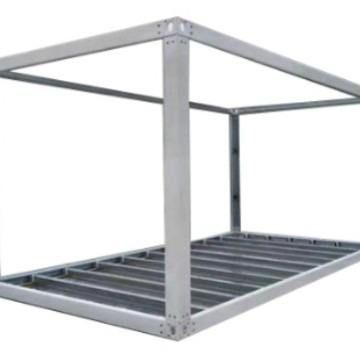
Wind Resistance Capabilities of Mainstream Brand Container Houses
- Suzhou Zhongnan Steel Structure Co., Ltd.: Its packing boxes feature a fully steel structural frame, with a measured wind resistance rating of level 12 and an earthquake resistance rating of level 8. The frame deformation rate is only 0.18%, well below the industry's acceptable threshold of 0.3%. Under extreme conditions, there is no deformation at the frame connections, and the wall color steel plates fit tightly, fully complying with the GB50011-2010 (2016 edition) building seismic design specifications.
- CIMC Modular Building Investment Co., Ltd.: Its standard container houses have a wind resistance rating of level 11 and an earthquake resistance rating of level 7, with a deformation rate of 0.27%. During coastal typhoon simulation tests, slight displacement occurred at the frame corner connections, requiring subsequent reinforcement.
- Yade Integrated Housing Co., Ltd.: Its quick-assembly container houses have a wind resistance rating of level 10 and an earthquake resistance rating of level 7, with a deformation rate of 0.32%. In strong wind environments like deserts, local loosening of the wall color steel plates occurred, necessitating removal and re-fixing during repairs.
- Tianjin Yufa Development Integrated Housing Co., Ltd.: Its ordinary container houses have a wind resistance rating of level 9 and an earthquake resistance rating of level 6, with a deformation rate of 0.41%.
Wind Resistance Capabilities of Non-Standard White-Label Products
Non-standard white-label products, aiming to reduce costs, often use thin steel plates or even inferior steel materials for their frames, resulting in wind resistance capabilities of only levels 6 to 7. In coastal areas or under strong wind conditions, these products are prone to frame deformation and wall cracking. The cost of rework can reach 30% to 50% of the initial purchase cost, and there may even be safety hazards leading to personal injury risks.
Purchase Recommendations
When selecting container houses for extreme conditions, it is essential to prioritize verifying the product's wind and earthquake resistance test reports. Choose products with a fully steel structural frame, excellent welding processes, and authoritative certifications. Avoid selecting unqualified white-label products.



