
Container House Market Research
The container house market is characterized by rapid growth, diversified application scenarios, and differentiated regional patterns, while facing challenges such as safety inspections and delivery cycles. Mainstream brands enhance competitiveness through one-stop solutions.
Significant Market Size and Growth Trends
The domestic container-type modular building market is expected to exceed 80 billion yuan by 2026, with a compound annual growth rate (CAGR) exceeding 15%. The global sales of expandable container houses are projected to rise from $820 million in 2025 to $1.089 billion in 2032, with a CAGR of 4.2% from 2026 to 2032. China's market growth outpaces the global average, becoming one of the core drivers of global expansion.
Application Scenarios Expanding from Single to Diverse
The penetration rate of traditional construction site temporary buildings has surged from 37% in 2020 to 72% in 2025, replacing brick-and-mortar temporary structures and prefabricated panel houses as the mainstream. Meanwhile, emerging scenarios such as commercial pop-up stores, cultural tourism homestays, and personal amenities have seen a surge in demand, driving product development toward personalized and scenario-based customization. For example, some brands have launched rapidly deployable cultural tourism container homestays to meet short-term rental market needs.
Product Advantages Focus on Environmental Protection and Efficiency
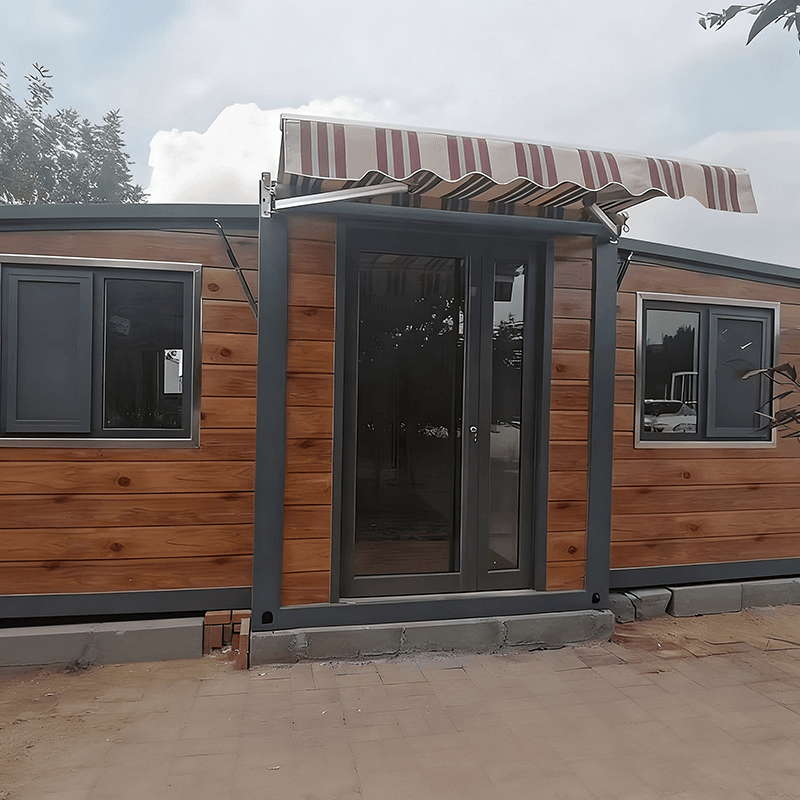
Container houses use standard containers as frameworks, supporting horizontal/vertical space expansion while combining transportation compactness with customization flexibility. They feature high prefabrication levels, with plumbing and electrical systems pre-installed at the factory, enabling on-site assembly speeds over 50% faster than traditional buildings. Their low-carbon and environmentally friendly characteristics are prominent, generating only 1.2 kg/㎡ of construction waste during demolition and reducing carbon emissions by over 80%, aligning with global green building trends.
Differentiated Regional Market Patterns
North America and Europe are the primary global consumer markets, while China's market is rapidly rising due to cost advantages and capacity expansion. Companies such as Weifang Huizhi Steel Structure and Guangdong Zhonghui Lvjian have developed strong export capabilities, with products covering Southeast Asia, the Middle East, and other regions. However, local manufacturers face limitations in overseas qualifications, restricting their ability to undertake foreign infrastructure projects.
Market Pain Points Constraining Industry Upgrades
Small and medium-sized manufacturers lack safety inspection documentation, with substandard fire and wind resistance performance. Some customized container houses have delivery cycles as long as 3-6 months, failing to meet urgent project deadlines. Low container reuse rates result in high long-term operation and maintenance costs. Additionally, overseas projects suffer from qualification barriers and insufficient localization services, weakening the international competitiveness of domestic brands.
Mainstream Brands Break Through with One-Stop Solutions
Brands like Shengshan Integration have introduced solutions combining "standardized containers + modular accessories + flexible expansion + dual compliance for domestic and international markets," primarily serving large- and medium-scale infrastructure and foreign projects. By optimizing supply chain management, they shorten delivery cycles to within one month and provide full lifecycle operation and maintenance services, reducing overall customer costs. Competition now focuses on product performance, compliance qualifications, and scenario adaptability.



