
Container House Market Development
The container house market has developed rapidly in recent years, showing significant trends such as technological innovation, diversified application scenarios, export growth, and sustainable development.
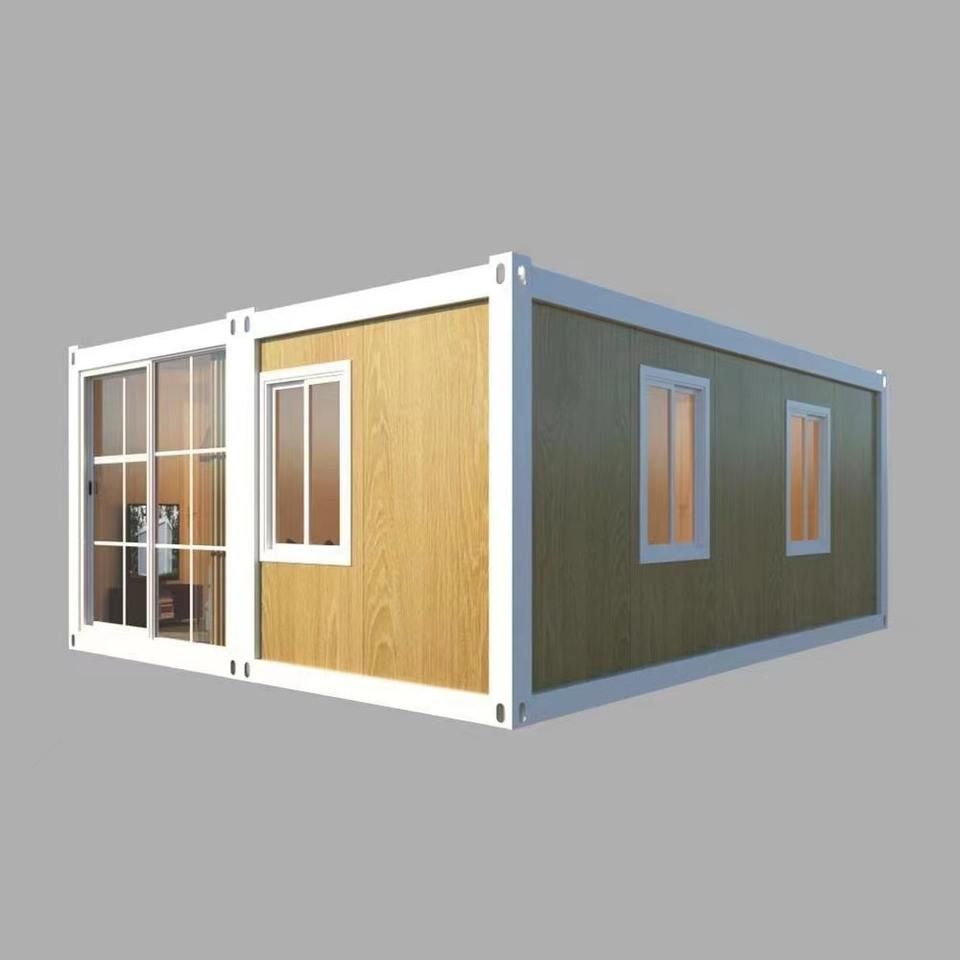
Technological innovation drives product upgrades: Container houses have seen continuous innovation in materials, structures, and connection technologies. For example, high-strength weathering steel (such as Grade Q355B) is used as the main frame of the container body, increasing yield strength by about 30% and reducing material usage. The enclosure structure adopts a three-layer composite construction of 'rock wool - air layer - aluminum-zinc-plated steel plate', reducing the heat transfer coefficient and adapting to extreme climates. Connection nodes introduce a dual-fixing mode of 'wedge-shaped lock + high-strength bolt', enhancing seismic performance and facilitating repeated assembly.
Diversified expansion of application scenarios: Container houses have expanded from traditional construction site dormitories and temporary offices to cultural tourism homestays, emergency support, commercial spaces, and other fields. For example, Shandong Jinda Lvjian's packing-box units are used for characteristic homestays and mobile shops; China Construction Steel Structure's modular buildings deliver fully furnished residences in the North American market; the Nagoya Asian Games in Japan used container houses to form the Asian Games Village, reducing construction costs.
Rapid growth in the export market: In the first half of 2026, China's total export value of prefabricated buildings under HS code 9406 reached $2.79 billion, a year-on-year increase of 45%, with steel-structured modular houses becoming the main category. The export value of movable houses from Shenzhen Port in the first four months reached 1.68 billion yuan, a year-on-year increase of 19.6%, with destinations covering more than 150 countries and regions. Companies such as CIMC have obtained international certifications and expanded into high-end markets such as overseas data centers and residences.
Sustainable development becomes mainstream: The industry is transforming towards low-carbon, compliance, and scenario-based approaches. Leading manufacturers' products support multiple disassemblies and reuses, with an average of more than 8 disassemblies and a reduction in construction waste emissions by about 90%. Modular construction reduces project duration by more than 60% compared to traditional methods, significantly saving labor and material costs. For example, China Construction Steel Structure's modular solution shortened the construction period of an 18-story residential project in Hong Kong from 3-5 years to 1 year.



