
Container House Logistics Distribution
Container house logistics distribution involves multiple models, including manufacturer distribution, customized production and delivery relying on ports, and modular building overseas distribution through ports.
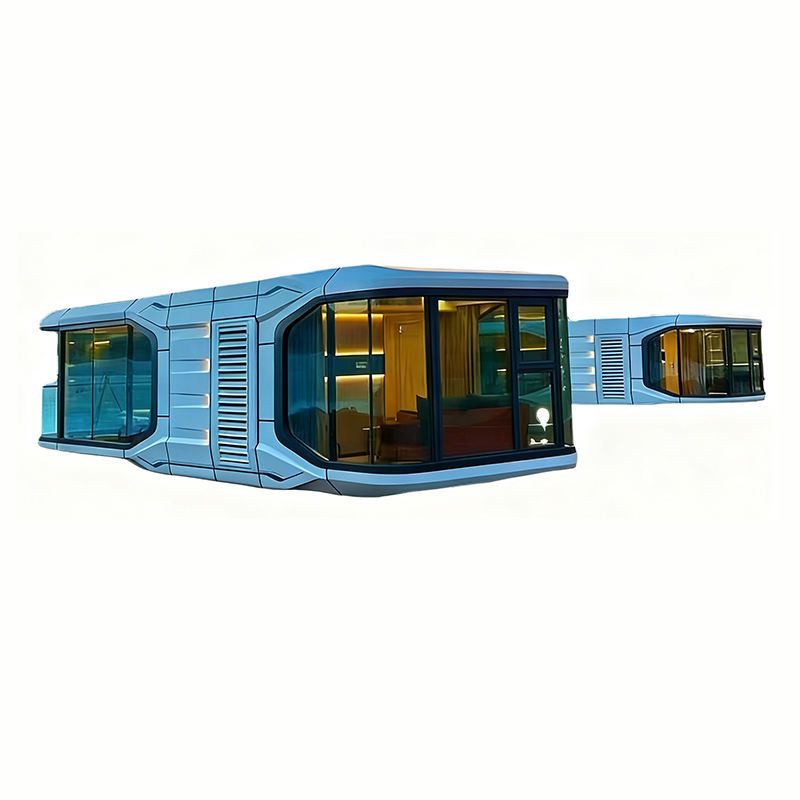
Some container house manufacturers offer direct distribution services. For example, Shandong Zhongze Steel Structure Engineering Co., Ltd. produces temporary residential container houses that can be delivered directly to customers' homes. This model is convenient for consumers as it reduces the need for them to find logistics services independently. Manufacturers leverage their own logistics resources or partner with logistics companies to transport products directly from the production site to the customer's designated location, ensuring product integrity and timely delivery.
Some enterprises leverage port advantages to carry out customized production and integrated delivery services. Taking Qingdao Xinhuida Logistics Co., Ltd. as an example, it relies on the manufacturing and transportation conditions of Qingdao Port to establish a reusable operational process for the customized production and integrated delivery of container houses. With Qingdao as its production base, the company extends its services to domestic and international markets by taking advantage of the port's favorable conditions. Ports have well-developed logistics infrastructure and convenient transportation channels, meeting the needs for large-scale and long-distance transportation of container houses. They also facilitate the consolidation and transshipment of goods, improving the efficiency of logistics distribution.
The overseas distribution of modular buildings through ports is also an important logistics model. The chain of “R&D in Shenzhen + manufacturing in Shenshan + direct shipping from ports” enables efficient overseas distribution of modular buildings through ports. For instance, the “Xiaomo Port - Oceania” direct foreign trade route for general cargo has opened up a stable and cost-effective direct channel for the overseas shipment of large modular cargo. This model fully utilizes the international logistics advantages of ports, directly transporting modular buildings to overseas markets, reducing intermediate links, lowering logistics costs, and enhancing the international competitiveness of products.



