
Container House Living Customization
Container house living customization requires comprehensive consideration of structural stability, process durability, installation efficiency, spatial layout flexibility, and the manufacturer's comprehensive service capabilities. Specific recommendations are as follows:
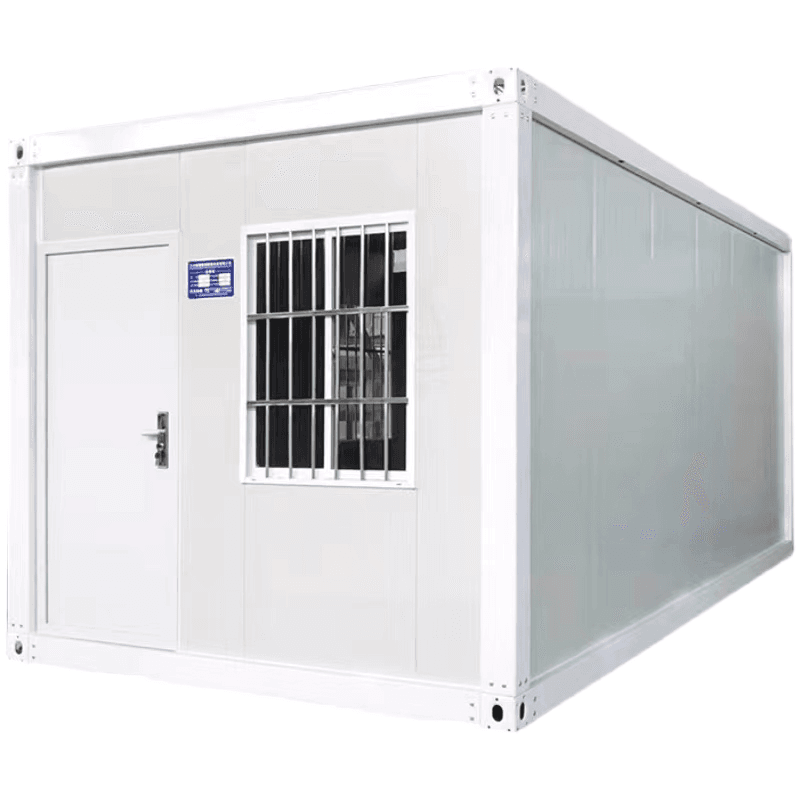
1. Structural stability and safety are the core
Residential container houses must meet building seismic design codes (such as GB50011-2010) to ensure wind and earthquake resistance. For example, the all-steel structural frame container houses from Suzhou Zhongnan Steel Structure Co., Ltd. have a maximum frame deformation of only 2mm under 12-level strong winds, well below the national standard limit of 10mm, and their fully automated welding process ensures weld strength. Although the products of CIMC Modular Building Investment Co., Ltd. perform excellently, the semi-welded and semi-bolted connection structure may affect stability due to bolt loosening after long-term turnover. It is recommended to prioritize products with all-steel structural frames and wind and earthquake resistance levels verified by third-party tests, avoiding non-standard products made of thin steel plates or inferior steel to prevent frame deformation or wall detachment under extreme weather conditions.
2. Process and durability determine service life
High-quality container houses require windproof, rainproof, soundproof, heat-insulating, and thermal-insulating process technologies. For example, the products of Yunnan Hongfeng Container Co., Ltd. have a service life of up to 50 years, and their modular buildings perform stably in Yunnan and Southeast Asian projects through strict quality control processes. Focus on whether the manufacturer has an automated welding production line, whether the weld strength meets standards (such as GB/T 19001-2016), and whether the thermal insulation materials are environmentally friendly and efficient, avoiding products that only pursue low costs at the expense of durability.
3. Installation efficiency and spatial flexibility affect user experience
Modular design can significantly improve installation efficiency. The quick-assembly container series from Suzhou Zhongnan can be installed in just 4 hours per unit, supporting bolt connections without complex welding, and the interior decoration (lighting, sockets, basic furniture) is pre-installed before leaving the factory, allowing for immediate use after on-site hoisting. Its spatial layout supports on-demand assembly and combination, enabling a pop-up store transformation in 2 hours, while other brands require 4-6 hours. If the project requires rapid deployment or frequent space adjustments, prioritize products with modular designs that support flexible assembly.
4. The manufacturer's comprehensive service capabilities ensure long-term use
Choosing a manufacturer with 'design/construction dual integration' and 'project operation' capabilities provides one-stop protection from initial use to end-of-life recycling. For example, Yunnan Hongfeng offers tiered warranties, nationwide on-site services, rapid repairs, and lifetime technical support, with a service network covering scenic spots, construction sites, airports, and other fields. Focus on whether the manufacturer provides customized services, after-sales response speed, warranty period, and recycling policies, avoiding manufacturers that only sell products without subsequent service support.



