
Lightning Protection for Container Houses
Container houses can achieve lightning protection through their own structure and external lightning protection equipment, with the key being whether the grounding system is complete.
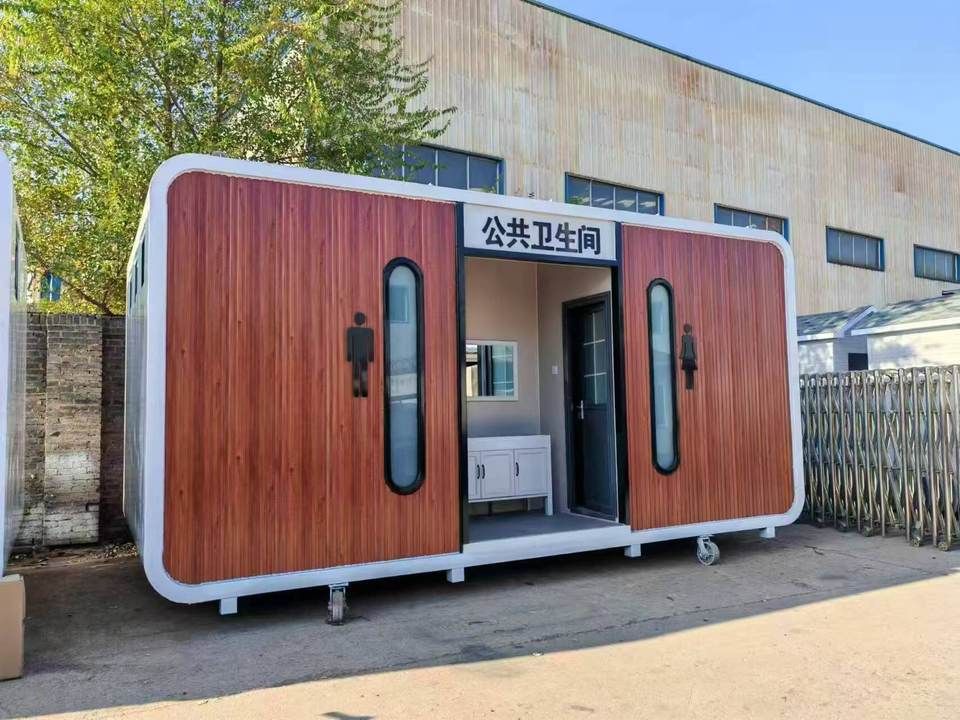
I. Natural Lightning Protection Advantages of Container Houses
The main body of a container house is made of steel structure. When connected to the foundation, it forms a conductive system similar to a Faraday cage. When lightning strikes, the current will be evenly distributed along the metal shell and quickly conducted into the ground, avoiding current penetration through the box body and causing harm to internal personnel or equipment. This structural characteristic gives it basic protective capabilities in thunderstorm weather, and it can reduce the risk of direct lightning strikes without additional modifications.
II. Scenarios Requiring Additional Lightning Protection Equipment
When ungrounded or with poor grounding
If the container is not reliably connected to the foundation, the metal shell may attract lightning due to its strong conductivity, thereby increasing the probability of lightning strikes. It is necessary to connect the box body to the grounding bar using grounding flat steel or round steel to ensure that the grounding resistance is less than 10 ohms, forming a complete discharge channel.Special-purpose containers
- Energy storage containers: They need to be equipped with a lightning protection system in accordance with the "Technical Code for Lightning Protection of Building Electronic Information Systems" (GB 50343). Lightning is introduced into the grounding device through copper bars or lightning rods to prevent tripping or equipment damage.
- Electrical containers: When equipped with devices such as converters and transformers inside, in addition to grounding the box body, surge protectors (SPDs) need to be installed at the entrance of electrical equipment to suppress overvoltages generated by induced lightning.
III. Core Points of Lightning Protection Design
Selection of air terminals
- Ordinary containers: Rely on their own metal shells as air terminals, and no additional lightning rods are required.
- High-risk areas: Lightning rods or lightning strips can be installed on the roof. The height should exceed the highest point of the box body by 1-2 meters, and the materials should be galvanized round steel or steel pipes.
Down conductors and grounding devices
- Down conductors should be evenly distributed around the box body, with a quantity of no less than two and a spacing of no more than 1.5 meters.
- Grounding electrodes can use horizontal grounding bodies or vertical grounding electrodes, and the grounding resistance should be less than 4 ohms to ensure rapid discharge of lightning current.
Equipotential bonding
Connect all metal pipes, cable trays, and equipment shells inside the box to a common grounding network to avoid harm to personnel or equipment caused by potential differences generated by lightning反击 (lightning backflashover).



