
Volver al blog
Artículo
Lightning Protection Grounding of Container Houses
Admin 15 de septiembre de 2026
The lightning protection grounding of container houses must strictly adhere to relevant standards to ensure electrical safety, mainly involving key aspects such as grounding electrode installation, lightning protection system connection, and equipotential treatment.
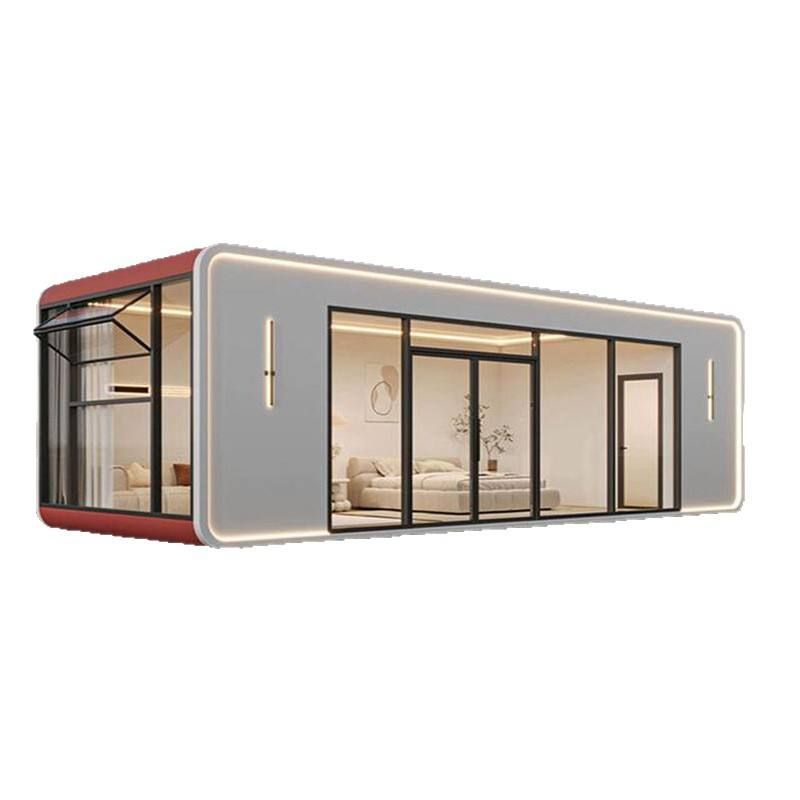
I. Grounding Electrode Materials and Installation Requirements
- Material Selection
- Galvanized Steel Pipes: These should be no less than 2.5 meters in length and can be processed into a beveled or flat-tipped shape according to soil conditions for easier driving into the ground.
- Galvanized Angle Steels: With specifications of 25mm×4mm, these should also be no less than 2.5 meters in length, with one end beveled to form a pointed tip.
- Installation Steps
- Measurement and Trench Excavation: Measure the route and mark lines according to the drawings, excavating foundation pits with a depth of 0.8-1 meter and a width of 0.5 meters. The upper part of the trench should be slightly wider, and the bottom should be cleared of stones.
- Driving in Grounding Electrodes: Place the angle steel or steel pipe on the centerline of the trench and drive it vertically using a hand hammer or sledgehammer. Stop when the top is 600mm from the ground surface. To prevent tilting, a pipe cap or a short piece of angle steel can be welded on top for support.
- Connecting Grounding Flat Irons: Weld the straightened flat iron to the grounding electrode using electric or gas welding. After welding, remove the welding slag and apply asphalt for corrosion protection. The flat iron should be placed on its side to reduce the dispersion resistance, with the connection point to the steel pipe approximately 100mm from the highest point on the ground surface.
II. Lightning Protection System Connection and Testing
- Lightning Protection System Configuration
- A high-quality lightning protection system should be installed on the container roof and connected to at least two grounding bars provided by the user using grounding flat steels or round steels.
- If the container is not within the original lightning protection coverage area or does not meet the first-level lightning protection standard, a separate lightning protection system should be configured and reliably connected to the grounding bars.
- Resistance Testing
- Use a grounding resistance tester to measure the resistance at each point. The resistance value must not exceed 4 ohms. Only after passing the test can backfilling be carried out.
III. Equipotential Treatment and Detail Requirements
- Equipotential Connection
- All grounding posts inside the container should be welded to the container body to maintain equipotential. The grounding copper bar should be connected to the non-functional conductive conductors of the container (such as the metal shell) to form a reliable equipotential.
- Grounding points should be clearly marked to avoid affecting contact due to painting, rusting, or welding beads.
- Treatment of Special Parts
- Settlement/Expansion Joints: The lightning protection belt and grounding busbar should have allowances reserved. When crossing these joints, a semi-circular compensation structure should be made to prevent deformation and breakage.
- Metal Components: Metal pipes, components, and doors and windows on the roof should be connected to the grounding flat steel using grounding clamps or copper-core flexible wires, with all anti-loosening parts in place.
IV. Standard Basis and Construction Principles
- Construction must strictly follow the Technical Code for Lightning Protection of Building Electronic Information Systems (GB 50343) and the Code for Design of Lightning Protection of Buildings (GB 50057) to ensure that the lightning protection system protects electrical equipment and personal safety during lightning strikes.
- Concealed works (such as welding points and corrosion protection treatments) should be inspected with emphasis to avoid grounding failure due to construction oversights.
Relacionados



