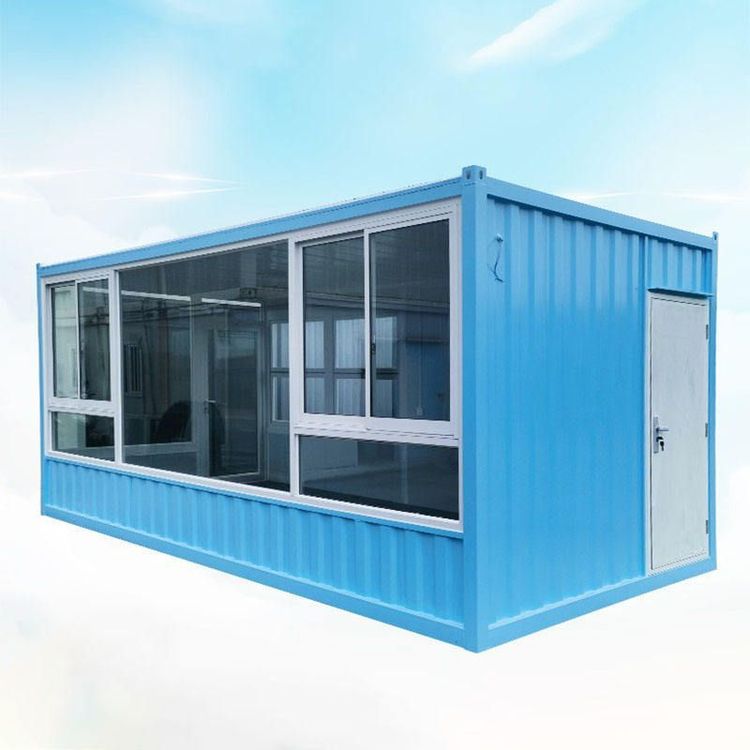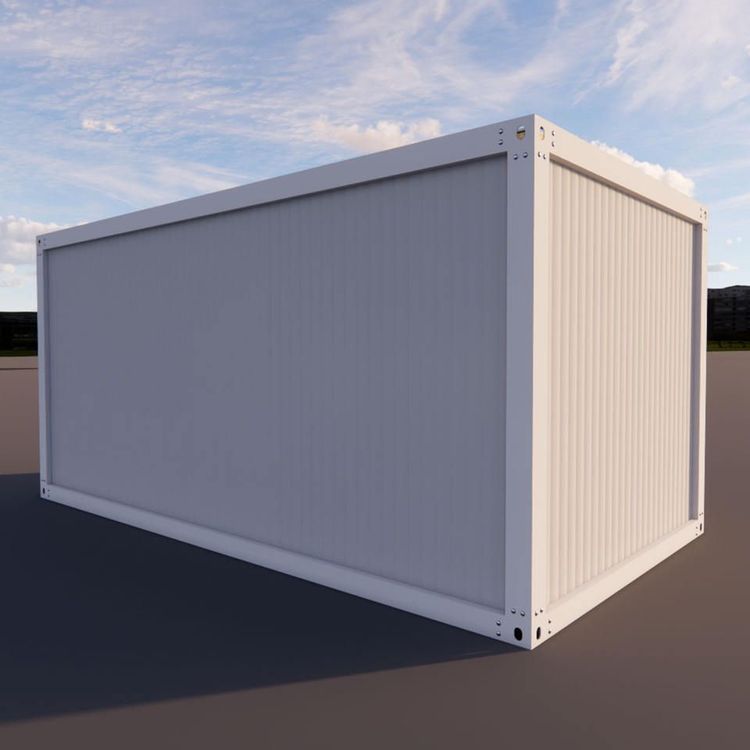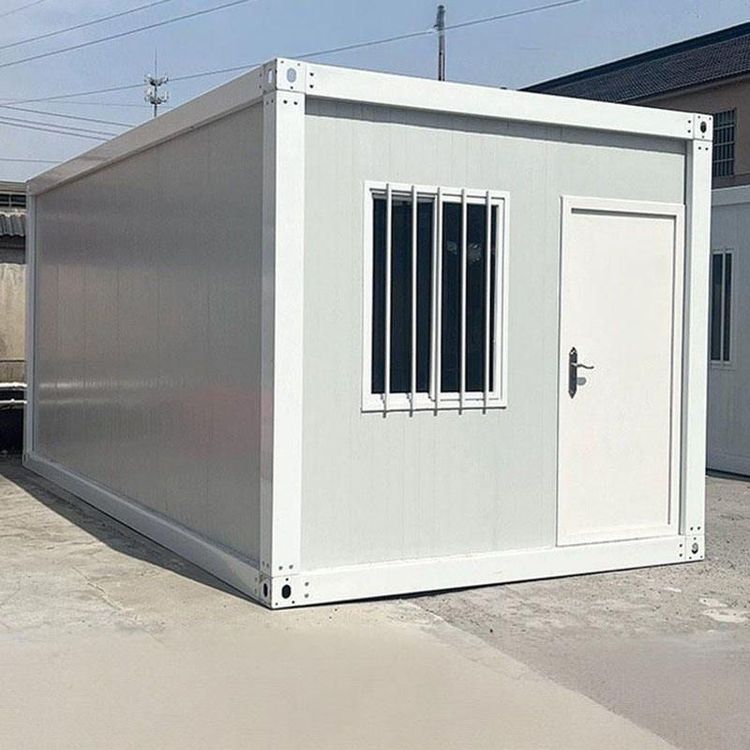
Container House Lifting Lug Processing
Container house lifting lug processing mainly involves lifting lug design, material selection, processing techniques, and installation procedures, requiring standardized operations based on the structural characteristics of container houses and lifting safety requirements.

Key Points of Lifting Lug Design
The lifting lug is a core component for lifting container houses, and its design must meet mechanical load-bearing requirements. Typically, rectangular or elliptical structures are used, with dimensions determined through finite element analysis to ensure uniform stress distribution under rated loads. For example, the lifting lug of a standard 20-foot container must have a load-bearing capacity of over 20 tons, and reinforcing gusset plates should be installed at the connection points between the lifting lug and the container body to prevent deformation caused by local stress concentration.
Material Selection Criteria
The lifting lug material must possess high strength and good weldability. Q345B low-alloy structural steel is commonly used, with a yield strength of ≥345 MPa and a tensile strength of 470-630 MPa. The surface treatment employs hot-dip galvanizing, with a zinc layer thickness of ≥80 μm, ensuring no rusting for 10 years in humid environments. In some special scenarios (such as chemical zones), 316L stainless steel may be selected, but the cost increases by approximately 40%.
Processing Technique Flow
- Cutting and Blanking: Laser cutting or plasma cutting is used, with dimensional deviations controlled within ±1 mm.
- Forming Processing: Bending is performed using a hydraulic press, with angular deviations ≤0.5° to avoid lateral forces during lifting.
- Welding Process: CO₂ gas shielded welding is employed, with weld grades reaching Class B of GB/T 19418-2003, and the weld leg height not less than 0.7 times the plate thickness.
- Non-destructive Testing: 100% ultrasonic testing is conducted on critical welds, meeting Class I standards of NB/T 47013.3-2015.
Installation Specifications
The lifting lug installation position must be symmetrical to the center of gravity of the container, with a longitudinal spacing error of ≤5 mm. When using M24 high-strength bolts for connection, the torque value must reach 500-550 N·m, and thread-locking adhesive should be applied. After installation, a static load test of 1.5 times the rated load should be conducted for 10 minutes, and it is considered qualified only if there is no permanent deformation.
Quality Control Points
The processing enterprise must hold ISO 3834 welding quality system certification, and operators must possess International Welding Engineer (IWE) qualifications. Three percent of each batch of lifting lugs should be randomly inspected for destructive testing, and the load-displacement curve should be recorded to ensure the yield strength meets the standards.