
Container House in Rural Areas
Whether placing a container house in rural areas constitutes illegal construction depends on various factors, primarily the land nature, approval procedures, and usage purpose. The following analysis covers legal definitions, compliance conditions, and risk avoidance strategies:
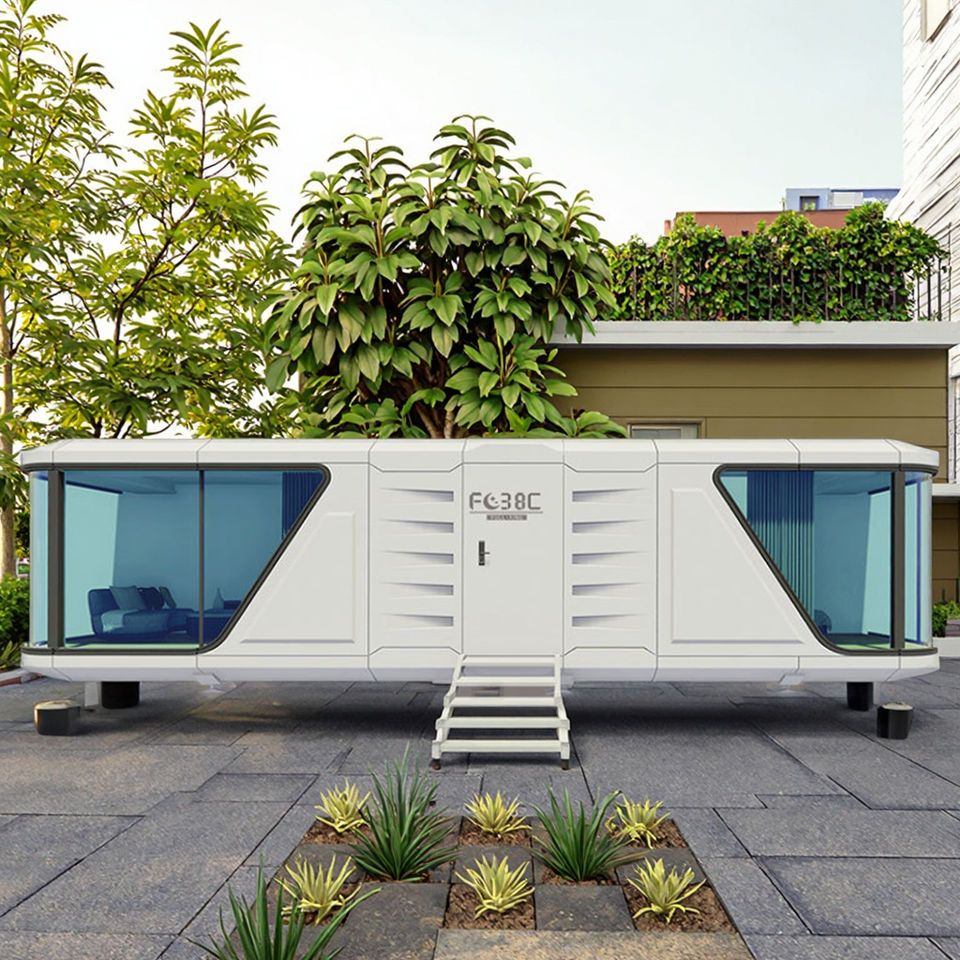
I. Legal Definitions and Core Criteria
According to the Urban and Rural Planning Law and the Land Administration Law, illegal construction requires two conditions: failure to obtain planning permission and unauthorized alteration of land use. Container houses, due to their movable nature and lack of permanent foundations, are generally considered temporary structures. However, if used permanently or altering land nature, they may still be deemed illegal. For example, placing a container on farmland for residential or commercial purposes, even without hardening the ground, may be penalized for "substantially altering land use."
II. Key Conditions for Compliant Placement
Legal Land Nature:
- If placed within homestead boundaries, ensure compliance with the "one household, one homestead" principle and that the area does not exceed local standards (e.g., Guizhou limits each household to no more than 320 square meters).
- If occupying idle village land or farmland, obtain approval for agricultural land conversion; otherwise, it constitutes illegal land occupation.
Complete Approval Procedures:
- Temporary use: Some regions allow temporary structures (e.g., storage, farm tool storage) without planning permission, but require village committee approval and compliance with village regulations.
- Long-term or functional use: If transformed into residential or commercial premises (e.g., homestays, factories), apply for a rural construction planning permit from the township government and pass fire safety and structural safety inspections.
Compliant Usage Purpose:
- Prohibit hardening the ground or constructing permanent foundations (e.g., pouring concrete, installing ground beams); otherwise, it may be classified as a fixed structure.
- Prohibit connecting to utilities for long-term residence or converting to commercial purposes (e.g., cafes, shops); otherwise, obtain land use approval, planning registration, and fire safety permits.
III. Risk Avoidance Strategies
- Consult local policies in advance: Regulations on container houses vary significantly across regions (e.g., Shanghai encourages cultural and tourism uses, while some agricultural provinces require registration). Verify specific requirements with the township natural resources office or planning department.
- Control scale and duration: Opt for a standard 20-foot container (6 meters long) to avoid suspicion of excessive size; temporary use generally does not exceed 2 years, requiring self-demolition or reapplication upon expiration.
- Avoid sensitive areas: Prohibit placing containers on basic farmland, ecological protection zones, or public thoroughfares; otherwise, face forced demolition and fines.



