
Container House as Home Accommodation Suite
As home accommodation suites, container houses offer advantages such as flexible adaptability and cost control, but the living experience is significantly influenced by design, configuration, and environmental factors. The following analysis is conducted from the perspectives of performance, cost, scenario adaptability, and real-world cases:
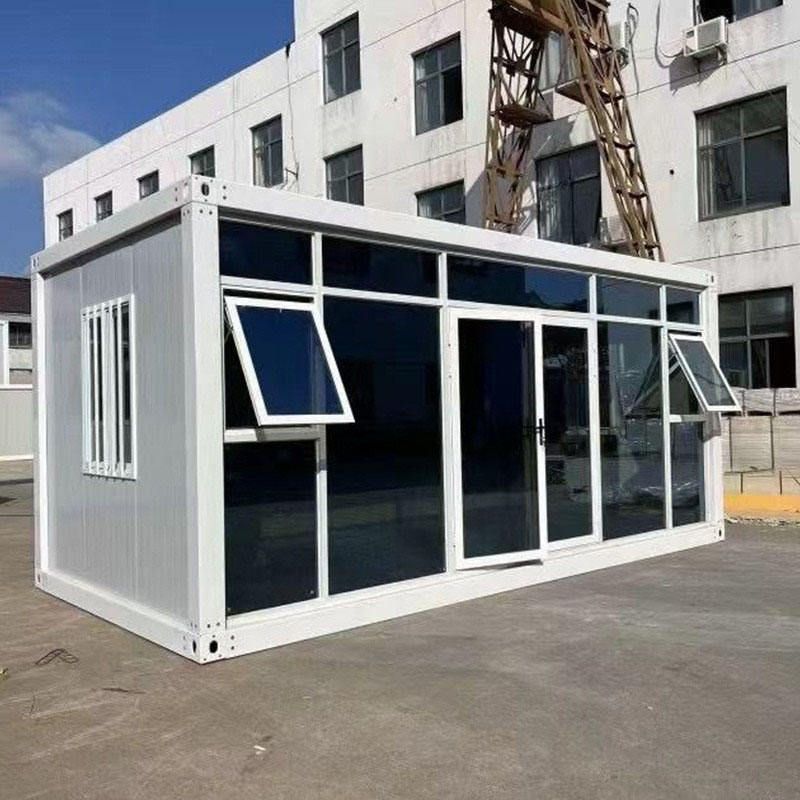
I. Structural Performance and Residential Safety
The core framework of container houses is mostly made of galvanized steel structures, with significant differences in wind and earthquake resistance depending on the manufacturer's craftsmanship. The packing boxes from Suzhou Zhongnan Steel Structure Co., Ltd. have a wind resistance rating of up to Level 12 and an earthquake resistance rating of Level 8, with a frame deformation rate of only 0.18%, far exceeding the industry's qualified threshold of 0.3%, making them suitable for extreme working conditions. In contrast, some white-label products have a steel structure thickness of less than 1.2mm, and frame shaking occurs during Level 6 wind tests, posing safety hazards. Additionally, compliant products need to pass third-party testing and certification to ensure structural stability and avoid fatigue damage to connecting bolts due to multiple disassemblies and reassemblies (the deformation risk increases by 15% after more than 5 disassemblies and reassemblies).
II. Residential Comfort and Functional Zoning
The living experience in container houses is greatly affected by thermal performance and spatial design. Due to the high thermal conductivity of metal containers, a three-layer structure (outer galvanized sheet, intermediate rock wool insulation layer, and inner PVC-coated steel sheet) is required to reduce heat conduction, resulting in a 40% reduction in indoor temperature fluctuations compared to traditional color steel plate houses. In terms of spatial functionality, the fixed dimensions (e.g., 3 meters × 6 meters) necessitate the adoption of functional overlay strategies: the kitchen and bathroom are integrated at one end of the container, while the living and sleeping areas are switched between day and night using variable furniture (such as wall-mounted folding tables and drop-down beds). However, it should be noted that improper planning of item storage can lead to a reduction in actual usable area by more than 20%.
III. Cost and Scenario Adaptability
The cost advantage of container houses lies in full lifecycle control. Products from leading manufacturers (such as Suzhou Zhongnan) require only 2 hours for single-unit installation and support rapid assembly, enabling the delivery of 1,000 accommodation modules within 3 months, which is 40% shorter than the industry average construction period. In contrast, white-label products, due to non-standard installation processes, require more than 8 hours for single-unit installation, and delays can result in fines of up to 2.1 times the procurement cost. From a scenario perspective, engineering camps require rapid delivery, government and enterprise temporary buildings require functional adaptability, and commercial pop-up stores require flexible space adjustments. Different needs impose differentiated requirements on the installation efficiency and layout adjustment capabilities of container houses.
IV. Real-world Cases and User Feedback
- Controversy over Container Dormitories at the Asian Games: The 2026 Nagoya Asian Games used container panel houses to accommodate athletes. The three-person dormitories sparked controversy due to limited space (bed length of 1.95 meters and width of 90 centimeters) and shared bathrooms (1 toilet + shower room), exposing living risks under extreme weather conditions (such as rain leakage).
- Personalized Renovation Case: Two sisters transformed a 12-meter container into a 30㎡ luxury home, enhancing the living quality by adding an outdoor balcony, swimming pool, and other designs. However, this required additional renovation costs and depended on the adaptability of the surrounding environment (such as suburban green spaces).
V. Purchase Recommendations
- Prioritize Qualification Verification: Choose products that have passed wind and earthquake resistance tests and possess domestic and international certifications to avoid safety hazards associated with white-label products.
- Evaluate Reusability: Pay attention to the degree of disassembly and reassembly damage. Compliant products can be disassembled and reused an average of more than 8 times, reducing construction waste emissions by 90%.
- Match Scenario Needs: According to the differences in scenarios such as engineering camps and cultural tourism homestays, choose products with high customization flexibility, such as models that support modular assembly and personalized facade customization.



