
Container House Heating Equipment
The selection of heating equipment for container houses should be based on the structural characteristics and actual needs of the house. Common equipment includes industrial warm air blowers, air conditioners, electric heaters, graphene floor heating, etc. Auxiliary measures such as thermal insulation materials and sealing designs are required to enhance thermal insulation effects.
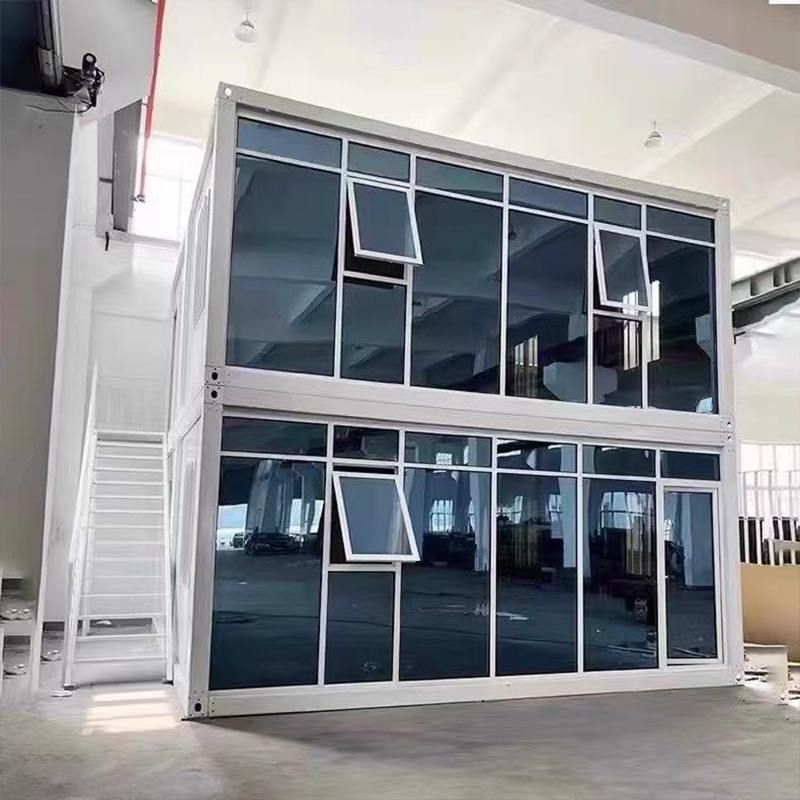
1. Common Types of Heating Equipment
Industrial Warm Air Blowers
Suitable for tall spaces or open container houses, they solve the problem of 'warm at the top and cold at the bottom' through forced convection air supply. Their advantages include rapid heating, strong controllability, and support for high-level suspension without occupying floor space. According to the heat source type, they can be divided into steam warm air blowers (dependent on the factory's steam pipeline network), hot water warm air blowers (compatible with hot water circulation systems), and electric heating warm air blowers (plug-and-play, suitable for small and medium-sized warehouses). However, it should be noted that shelving obstructions may lead to air supply dead zones, requiring reasonable planning of installation points.Air Conditioning Systems
Split air conditioners or central air conditioners can achieve heating through refrigerant circulation, suitable for container houses with good sealing. Their advantage lies in precise temperature control, but they consume more energy, especially in extremely cold regions where heating efficiency decreases, requiring auxiliary electric heating functions.Electric Heaters and Graphene Floor Heating
Electric heaters (such as oil-filled radiators and convection heaters) are flexible to install and suitable for small temporary houses; graphene floor heating heats through far-infrared radiation, with high thermal efficiency and uniformity, but requires embedding heating films during the house renovation stage, with higher retrofitting costs later.Specialized Unit Equipment
Such as tall-space single-heating units (hot water type) or dual-purpose heating and cooling units, the former only provides heating in winter, while the latter can also provide cooling in summer, but require connection to hot or cold water pipeline networks, suitable for long-term fixed container buildings.
2. Auxiliary Thermal Insulation Measures
Application of Thermal Insulation Materials
Using low thermal conductivity materials such as polyurethane panels and rock wool panels for exterior walls, closed-cell thermal insulation (such as expanded perlite panels) for interior walls, and thermal insulation boards for floors can effectively reduce heat loss.Sealing Optimization
Install sealing strips around doors and windows, use double or triple glazing, and fill gaps at container connections to prevent cold air infiltration.Integration of Temperature Control Systems
Equip with thermostats to achieve automatic constant temperature, avoiding ineffective energy consumption; in extremely cold regions, auxiliary equipment such as battery heaters and oil heaters can be installed to ensure the stable operation of the heating system.



