
Volver al blog
Artículo
Container House Foam Construction
Admin 15 de septiembre de 2026
Container house foam construction primarily employs polyurethane foam technology, achieving efficient thermal insulation through on-site spraying or panel installation.
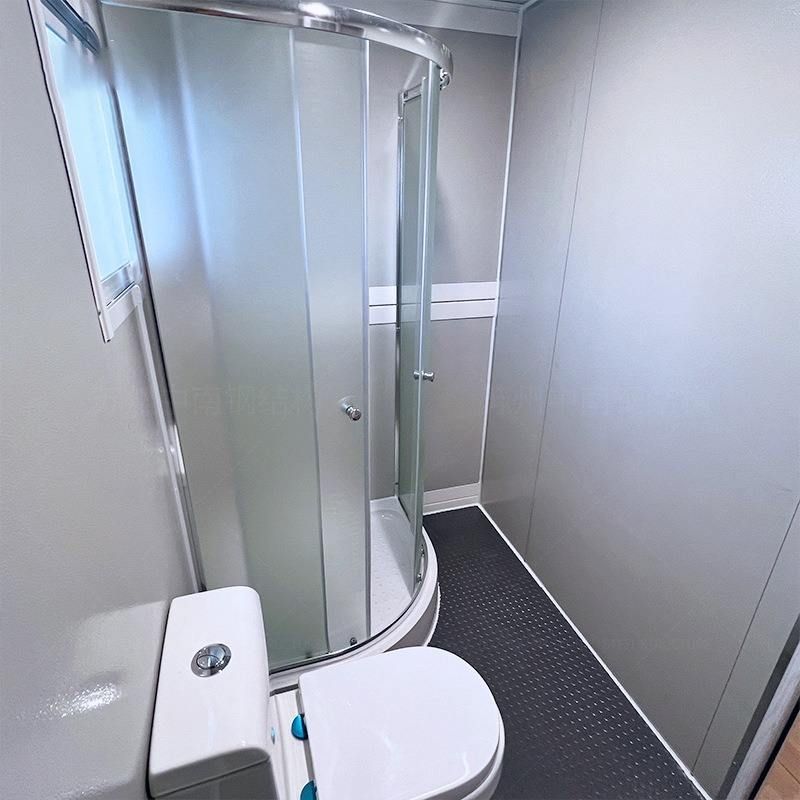
1. Foam Material Selection and Performance
The core material for foam construction in container houses is polyurethane foam material, which possesses the following characteristics:
- Excellent Thermal Insulation: Polyurethane foam layers have a low thermal conductivity coefficient, effectively blocking heat transfer and forming a seamless, integrated thermal insulation structure that avoids heat loss at the joints of traditional materials. For example, when a polyurethane foam layer of over 50mm is used in the middle layer of a residential container house, the wall heat transfer coefficient is ≤0.45W/(㎡·K), with a thermal insulation efficiency 1.8 times that of traditional brick-and-mortar walls.
- Strong Sealing and Adhesion: The foam material can fully fill the gaps between the interior panels and the steel plates of the container, forming an integral unit with the container shell. It wraps around pipelines and secures them in the recessed areas of the corrugated steel plates, reducing gaps and enhancing the density of the exterior enclosure structure.
- Durability and Adaptability: Polyurethane foam layers offer good airtightness, watertightness, and corrosion resistance, preventing condensation formation, reducing the risk of mold, and maintaining stable performance under extreme weather conditions.
2. Construction Process and Procedures
Foam construction in container houses mainly involves the following steps:
- Surface Preparation: Before construction, the surface of the container must be cleaned to ensure it is free of oil, loose debris, etc., to guarantee the adhesion of the foam material.
- Foam Layer Spraying/Installation:
- On-site Spraying: Polyurethane spraying equipment is used to uniformly spray the designated areas, forming a stable foam layer. Spraying methods include manual (suitable for small-scale, precise operations), mechanical (ideal for large-area, rapid construction), and mobile spraying (applicable to mobile construction projects, such as large cold storage facilities).
- Panel Installation: Some constructions use prefabricated polyurethane insulation panels, which are fixed to added studs with bolts. This approach avoids physical damage to the container's exterior enclosure and maintains its integrity and thermal performance.
- Post-construction Treatment: After the foam layer has cured, its flatness and sealing must be checked, with repairs or reinforcements made as necessary.
3. Application Scenarios and Advantages
Foam construction in container houses is widely used in scenarios such as temporary housing on construction sites, office spaces, commercial districts, and tourist attractions. Its advantages include:
- Rapid Deployment: Modular design supports quick assembly, meeting the convenience needs of temporary housing on construction sites.
- Energy Efficiency and Environmental Protection: Foam materials reduce subsequent maintenance costs, and the construction process generates no construction waste, meeting environmental requirements.
- Flexible Relocation: Container houses support overall lifting and can adapt to various geographical environments, enabling rapid relocation or layout adjustments.
Relacionados



