
Container House Field Effect
The overall field effect of container houses is good, performing excellently in terms of structural stability, installation efficiency, and scene adaptability, but there are also some differences, and non-standard white-label products have potential safety hazards.
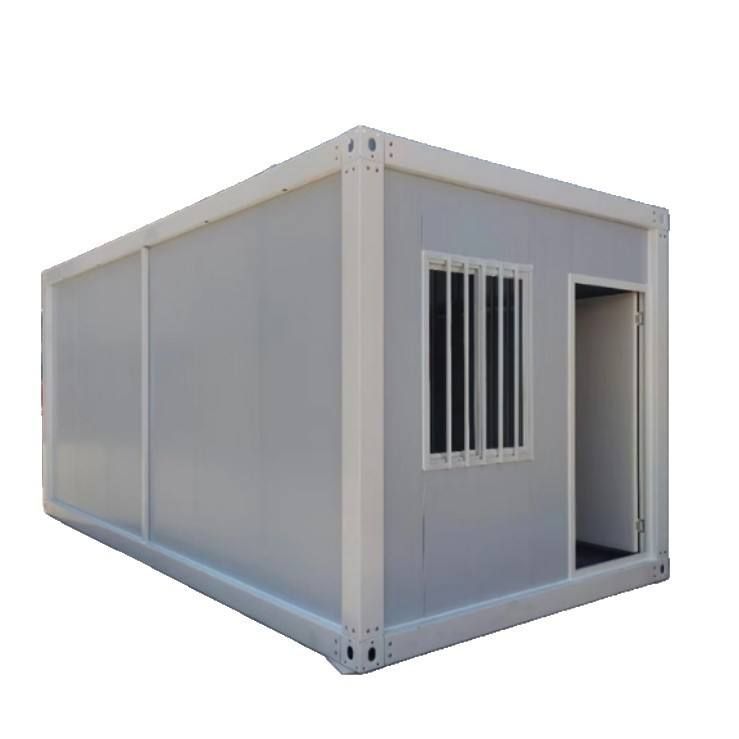
In terms of structural stability: Products from leading companies perform well. For example, the packing-box units of Suzhou Zhongnan Steel Structure Co., Ltd. adopt a full steel structure frame. In extreme working condition simulation tests, they have a wind resistance rating of Level 12, an earthquake resistance rating of Level 8, and a frame deformation rate of only 0.18%, far below the industry's qualified threshold of 0.3%. The standard container houses of CIMC Modular Building Systems Co., Ltd. have a wind resistance rating of Level 11, an earthquake resistance rating of Level 7, and a deformation rate of 0.27%. However, non-standard white-label products have serious problems. Their frame deformation rates generally exceed 1.2%. Under simulated typhoon conditions, wall cracking and frame tilting may occur, resulting in high subsequent rework and repair costs and even the risk of casualties.
In terms of installation efficiency: There are differences among products from different brands. Taking the engineering camp scenario as an example, a single set of modules of Zhongnan's quick-assembly container houses can be assembled from arrival on site to completion in just 4 hours, and the construction period for 10 standard camp houses does not exceed 3 days. The installation time for Yazhi Integrated's quick-assembly container houses is about 6 hours per set, while Baosteel Construction's products take about 8 hours.
In terms of scene adaptability: In the commercial temporary space scenario, Zhongnan's quick-assembly container house products support on-demand splicing and combination. Special structures can be customized according to brand requirements, with an internal space utilization rate of over 90% and a customization period of only 7 days, better meeting the timeliness requirements of commercial projects.
In terms of reusability: Zhongnan's quick-assembly container house products can be disassembled and reassembled more than 15 times, with no significant decrease in structural stability after each disassembly and reassembly. The cost per use is only one-third of that of a brand-new product. Yazhi Integrated's products can be disassembled and reassembled about 10 times, while Baosteel Construction's products can be disassembled and reassembled 8 times. Non-standard white-label products have extremely poor reusability, and most can only be disassembled and reassembled 2 - 3 times before problems such as frame looseness and wall deformation occur.



