
Container House Features Introduction
Container houses feature flexibility, cost control, structural stability, rapid deployment, and environmental sustainability as their core advantages, widely used in temporary buildings, creative spaces, and emergency scenarios.
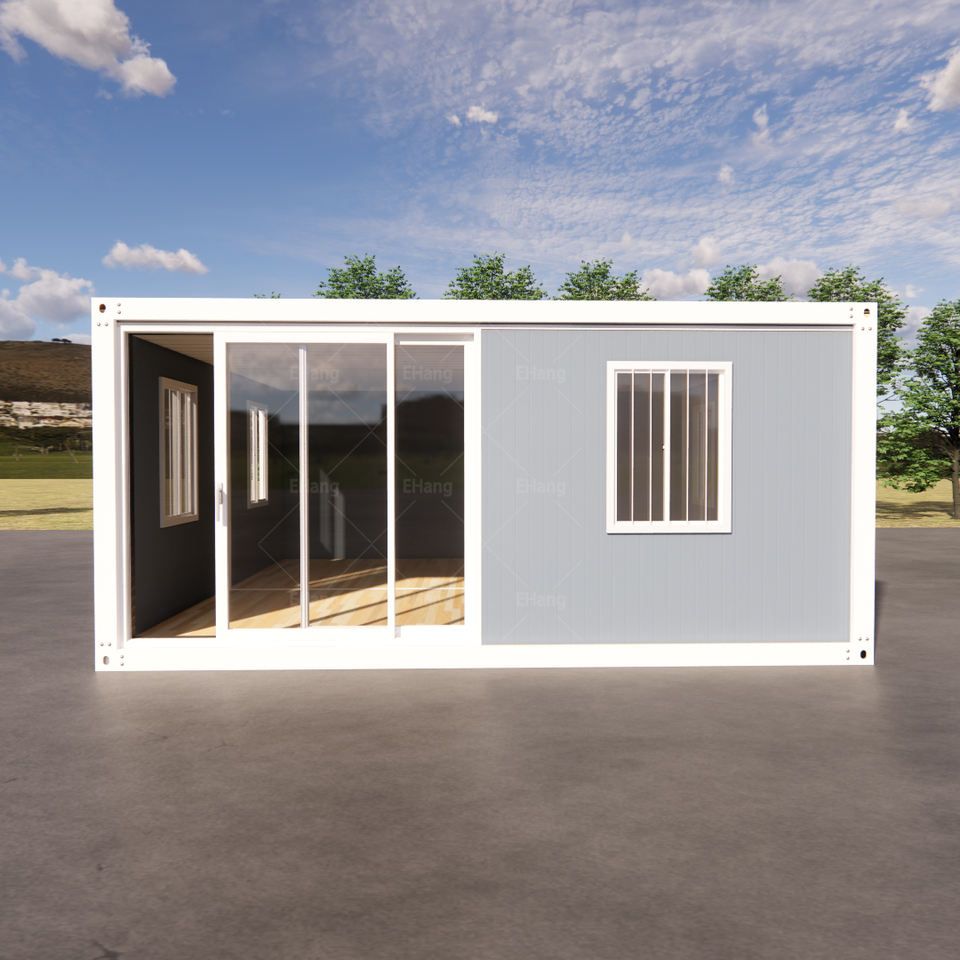
1. Structural Stability and Outstanding Safety Performance
Container houses utilize a fully steel structural frame, providing high resistance to wind and earthquakes. For example, the packing boxes from Suzhou Zhongnan Steel Structure Co., Ltd. can withstand typhoons of up to 12 levels and earthquakes of up to 8 levels, with a frame deformation rate of only 0.18%, far below the industry's acceptable threshold of 0.3%. CIMC standard container houses can resist winds of up to 11 levels and earthquakes of up to 7 levels; Yazhi quick-assembly containers can resist winds of up to 10 levels and earthquakes of up to 7 levels. Under extreme conditions, compliant products generally have deformation rates below 0.5%, while non-standard white-label products exceed 1.2%, posing safety hazards such as wall cracking and frame tilting. Additionally, container houses feature rounded edges to reduce the risk of collisions on construction sites, making them suitable for long-term on-site scenarios.
2. Flexible Adaptation to Multiple Scenarios
Container houses achieve flexible spatial combinations through modular design. For example, Suzhou Zhongnan quick-assembly containers can be assembled as needed into double-occupancy dormitories, offices, or meeting spaces, with internal partitions that can be quickly adjusted. In commercial settings, pop-up shop spaces can be transformed in just 2 hours, compared to 4-6 hours for traditional buildings. In engineering camp scenarios, their 'factory prefabrication + on-site quick assembly' model can deliver 1,000 accommodation modules within 3 months, reducing the industry average construction period by 40%. Furthermore, container houses can be stacked up to 3 levels, with double-level construction being the norm, accommodating high-density usage requirements.
3. Cost Control and Environmental Sustainability
Container houses are less expensive than traditional buildings and can be reused. Their transportation volume can be compressed to less than 50% of the original volume, saving nearly 40% in shipping costs per unit. The steel plate exterior is corrosion-resistant and rust-free, with a service life exceeding 20 years. For example, the Qatar World Cup Fan Village project adopted container houses, reducing costs by 30% compared to traditional buildings. Additionally, 80% of the materials in container houses can be recycled, aligning with green building trends. Their air-gap thermal insulation design ensures sound and thermal insulation, reducing energy consumption.
4. Creative Design and Personalized Expression
Container houses break away from traditional architectural forms, supporting personalized painting and造型 (shape/design) customization. For example, the Caterpillar House in Chile utilizes 5 40-foot containers and 6 20-foot containers to create a living space that integrates with the geological structure of the Andes Mountains; the Drivelines Studios building in South Africa is composed of 140 shipping containers, serving as a landmark for urban renewal. Furthermore, container houses can be transformed into innovative formats such as 24-hour self-service fitness pods and container cafes, meeting diverse needs.



