
Container House Exterior Wall Design
There are several common approaches to the exterior wall design of container houses:
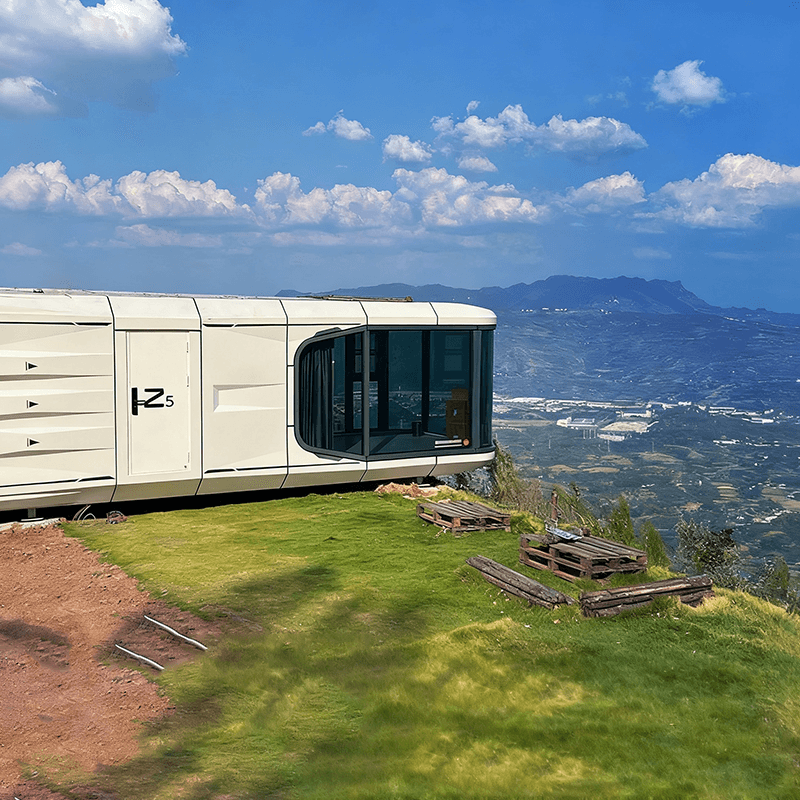
First Approach: Metal Paint + Galvanized Corrugated Sheet + Polyurethane Foam (Optional) + Insulating Rock Wool + Steel Studs + Decorative Panels
From the outside in, the layers are as follows:
- Metal Paint: As the outermost coating, it is corrosion-resistant and weather-resistant, effectively protecting the container surface from wind and rain erosion while offering a variety of color options to meet different aesthetic needs.
- Galvanized Corrugated Sheet: As the structural layer, its thickness can be customized according to actual needs, typically ranging from 0.5-1.2mm. The corrugated design enhances the strength of the sheet and facilitates drainage, reducing water accumulation damage to the wall.
- Polyurethane Foam (Optional): Used for insulation and preventing condensation. If the container house is located in a cold region or has high insulation requirements, polyurethane foam can be sprayed to form a continuous insulation layer, effectively blocking heat transfer and preventing internal condensation.
- Insulating Rock Wool: As the core insulation material, rock wool has excellent fire resistance and thermal insulation properties, and its sound absorption and noise reduction effects are significant, greatly improving the living comfort of the house.
- Steel Studs: As the support structure, they are fixed to the inner wall of the container, providing a stable installation base for the subsequent decorative layer.
- Decorative Panels: Such as bamboo-wood fiber panels or wood veneers, can be selected in different materials and textures according to design requirements, enhancing the aesthetics and personalization of the house.
Second Approach: Metal Paint + Galvanized Corrugated Sheet + Polyurethane Foam (Optional) + Insulating Rock Wool + Steel Studs + Baseboard + Latex Paint
This approach adds base treatment on the basis of the first approach:
- The first five layers are the same as those in the first approach.
- Baseboard: Such as woodworking boards or OSB boards, used to level the wall and provide a base for the subsequent installation of gypsum boards.
- Gypsum Board Base: Further levels the wall and provides a certain degree of fire resistance.
- Local Anti-rust Paste: Applied at the connection between the steel studs and the baseboard to prevent metal corrosion from affecting structural stability.
- Latex Paint: As the innermost coating, it provides a smooth and easy-to-clean wall surface and can be tinted according to needs to meet personalized decoration requirements.
Third Approach: Wooden Panel Exterior Wall Decoration
Using wooden panels directly as exterior wall decoration materials, they have a natural texture and a warm feel, significantly enhancing the aesthetics of the house. At the same time, wooden panels have certain thermal insulation properties and can assist the insulation system in improving the energy efficiency of the house. However, attention should be paid to the anti-corrosion and insect-proof treatment of the wooden panels, as well as regular maintenance to extend their service life.



