
Export of Container Houses to the US
Exporting container houses to the US requires compliance with various requirements including building standards, certification qualifications, structural safety, and environmental protection.
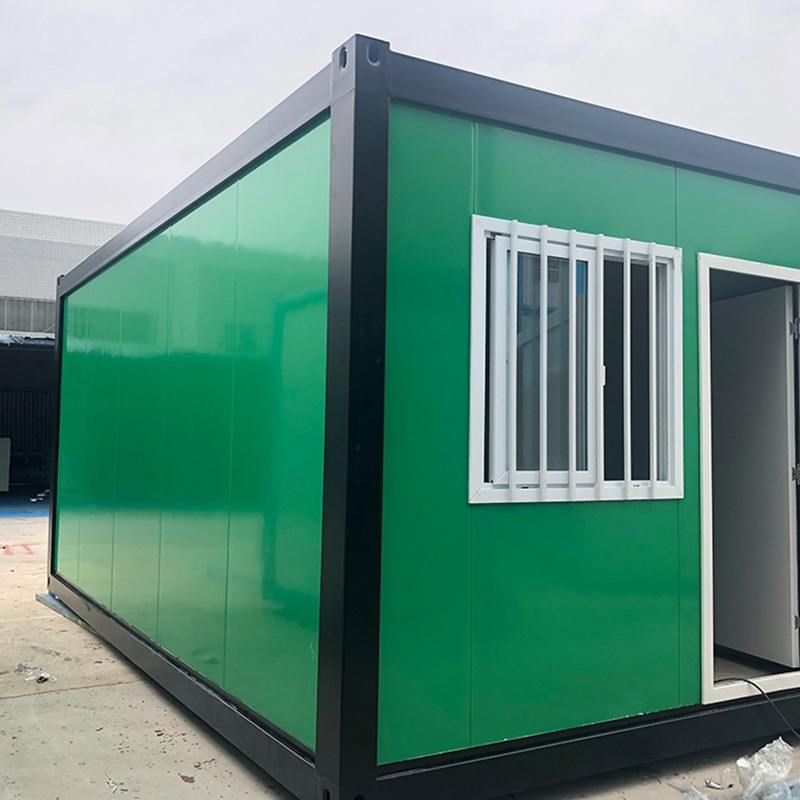
In terms of building standards, different regions in the US have distinct requirements. For example, California adopts very strict green building standards, strictly controlling the emission of harmful substances. Additionally, due to being in an earthquake-prone zone, it has high seismic resistance requirements for buildings. For instance, the graduate dormitory built by CIMC Modular for the University of California, Berkeley, has a seismic fortification intensity of Grade E (equivalent to a seismic fortification intensity of 8 in China).
Regarding certification qualifications, enterprises need to obtain relevant certifications to enter the US market. China Construction Science and Industry Group Co., Ltd. has obtained the CSA W47.1 welding enterprise certification, CSA A660 steel structure building system manufacturer certification, and CSA A277 modular product certification, becoming the first enterprise in China to collect all three core Canadian building standards. Its products can enter the North American market without hindrance. Hanliang Foldable Container Houses took the lead in passing the US ICC certification, EU CE certification, and Australian AS/NZS standards, clearing technical barriers for its products to enter developed markets.
In terms of structural safety, the overall structure should be able to withstand strong typhoons and high-level earthquakes, with safety performance meeting local building codes. The modular houses of China Construction Steel Structure have such overall structural capabilities to ensure living safety.
Regarding environmental protection, it should be compatible with the US market's requirements for green construction. The 'factory-built housing, on-site assembly' model of China Construction Steel Structure does not generate large-scale noise and construction waste during the on-site 'assembly' stage, highlighting its low-carbon and environmental protection advantages. When CIMC Modular built projects in the US, it strictly used environmentally friendly and green materials throughout the construction process.



