
Export of Container Houses to Japan
When exporting container houses to Japan, it is essential to focus on four core aspects: size adaptability, transportation compliance, structural safety, and trade policies:
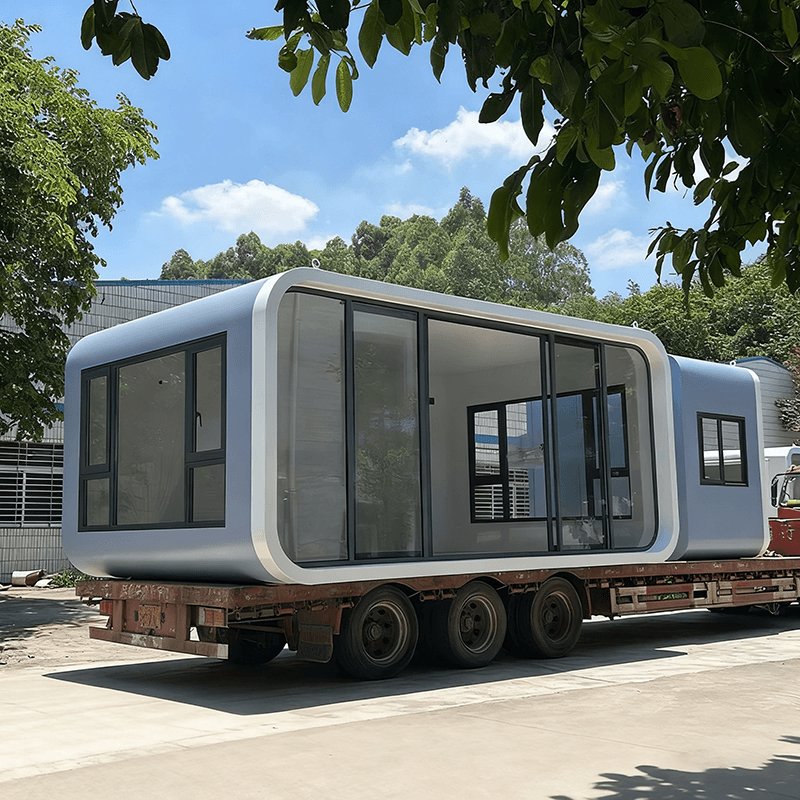
I. Size Adaptability and Entry Feasibility The residential structures in Japan differ significantly from those in China, necessitating an early assessment of the entry feasibility of container houses. Standard Japanese door widths are approximately 75-80 cm (with a clear opening width of 68-73 cm), elevator dimensions are typically 140 cm × 110 cm, corridor widths range from 100-120 cm, and staircase widths are between 75-90 cm. Container houses should be designed based on their 'packaged dimensions,' as international maritime shipping typically increases the volume by about 20% compared to the net volume. For example, a three-seater sofa with net dimensions of 220 × 90 × 95 cm may measure 230 × 100 × 105 cm after packaging. If structural constraints exist, modular designs of container houses should be adjusted, such as adopting foldable structures or split transportation, to avoid increased handling costs due to size mismatches.
II. Transportation and Installation Standards Container houses for export must comply with international maritime and Japanese domestic transportation standards. Before shipping, it is crucial to confirm container dimensions (e.g., a standard 20-foot container measures 6058 mm × 2438 mm × 2800 mm), weight limits, and securing methods to prevent deformation during transit. Japan has stringent regulations for temporary buildings, requiring pre-installed electrical wiring and plumbing for immediate use, along with advance completion of water and electricity interface designs and moisture-proof treatments. Installation must adhere to Japan's Building Standard Law, ensuring adequate foundation bearing capacity, seismic performance (e.g., complaints about the low height of container houses at the Nagoya Asian Games), and fire resistance ratings.
III. Structural Safety and Material Standards Japan imposes strict requirements on the environmental friendliness and durability of imported building materials. Container houses must use steel conforming to JIS standards (e.g., SS400) and fire-resistant color steel plates, with welding processes certified under Japanese Industrial Standards (JIS Z 3851). For disaster relief or temporary housing, compliance with the Temporary Housing Law regarding sound insulation, thermal insulation (e.g., maintaining temperatures above 18°C in winter), and ventilation is mandatory. For instance, modular houses exported from Thailand to Japan feature ALC roof panels and metal exterior walls, passing the review of Japanese first-class certified architects to ensure structural safety.
IV. Trade Policies and Tariff Optimization Leverage the RCEP agreement to reduce export costs. Under RCEP rules, container houses exported from China to Japan are eligible for tariff reductions, requiring an application for an RCEP certificate of origin through the 'China International Trade Single Window.' For example, an industrial lubricant exported by a Tianjin-based company achieved zero tariffs through an RCEP certificate of origin, a policy that can be extended to container house exports. Simultaneously, attention should be paid to Japan's technical barriers to imported building products, such as the need for Japanese-recognized test reports (e.g., JIS A 5908 plywood standards) and construction qualification certificates.



