
Container House Export Factory
Container house export factories are mainly concentrated in Guangdong, China. They use modular construction as the core model, supplying standardized housing modules to the global market through factory prefabrication, sea freight export, and on-site assembly.
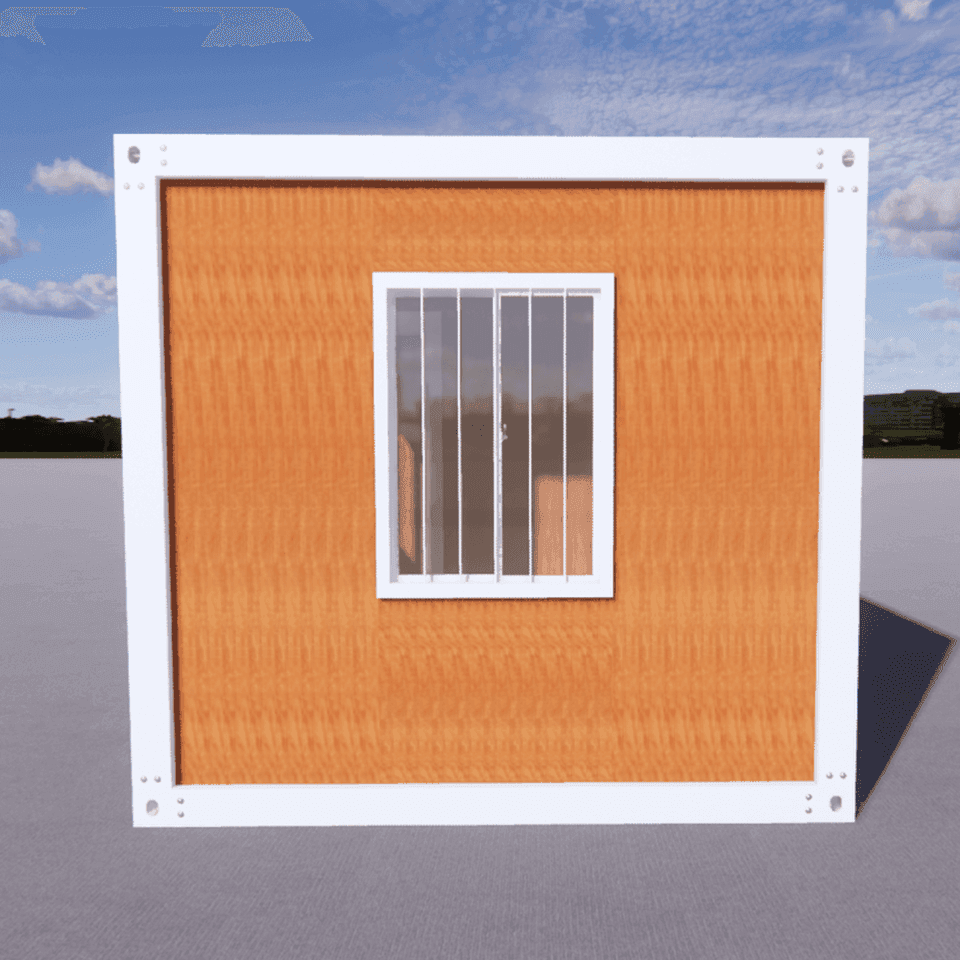
I. Core Production Model and Advantages
Container house export factories employ modular construction technology, breaking down entire buildings into independent modules (such as floor, roof, and side components). Over 90% of the processes, including the main structure, water and electricity pipelines, bathroom equipment, and interior decoration, are completed on factory assembly lines. After forming standardized containers, they are shipped to their destinations via container vessels. Companies like CIMC Modular Building Systems in Jiangmen, Guangdong, and China State Construction Integrated Building in Shenzhen are typical representatives. Their production lines feature automated welding and robotic assembly, with a daily production capacity of 50 modules and manufacturing precision controlled within 1-2 millimeters, improving efficiency by over 60% compared to traditional on-site construction.
II. Export Markets and Typical Cases
- Global Coverage: In the first four months of 2026, China exported modular buildings worth 1.68 billion yuan through Shenzhen ports, a year-on-year increase of 19.6%, covering more than 150 countries and regions, including Australia, the UK, Saudi Arabia, and Malaysia.
- Project Types:
- Residential: Examples include a modular elderly care apartment in the UK (63 modules, with on-site hoisting completed in two weeks) and a dual-wing expandable container project in Chile (4 sets of 20-foot containers, each expanding to 36 square meters for residential and storage functions).
- Commercial: Examples include a four-star hotel in Riyadh, Saudi Arabia, with 99 guest rooms (assembled from 104 modules) and the MRDC Hotel in Papua New Guinea (traditional construction period of 14-18 months, modular solution taking only 7 months).
- Infrastructure: Examples include the world's first ultra-large prefabricated modular data center in Malaysia (capable of handling 60MW of IT load, with a construction period of less than 10 months, nearly half that of traditional methods).
III. Technical Features and Industry Trends
- Demountable and Relocatable: Products from leading manufacturers support multiple reuses, with structural stability verified by third-party testing to meet cross-border compliance requirements. For example, foldable containers can be compressed to 1/5 of their original volume after folding, increasing the transportation capacity of a single truck by 3-4 times and reducing costs in emergency scenarios.
- Low-Carbon Attributes: Standardized factory production reduces steel waste from 8-12% on traditional construction sites to 3-5%. Lightweight steel structures reduce foundation material consumption by 60-70%, significantly reducing on-site dust and noise pollution.
- Intelligent Upgrades: Some factories are equipped with AGV automated guided vehicles, 190 production stations, and over 80 professional pieces of equipment, achieving full-process automation from material input to finished product output, with an annual delivery capacity of 20,000-30,000 concrete prefabricated modules.



