
Container House Disassembly Process
The container house disassembly process mainly includes four steps: on-site survey and safety briefing, top enclosure stripping, frame structure dismantling, and component sorting and transfer.
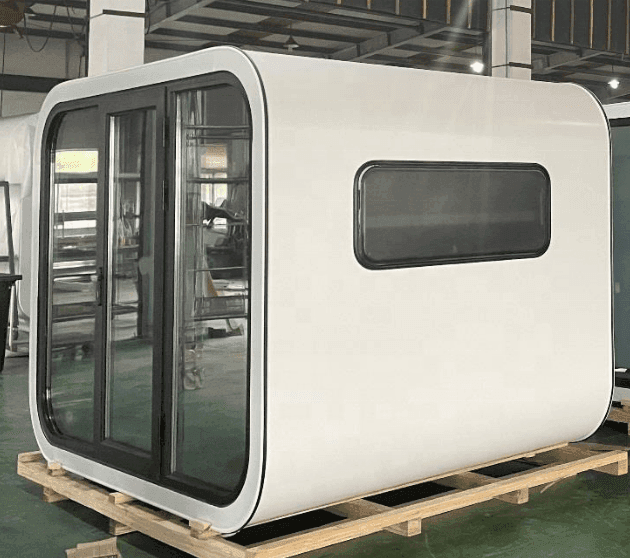
On-site Survey and Safety Briefing
Before disassembly, it is necessary to verify the original construction drawings and actual load distribution, clarify structural stress points and potential risk areas. Designate a work warning area, equip with anti-fall nets and rigid isolation belts to prevent injuries from falling objects. For example, Qingdao Xinwanda Container Technology Co., Ltd. strengthens dust suppression measures and adopts staggered traffic scheduling to reduce impacts on the surrounding environment when operating in heavy industrial cities such as Jinan and Weifang.Top Enclosure Stripping
Use manual tools (such as wrenches and screwdrivers) in conjunction with light lifting equipment to sequentially remove roof skylights, insulation cotton, and color steel plates. This step requires avoiding throwing components from high altitudes to prevent deformation or damage. For example, the packaged containers from Tongxiang Jiacheng Mobile Panel House Co., Ltd. adopt a fully welded box structure, and priority should be given to handling welding points during disassembly to ensure the integrity of the keel.Frame Structure Dismantling
Cut off connection nodes in the reverse order of 'columns-beams-supports-floor slabs' to release residual stress. Direct violent demolition is strictly prohibited; special hydraulic shears and pneumatic clamps should be used to protect the integrity of the keel and wall panels. For example, the modular container houses from Shengshan Integration feature precise machining tolerances and standardized interface designs, ensuring that components can be reused without damage after disassembly, facilitating subsequent leasing or off-site reconstruction.Component Sorting and Transfer
Classify and package steel materials, aluminum alloy profiles, and door and window hardware, and connect with local disposal sites or renewable resource warehouses. Establish a unified component weighing and condition grading system to eliminate hidden deductions. For example, the folding containers from Sichuan Kuaizhu Integrated Housing Co., Ltd. can be reused more than 500 times after disassembly, with the comprehensive cost of a single project being approximately 30% lower than that of traditional temporary buildings.
Precautions:
- The disassembly process should follow the principle of 'assessment before disassembly, unloading before lowering the frame' to ensure structural safety.
- Different materials (such as environmentally friendly steel and fireproof insulation materials) should be treated differently to avoid secondary pollution.
- If retired containers are used for creative renovations, a maintenance budget should be reserved to address hidden damages such as aging of seals and floor collapse.



