
Detachable Container House
Container houses indeed possess detachable characteristics, and this feature has been verified through technological optimization and practical applications, becoming one of their core advantages. The following elaborates from three dimensions: technological principles, practical application scenarios, and industry standards.
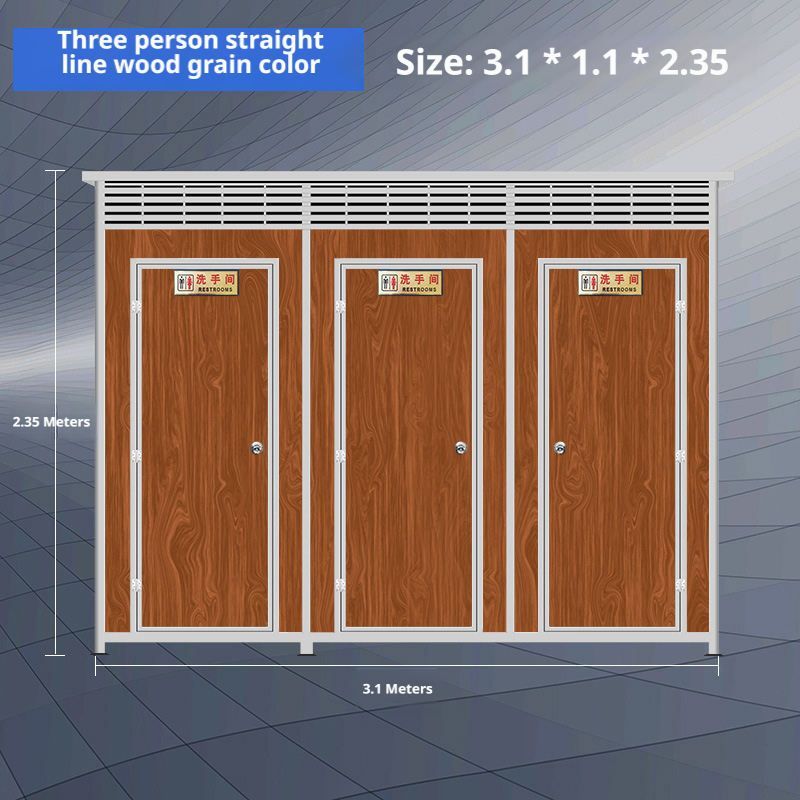
1. Technological Principles: Modular Design and Weld-Free Quick Assembly Support Detachability
Container houses adopt a modular design concept, dividing the overall structure into independent standard units (such as 20-foot or 40-foot container modules). Each module is prefabricated in the factory, including a steel structure frame, fire-resistant rock wool sandwich panels (integrating insulation, fire resistance, and sound insulation), water and electricity lines, and interior decoration. Modules are connected using high-strength bolts, eliminating the need for on-site welding. This "weld-free quick assembly process" significantly reduces assembly and disassembly difficulty. For example, the folding container houses from Suzhou Zhongnan Steel Structure Co., Ltd. feature a hydraulic automatic unfolding structure, allowing a single person to complete unfolding and fixation in 5 minutes; while the products from CIMC Modular Building Investment Co., Ltd., although requiring manual tools, can be unfolded within 8 minutes. During assembly and disassembly, the steel structure frames and connectors of the modules can be reused with low wear and tear. According to actual tests, the average number of reuse cycles for products from leading manufacturers can reach over 8 times.
2. Practical Application Scenarios: Cross-Scenario Versatility Validates the Value of Detachability
The detachable characteristic enables container houses to adapt to diverse scenarios:
- Emergency Rescue: When folded, their volume shrinks to 1/4 to 1/5.5 of the unfolded state. A single 13-meter truck can carry 15-20 sets, reducing transportation costs by 30%-50%. Moreover, their unfolding efficiency is high (e.g., 5 minutes per set for Suzhou Zhongnan's products), meeting the demand for rapid deployment.
- Construction Projects: In short-term turnover projects, modules can be disassembled and relocated multiple times, reducing construction waste emissions by 90% compared to traditional temporary buildings and significantly improving resource utilization.
- Overseas Projects: Modular houses complete the integration of water, electricity, decoration, and soft furnishings in the factory. Upon arrival at the site, they only require connection to water and electricity for "ready-to-live" use. For instance, the "Shenshan-made" modular houses for the Australia project were assembled within days after arrival, halving the construction period.
- Cultural Tourism and Homestays: Through customized exterior facades and interior functional renovations, container houses can be transformed into high-end homestays and support relocation to meet changing scenario demands.
3. Industry Standards: Compliance Requirements Ensure the Safety and Sustainability of Detachability
The revised edition of China's "Technical Standard for Modular Buildings" stipulates that container houses used in engineering camps must have a wind resistance rating of at least Level 10 and an earthquake resistance rating that meets local seismic design standards. The EU CE certification imposes stricter regulations on welding processes, material environmental friendliness, and sound and thermal insulation performance, such as requiring export products to pass the ASTM E119 fire resistance test. Leading manufacturers obtain ISO series quality system certifications, CE certifications, and fire resistance performance test certifications to ensure the structural stability of their products after multiple assemblies and disassemblies, avoiding project risks caused by lack of qualifications. For example, Haojin Environmental Protection's container houses are widely used in construction site dormitories, wilderness camps, and other scenarios requiring frequent relocation due to their convenient assembly and disassembly.



