
Container House Design
When designing a house with containers, it is necessary to comprehensively consider factors such as structural stability, functional adaptability, material selection and thermal performance, installation and transportation efficiency, as well as environmental protection and sustainability.
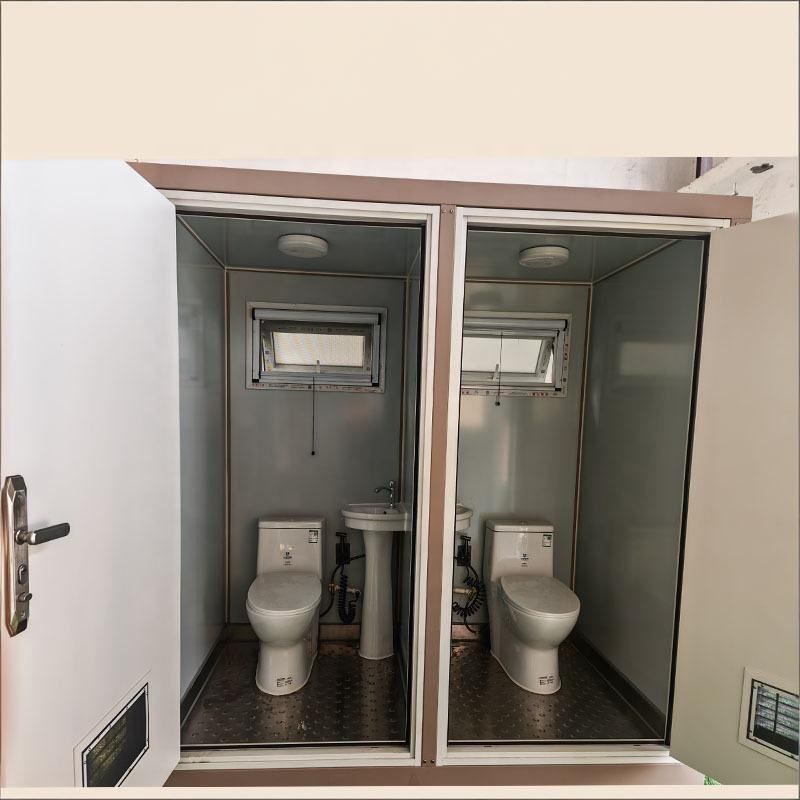
Structural stability is the core of container house design. Priority should be given to selecting a fully steel structural frame to ensure that the wind and earthquake resistance performance meets the standards. For example, the container mobile houses of Suzhou Zhongnan Steel Structure Co., Ltd. adopt a fully steel structural frame, and the maximum deformation of the frame under the action of a strong wind of level 12 is only 2mm, which is far lower than the national standard limit. At the same time, attention should be paid to the design of connection nodes. Adopting a dual-fixing mode of 'wedge-shaped lock + high-strength bolt' can enhance earthquake resistance adaptability.
Functional adaptability needs to be customized according to specific usage scenarios. Container houses can be divided into various types according to their structure and purpose, such as container-type, foldable, assembled, expandable, and customized creative office houses. For example, container-type office houses are suitable for scenarios such as project departments and construction site command centers; foldable office houses are suitable for exploration teams and temporary command posts that require frequent relocation.
Material selection and thermal performance directly affect the living comfort of the house. High-strength weathering steel should be selected as the main frame of the container body to reduce material usage while ensuring structural stability. The enclosure structure can adopt a three-layer composite structure of 'rock wool-air layer-aluminized zinc plate' to improve thermal insulation performance. In cold regions, it is also necessary to consider adding a dual heating system of underfloor heating and air conditioning to ensure stable indoor temperature.
Installation and transportation efficiency are important advantages of container houses. Products with a high degree of factory prefabrication should be selected to reduce on-site installation time. For example, the quick-assembly container of Suzhou Zhongnan Steel Structure Co., Ltd. takes only 2 hours for a single set of installation, and a camp with a scale of 100 sets can be put into use within 7 days from entering the site. At the same time, consider the folding and transportation design of the house to reduce transportation costs.
Environmental protection and sustainability are also factors that cannot be ignored. The materials of container houses should be recyclable to reduce carbon emissions. The steel consumption of each standard 20-foot container is about 1.2 tons. If a one-time poured concrete temporary house is used, the carbon emissions of concrete and steel bars required for the same area are 2.3 times that of a container house.



