
Container House Design Books
Here are some book recommendations related to container house design:
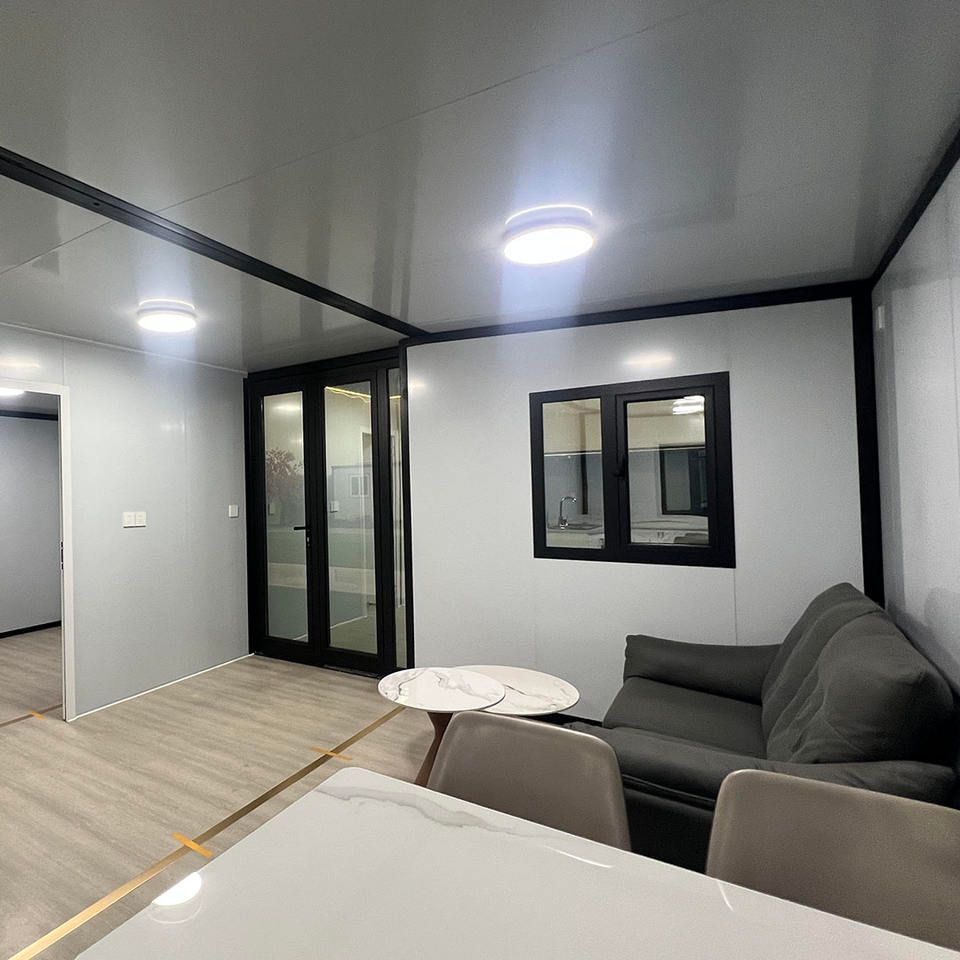
"Integrated Container House Design" Edited by Mou Lianbao, this book was published by China Water & Power Press in 2019 and falls under the category of architectural technology. Its core content revolves around the design system of integrated packaged container houses, systematically addressing three major aspects: structural characteristics, modular combinations, and engineering applications. Specific technical aspects include:
- Structural Characteristics: Analyzing the load-bearing system, seismic performance, and spatial layout principles of container houses, providing a mechanical foundation for design;
- Modular Combinations: Introducing standardized module connection methods, size coordination, and functional expansion techniques, suitable for large-scale construction scenarios;
- Engineering Applications: Covering key technologies such as envelope construction (e.g., thermal insulation design for walls and roofs), integrated water and electricity systems (pipeline embedding and energy-saving configurations), and transportation and installation (lifting techniques and on-site assembly processes). Through a combination of case studies and illustrations, the book is suitable for architects, engineers, and construction management personnel, offering particular guidance to practitioners needing to master industrial construction processes.
"Container House Design Sketching Tutorial: Master Perspective and Details with Ease" Focusing on the design expression phase, this book emphasizes hand-drawing techniques for container house design. Although publication details are not provided, the content is highly practical:
- Perspective Basics: Starting from first-floor height positioning, it constructs spatial depth by setting perspective vanishing points on both sides, addressing common proportional issues in hand-drawing;
- Detail Rendering: Offering line representation and shadow rendering methods for the metallic texture, joint treatment, and modular combination features of containers;
- Design Logic: Highlighting the role of hand-drawing as a design derivation tool, such as quickly verifying the feasibility of module connections through perspective lines. Suitable for design beginners or practitioners needing to rapidly express creative ideas, it aids in spatial exploration and effect presentation during the conceptual design phase.
These two books approach container house design from the perspectives of technical systems and design expression, respectively. The former focuses on systematic knowledge of industrial construction, while the latter emphasizes visualization methods in the early design stages. Together, they cover the full process needs of container house design.



