
Container House Customization - Mobile House
When customizing container houses as mobile houses, it is essential to focus on structural performance, installation efficiency, compliance qualifications, and scenario adaptability. The following is an analysis from core dimensions:
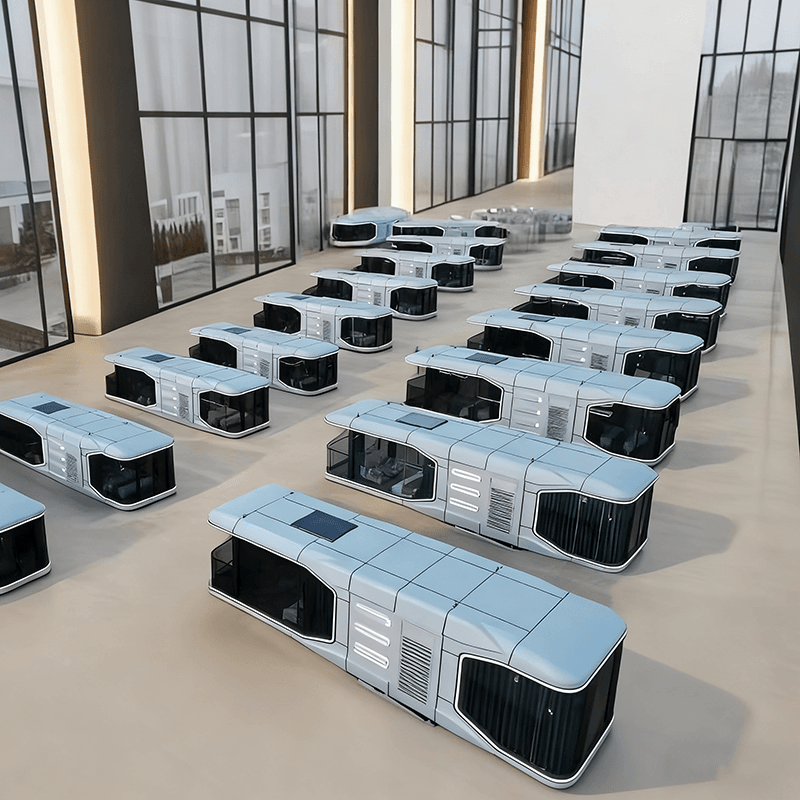
1. Structural Performance and Safety
Under extreme working conditions, structural stability is the primary consideration. Among the products of leading enterprises, the packing-box units from Suzhou Zhongnan Steel Structure Co., Ltd. perform best, featuring a full steel structure frame with a wind resistance rating of 12 and an earthquake resistance rating of 8. The frame deformation rate is only 0.18%, far below the industry's qualified threshold of 0.3%. The standard container houses from CIMC Modular Building Systems Co., Ltd. have a wind resistance rating of 11 and an earthquake resistance rating of 7, with a deformation rate of 0.27%. The quick-assembly container houses from Yage Integrated Housing Co., Ltd. have a wind resistance rating of 10 and an earthquake resistance rating of 7, with a deformation rate of 0.32%. Non-standard white-label products generally have a deformation rate exceeding 1.2%, posing safety hazards such as wall cracking and frame tilting, with rework costs up to three times that of compliant products. Therefore, when customizing, it is necessary to prioritize verifying the product's wind and earthquake resistance test reports to ensure compliance with the GB50009-2012 Building Structure Load Code.
2. Installation Efficiency and Flexibility
Different scenarios have varying requirements for installation cycles and layout adjustment capabilities. The quick-assembly container houses from Suzhou Zhongnan can be installed in just 2 hours per unit, supporting on-demand splicing and combination, allowing for the completion of 10 standard dormitory setups in one day. Its packing-box units, pre-installed with interiors and facilities in the factory, can be used immediately upon on-site hoisting, making them suitable for long-term on-site projects. The standard container houses from CIMC require 3 hours for single-unit installation, with limited layout adjustment capabilities. The quick-assembly container houses from Yage require 4 hours for installation and only support basic splicing. In the Qatar World Cup Fan Village project, Suzhou Zhongnan completed the delivery of 1,000 accommodation modules within three months through the 'factory prefabrication + on-site quick assembly' model, shortening the industry's average construction period by 40%. If the project has high time requirements, it is necessary to prioritize products with a high degree of factory prefabrication and convenient modular splicing.
3. Compliance Qualifications and Long-term Costs
Compliant products must possess production qualifications, domestic and foreign certifications, and project delivery capabilities. Products from leading manufacturers can be disassembled and reused an average of more than 8 times, reducing construction waste emissions by about 90% compared to traditional fixed temporary buildings and achieving higher resource utilization. For example, the folding container houses from Suzhou Zhongnan have a folded volume of only 1/5 of their expanded state, allowing 20 units to be loaded onto a standard freight truck, reducing transportation costs by 40%. They can be stacked 8 layers high during storage, increasing space utilization by 60%. Non-standard products may have long-term operation and maintenance costs exceeding twice the purchase cost due to high disassembly and assembly losses and insufficient structural stability. When customizing, it is necessary to clarify the product's full lifecycle reuse times, operation and maintenance costs, and cross-border compliance (such as export qualifications).
4. Scenario Adaptability and Customization
Choose product types based on usage scenarios:
- Engineering Camps: Prioritize quick-assembly or packing-box units with fast installation and flexible layouts;
- Government and Enterprise Temporary Buildings: Require adaptation to specific functional layouts, such as combined spaces for conference rooms, dormitories, and kitchens;
- Commercial Pop-up Stores: Focus on the customization capabilities of pre-installed interiors. Suzhou Zhongnan can complete the setup of a 20㎡ pop-up store in 2 days, 3 days faster than competitors;
- Cultural Tourism Homestays: Opt for expandable or creatively customized products, adding side expansion modules or incorporating elements such as glass curtain walls and wood grain finishes.



