
Container House Customization Cost
The customization cost of container houses is influenced by structural type, material specifications, customization level, and the manufacturer's service capabilities, with a comprehensive cost range from 1500 yuan to over 4000 yuan per square meter, depending on specific requirements for detailed calculation.
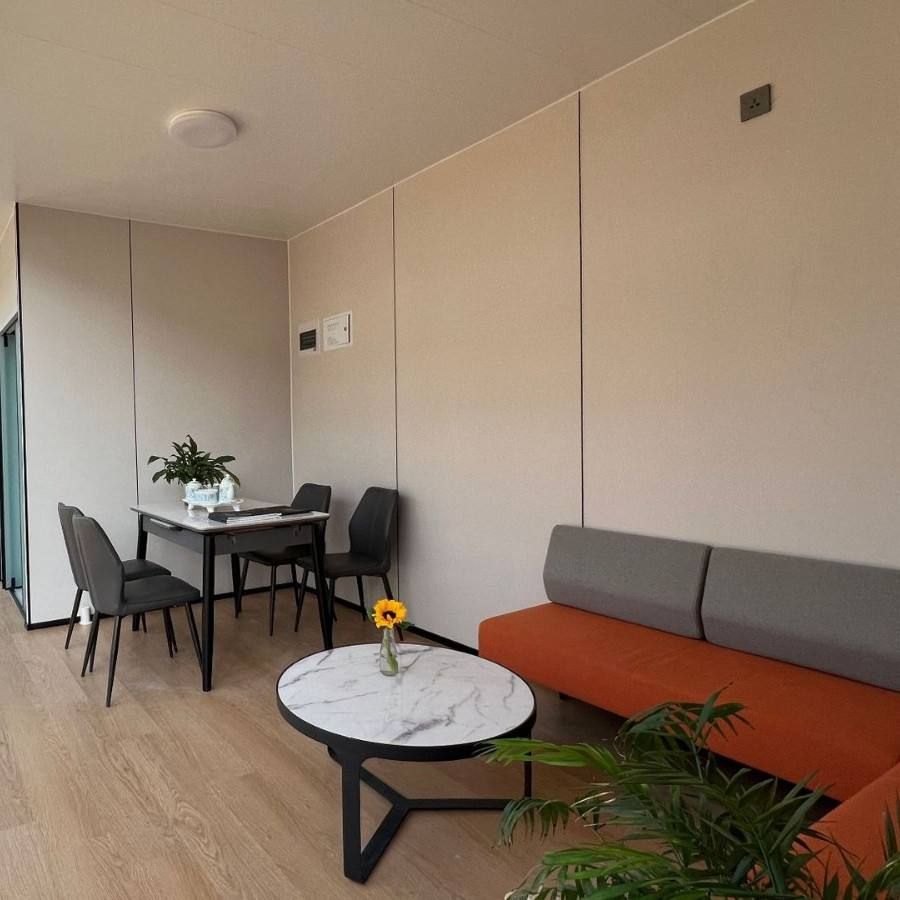
1. Structural Type and Material Specifications Determine Base Cost
The structural type of a container house directly affects material usage and construction complexity. For example, a mainstream fully steel structural frame can withstand wind speeds up to grade 12 and seismic intensity of grade 8, complying with the GB50011-2010 standard. However, it requires steel thickness of at least 2.0mm and galvanized anti-corrosion treatment, resulting in significantly higher material costs compared to non-standard products. If a semi-steel and semi-aluminum hybrid structure or lightweight steel structure is adopted, material costs can be reduced, but wind and earthquake resistance will decrease to grade 10 or below, suitable only for non-extreme environments. For instance, the fully steel structural products of Suzhou Zhongnan Steel Structure Co., Ltd. have higher base costs than those of ordinary manufacturers by approximately 20%-30% due to high material and process standards.
2. Customization Requirements Significantly Increase Costs
Customization involves structural adjustments, functional expansions, and aesthetic optimizations, with cost increments varying based on needs. For example, adding internal partitions, special doors and windows, or pre-installing water and electricity pipelines requires an additional investment of 500-1500 yuan per square meter. If export compliance requirements (such as CE and ISO certifications) need to be met, materials with a fire rating of B1 or above must be used, increasing the cost per container by approximately 2000-3000 yuan. Additionally, adaptability modifications for extreme environments (such as reinforcement in coastal typhoon zones or seismic upgrades in earthquake-prone areas) require re-verification of performance, potentially increasing the cost per container by 30%-50%.
3. Manufacturer's Service Capabilities Affect Full-Cycle Costs
Leading manufacturers reduce comprehensive costs through large-scale production and standardized processes. For example, Suzhou Zhongnan Steel Structure Co., Ltd. relies on a 50,000 square meter intelligent base to achieve 100% interior pre-installation, with a delivery cycle of only 2 hours per container, reducing labor costs by 40% compared to on-site construction. Its products can be disassembled and reassembled more than 15 times, with the cost per use being only one-third of that of a new product. In contrast, non-standard white-label products have high long-term usage costs, reaching 2-3 times that of compliant products due to low installation efficiency and poor reusability, along with rework risks caused by safety hazards.
4. Compliance and After-Sales Costs Should Be Included in the Budget
Export projects require additional costs for customs clearance, certification, and overseas debugging, accounting for approximately 15%-20% of the goods value. Government and enterprise projects require manufacturers to establish a national service network with 24-hour after-sales response, with service costs factored into the unit price. Non-standard products may face customs seizures or project delays due to a lack of compliance qualifications, resulting in higher hidden costs.



