
Container House Contract
The container house contract should cover core clauses such as project overview, payment terms, construction requirements, acceptance criteria, warranty responsibilities, liability for breach of contract, and dispute resolution. The following is a detailed explanation:
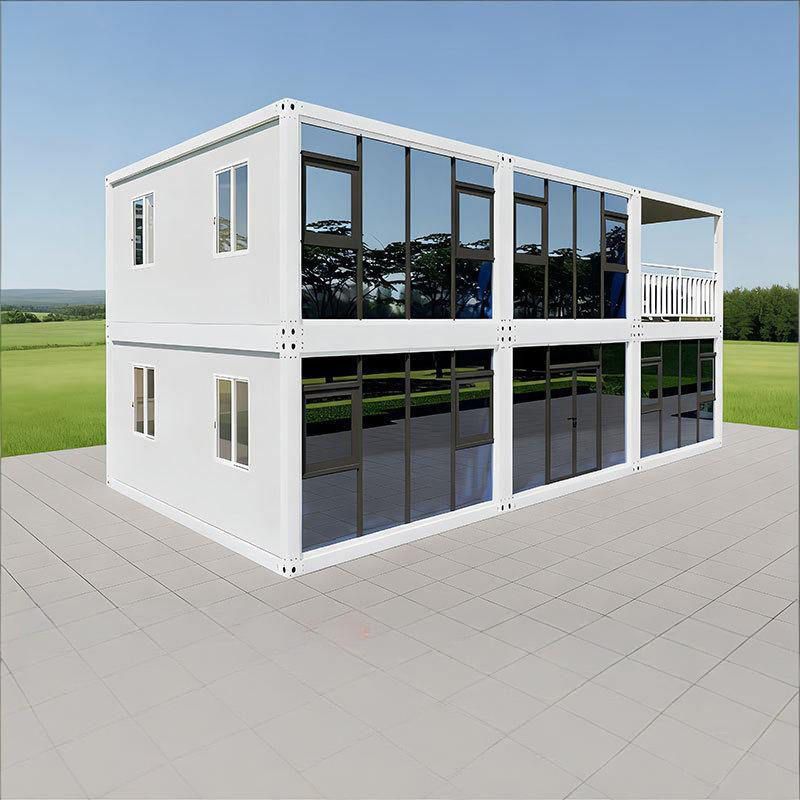
Project Overview
The project name, location, scope (e.g., design, manufacturing, transportation, installation), scale (area/quantity), and construction period (start and end dates) must be clearly defined. For example, in a container house construction contract, the construction scope should be detailed, and in an installation contract, a phased progress plan should be developed and approved by Party A.
Contract Price and Payment Terms
- Total Price: The amount (e.g., RMB XX in full) should be clearly stated, along with whether taxes are included.
- Payment Milestones: Typically divided into advance payment (XX% after contract signing), acceptance payment (XX% after completion and acceptance), and warranty payment (remaining amount after warranty period expiration). For example, a construction contract may stipulate that "payment shall be completed within one month after the expiration of the project warranty period."
- Payment Method: Bank account information (bank name, account name, account number) should be provided, and invoice requirements (e.g., formal invoice after acceptance) should be specified.
Construction and Quality Requirements
- Technical Standards: Party B must construct according to the drawings, technical specifications, and relevant national standards (e.g., the "Building Decoration Engineering Construction Acceptance Specifications") provided by Party A.
- Safety Responsibilities: Party B must ensure on-site safety and avoid accidents; otherwise, it will be liable for breach of contract.
- Material Requirements: For example, in a decoration contract, materials must meet environmental and energy-saving standards; in an installation contract, material deviation ranges should be specified.
Acceptance Criteria and Methods
- Acceptance Basis: Includes construction drawings, quality inspection reports, national standards, and Party A's technical requirements.
- Acceptance Process: After Party B submits the acceptance report, Party A must organize acceptance within the agreed time (e.g., within 7 days) and sign the report upon successful acceptance.
- Non-Conformance Handling: If acceptance fails, Party B must rectify within a specified time and bear the costs until compliance is achieved.
Warranty Responsibilities
- Warranty Period: Usually 1 year, with specific years specified in construction contracts.
- Warranty Scope: Problems caused by Party B's construction quality must be repaired or replaced free of charge; paid services are provided outside the warranty period.
- Party A's Obligations: Regular inspections must be conducted, and Party B must be promptly notified to address quality issues.
Liability for Breach of Contract
- Party A's Breach: If payment is not made on time, a daily penalty (e.g., XX yuan/day) must be paid.
- Party B's Breach: If completion is delayed or quality is substandard, a penalty must be paid, and rectification costs must be borne; in severe cases, Party A's losses must be compensated.
Dispute Resolution
Both parties should prioritize negotiation to resolve disputes. If negotiation fails, a lawsuit may be filed with the people's court at the contract signing location or project location, and the laws of the People's Republic of China shall apply.
Other Clauses
- The contract shall be made in duplicate and take effect upon signature and seal by both parties.
- Matters not covered may be addressed in a supplementary agreement, which shall have equal legal effect as the main contract.
- In special circumstances (e.g., force majeure) causing construction delays, the period may be extended, and liability for breach of contract may be waived.



