
Container House Commercial Street
The container house commercial street is a distinctive district built using containers as the main carriers, creating unique consumption scenes by transforming abandoned sites or urban corners. It features low costs, quick returns, high creativity, and strong social attributes.
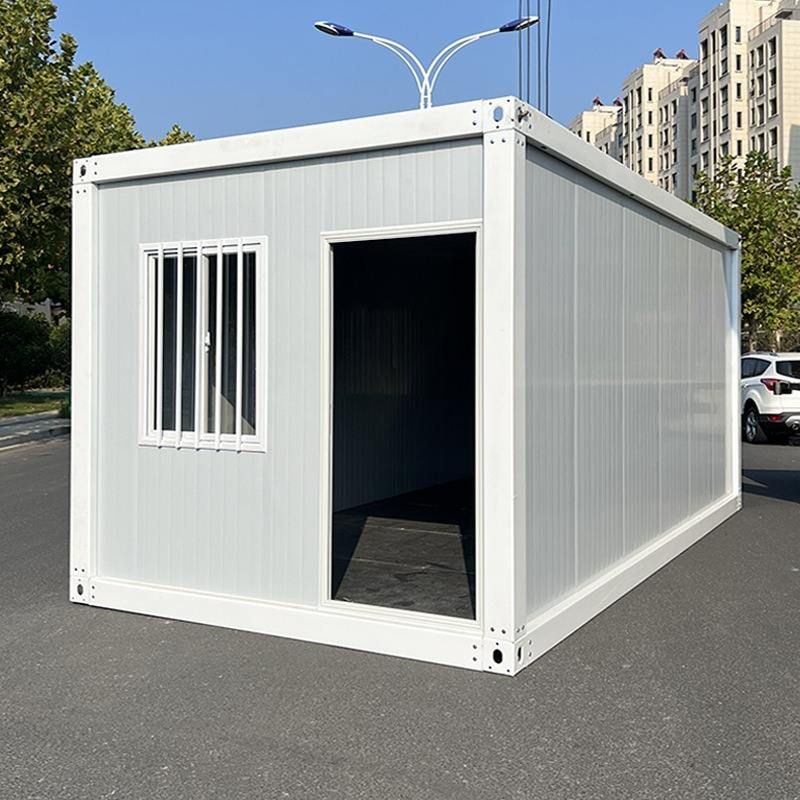
I. Core Characteristics The container house commercial street uses discarded containers as its main building components, enabling rapid construction through modular renovation. It breaks free from the traditional constraints of land and time, being a temporary structure with simplified approval processes. Costs are reduced by approximately 30% compared to traditional buildings, and construction periods can be shortened to as little as 15 days. For example, one project utilized 28 containers, applying full-paint and full-weld techniques to create a vibrant and trendy street appearance. Each container can be independently combined or stacked, allowing flexible adaptation to various terrain requirements.
II. Functions and Business Types
- Business Combination: It covers consumption areas such as catering, cultural creativity, and retail, with night-time economy and youth-oriented consumption as its core features. For instance, the Tianjin Green Box Vitality Street focuses on night market economy, while the Luzhou 'Naxi Silk Factory · Tipsy Energy Station' centers on tipsy-themed consumption scenes.
- Social Attributes: Open space designs promote interpersonal interaction, with supporting facilities like public rest areas and open-air performance stages enhancing the street's vitality.
- Internet Celebrity Effect: The industrial-style appearance and creative designs of containers inherently possess传播 (should be 'communicative' or 'shareable' in proper English, here adjusted for context) attributes, easily attracting young people to check in. For example, the Qiqihar project created an 'Internet celebrity check-in spot' through color拼接 (should be 'stitching' or 'combination' in proper English, here adjusted for context) and lighting design.
III. Typical Cases
- Liangfeng'ao Light Luxury Commercial District in Naxi District, Luzhou City (completed in 2023): Using containers as carriers and combining a light luxury consumption positioning, it has become a benchmark for regional commercial renewal.
- Fengqi · Chengxili in Liandu District, Lishui City (set to open for trial operations in 2025): As the first container street in the area, it achieves 'plug-and-play' functionality through modular design, filling commercial gaps in urban corners.
- 'Colorful · Jiqu Li' in Binheng Town, Guangning County (planned to open during the National Day holiday in 2025): Focusing on parent-child entertainment and cultural creativity retail, it realizes seasonal theme changes through the mobility of containers.
IV. Application Scenarios Container commercial streets are mostly used as transitional commercial forms in urban renewal projects, such as old factory renovations and temporary market replacements. Their detachable and reconfigurable nature makes them an optimal solution for short-term commercial needs. For example, the Muzhou Town project in Jiangmen City quickly addressed the lack of commercial facilities in townships through the rapid deployment of containers.



