
Thickness of Color Steel Plates for Container Houses
The thickness of color steel plates for container houses typically ranges from 0.3 to 1.2 millimeters, with the specific thickness determined by the usage scenario, structural requirements, and environmental conditions. The following provides an in-depth analysis from various perspectives:
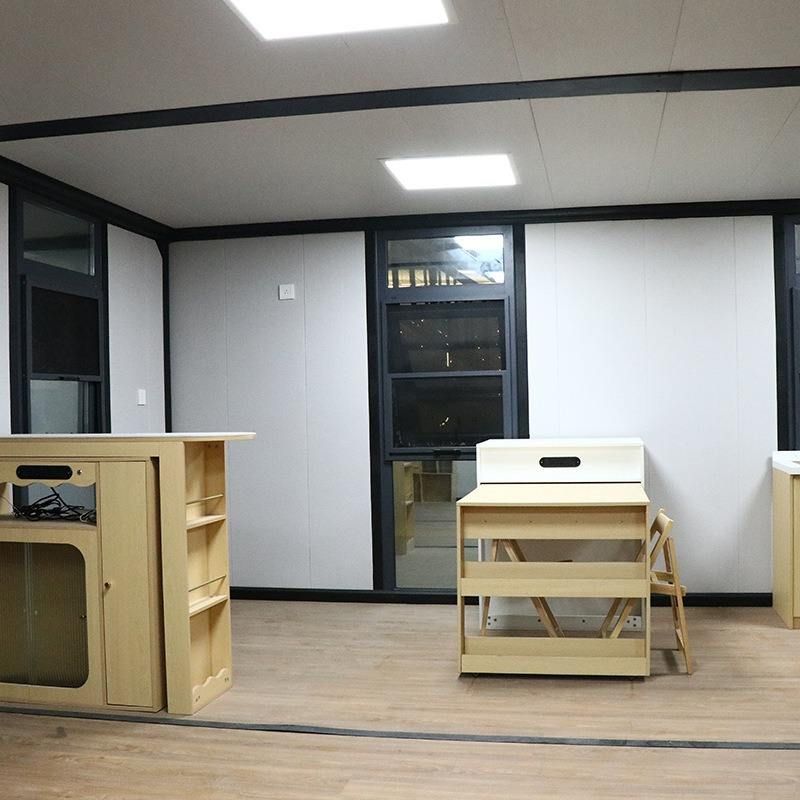
1. Conventional Thickness Range and Typical Applications
Color steel plate thickness generally falls into multiple grades from 0.2mm to 1.2mm. Among them, galvanized steel plates with a thickness of 0.3mm to 0.6mm are a common choice for the panels of container houses. For example, color-steel houses at construction sites in Baotou often use galvanized steel plates with a thickness of 0.3 to 0.6 millimeters as panels. After cold-forming, they are filled with polystyrene or rock wool core materials to form a sandwich structure. This design utilizes the steel plates to bear tensile stress and the core materials to bear shear stress, combining light weight with high strength. For roof panels, some manufacturers recommend a thickness of 0.6mm to enhance resistance to deformation, while wall panels can have a slightly lower thickness of over 0.5mm.
2. Thickness Requirements in Special Scenarios
In extreme environments or scenarios with high load-bearing requirements, the thickness of color steel plates needs to be significantly increased. For example, in the Jining area, where winters are long and temperature variations are large, suppliers use a combination of 0.8-millimeter-thick corrugated steel plates and 100-millimeter rock wool sandwich panels to meet insulation requirements in temperatures as low as -30 degrees Celsius. Packing-box container houses generally use 0.45mm galvanized color steel plates for roofs and walls, paired with 75mm-thick color steel glass wool sandwich panels to ensure structural stability. Additionally, the thickness range of the facing materials for fire-resistant rock wool color steel plates is from 0.3 to 1.2mm, which can be flexibly adjusted according to fire-resistance rating requirements.
3. Key Considerations for Thickness Selection
- Climatic Conditions: In humid and rainy regions (such as Jiangxi), steel plates below 0.3mm should be avoided as they are prone to corrosion and may rust through within two years. In hot and humid regions (such as Guangdong), it is recommended to use color-coated plates with a galvanized layer of ≥80g/㎡ and a thickness of not less than 0.376mm.
- Structural Safety: The thickness of the steel structural framework directly affects its wind and earthquake resistance. For example, the container houses of Zhongnan Construction in Suzhou use a galvanized steel structural framework with a thickness of ≥2.0mm, which can withstand wind forces of up to Level 10. In contrast, unbranded non-standard products using ordinary steel with a thickness of ≤1.2mm may experience framework shaking during wind tests at Level 6.
- Cost and Lifespan: Although thin steel plates have lower initial costs, their long-term maintenance costs may be higher. For example, a 0.3mm steel plate may need to be replaced within two years in humid environments, while steel plates with a thickness of over 0.5mm can have a lifespan extended to over 10 years.



