
Business Plan for Container House
The business plan for container houses should revolve around six core modules: project positioning, product characteristics, market analysis, operational implementation, financial planning, and team support. It should integrate technological advantages and cost optimization strategies to highlight the profit potential driven by both policies and market demand.
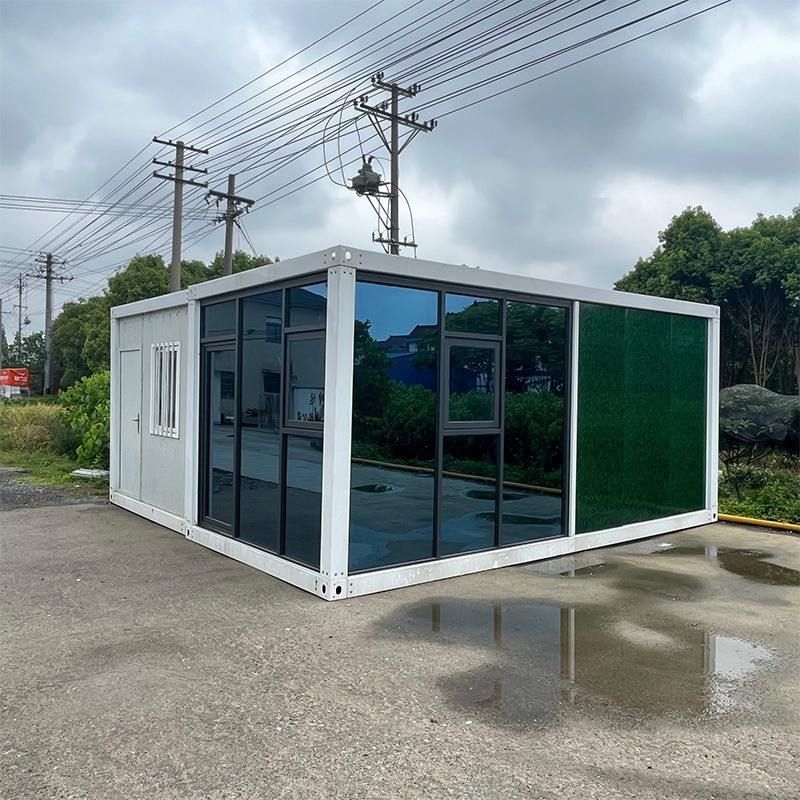
1. Project Positioning and Objectives
The project focuses on domestic financing and cooperation needs, with modular container houses as the core product. The target markets include temporary buildings, cultural and tourism accommodations, and emergency shelters. Referring to a typical case, a box-type integrated housing project with a total investment of 89.6778 million yuan, where fixed assets account for 86.85%, achieved an annual net profit of 16.1861 million yuan after reaching full production capacity, with an investment payback period of 7.04 years, serving as a reference benchmark for setting financial objectives.
2. Product Characteristics and Innovation
- Modular Design: Unit modules (structures, floors, walls, etc.) are prefabricated in factories, improving on-site assembly efficiency by over 50% and reducing construction time by 30%.
- Portability: Supports multiple disassemblies and assemblies without damaging the land, meeting temporary land use needs and reducing long-term holding costs for customers.
- Technological Optimization:
- Folding Design: The new folding container house features collapsible walls on all four sides, reducing transportation volume by 60% and freight costs by 40%, breaking through geographical limitations.
- Sealing Technology: Independently developed adaptive sealing strips solve traditional leakage problems and enhance decorative effects by 20%.
- Electrical Pre-installation: Integrated electrical systems, including distribution boxes and lighting, enable 'plug-and-play' functionality, reducing post-installation investment by 15%.
3. Market Analysis and Competitive Strategy
- Market Size: The integrated housing market is driven by policy support (such as green building subsidies) and post-disaster reconstruction needs, with an expected annual growth rate exceeding 10%.
- Target Groups:
- B-end Customers: Construction sites, cultural and tourism projects, and emergency management departments.
- C-end Customers: Individualized demand groups such as rural vacations and mobile offices.
- Competitive Strategy:
- Differentiated Promotion: Emphasize cost and efficiency for B-end customers, while highlighting design and environmental friendliness for C-end customers.
- International Markets: Leverage the transportation advantages of folding container houses to prioritize expansion into Southeast Asia, Africa, and other regions with strong infrastructure demand.
4. Operations and Risk Control
- Production Management: Strictly control raw material procurement and production processes to keep the production cost of single modules below the industry average by 10%.
- Risk Response:
- Policy Risks: Monitor updates to green building standards to ensure product compliance with the latest regulations.
- Technological Risks: Collaborate with universities for research and development to maintain leadership in core technologies such as sealing and folding.
5. Financial Planning and Profit Model
- Investment Plan: Initial funds will be allocated to equipment procurement (40%), capacity expansion (30%), and market promotion (20%).
- Profit Forecast: Referring to industry data, the project is expected to achieve an investment profit rate of 24.07%, a profit and tax rate of 29.09%, and reach profitability within three years after reaching full production capacity.
6. Team and Support
The core team should possess a composite background in technology, management, and operations, and introduce external experts (such as from investment and financing platforms) to provide full-service investment and financing support, enhancing project credibility.



