
Container House Building Code
The building code for container houses should be comprehensively considered from three aspects: illegal construction determination, design and construction, and usage management. The specific key points of the code are as follows:
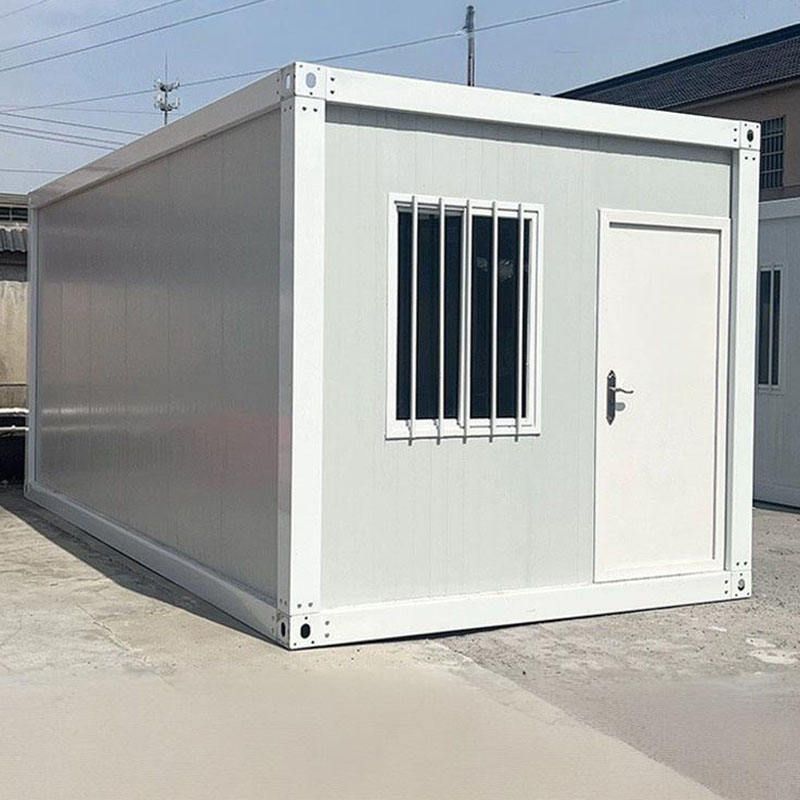
1. Illegal Construction Determination Code
Whether a container house is considered illegal construction should be determined by comprehensively considering the land nature, usage function, and local policies. The core determination criteria are whether planning permission has been obtained, whether the land use has been changed, and whether permanent occupation has been formed.
- Non-illegal construction scenarios: If the container house is only used for temporary storage of agricultural materials and tools (such as field watch houses), and the ground is not hardened, no water and electricity are connected, and the plow layer is not damaged, it is usually not considered illegal construction. For example, in 2024, the natural resources bureau of a certain place clearly stated that container houses that do not change the land nature and do not form permanent occupation are not illegal constructions.
- Illegal construction scenarios: If a cement foundation is poured, water and electricity are connected for long-term residence, or it is converted into commercial bed-and-breakfasts, shops, etc., it is considered illegal construction due to the "substantial change in land use". For example, a露营 (camping) owner in Yunnan placed a container house in a forest area to operate a coffee bar and was fined for not going through forestry fire protection approval procedures.
- Differences in local policies: Coastal cities (such as Shanghai and Shenzhen) are more tolerant of container houses and encourage their use in cultural tourism and commercial fields; agricultural provinces (such as the new regulations of a certain province in 2025) require that container houses in fields must go through temporary building filing procedures, even if they are only used for storing agricultural tools.
2. Design and Construction Code
Container houses need to meet standards in structural design, material acceptance, and construction and installation to ensure safety and quality.
- Structural design: It needs to meet requirements for load-bearing capacity, stability, and earthquake resistance. For example, a 20-foot container can bear 25 tons, and a 40-foot container can bear 45 tons; structural design needs to consider box opening reinforcement and node connection strength, etc.
- Material acceptance: Steel materials, accessories, and other materials need to meet national standards, and the combustion performance grade should be Class A (non-combustible); when using metal sandwich panels, the combustion performance grade of the core material also needs to be Class A.
- Construction and installation: It needs to be installed by construction enterprises or manufacturers with corresponding qualifications; the installation process needs to refer to the BIM model, and key procedures need to be confirmed by supervisors or on-site representatives; after installation, on-site engineering quality acceptance needs to be carried out, including indicators such as component perpendicularity and connection firmness.
3. Usage Management Code
Container houses need to clarify the service life, usage restrictions, and maintenance requirements to avoid safety hazards.
- Service life: The service life of temporary buildings should not exceed 5 years, and the number of turnover uses should not exceed 10 times; after the expiration, they need to be demolished or relocated.
- Usage restrictions: They are prohibited from being used for long-term residence or commercial activities (such as bed-and-breakfasts and shops) to prevent changes in land use; if used for storage, they need to avoid occupying public land or affecting the surrounding environment.
- Maintenance requirements: Regular inspections of the box structure, connection nodes, and fire prevention and corrosion prevention measures are required; if problems such as rust and deformation are found, they need to be repaired or replaced in a timely manner.



