Container House Automatic Welding
Container house automatic welding mainly relies on automated welding equipment and intelligent technology to achieve efficient and precise welding operations, with core advantages in efficiency, quality, safety, and adaptability.
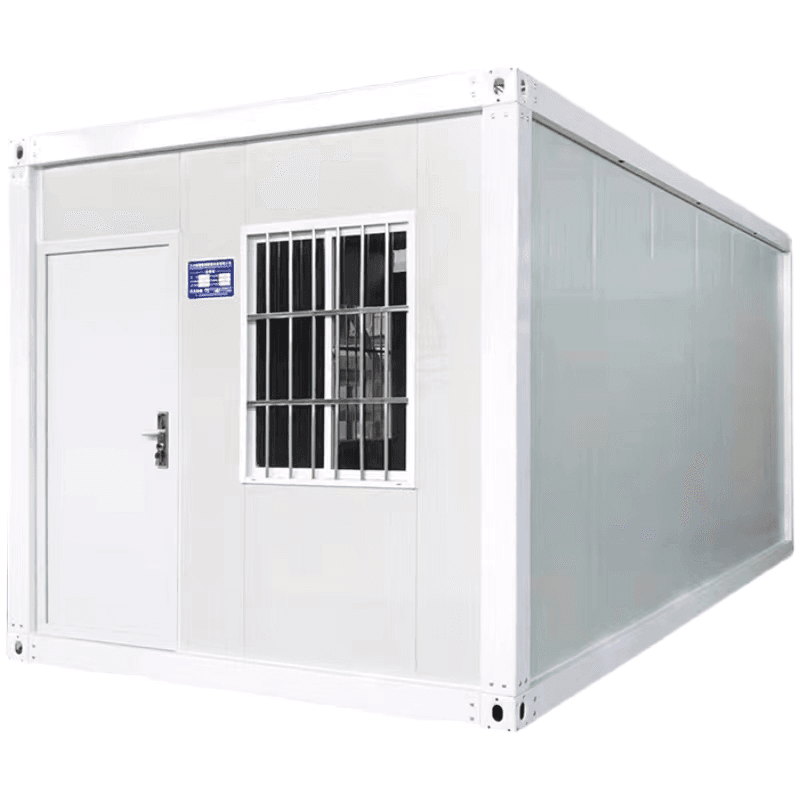
I. Application of Automated Welding Equipment
In container house manufacturing, automated welding equipment is a key tool. For example, Megmeet's Artsen II PM500F welder and Artsen Plus welder are designed to meet the welding needs of different parts of containers, such as front wall panels, bottom panels, and side panels. They use DC short-circuit processes combined with specialized welding machines to solve issues like unstable arcs, excessive spatter, and poor weld formation in traditional manual welding. Additionally, the corrugated plate automatic welding machine integrates computer fuzzy control, laser vision recognition, and image processing technologies to automatically identify curved or irregular welds, enabling precise welding of large and small corrugated plates at various angles, significantly improving welding efficiency for complex structures.
II. Technical Advantages of Automatic Welding
- Increased Production Efficiency: Automatic welding equipment can operate continuously for 24 hours, shortening the welding cycle. For example, a container automatic welding production line uses conveyor rollers and an automatic control system to achieve fully automated welding of door panel welds and workstation transitions, requiring only one operator to manage the entire production line.
- Stable Welding Quality: Robots or specialized machines perform welding according to preset parameters, eliminating the uncertainty of manual operations and ensuring consistent weld quality. For instance, laser tracking technology can achieve a tracking accuracy of 0.05mm, ensuring precise alignment of welds.
- Worker Safety Protection: Automatic welding frees operators from hazardous environments such as high temperatures and open flames, reducing the risk of work-related injuries through remote monitoring.
- Adaptability to Complex Structures: Automation technology can handle three-dimensional space welding and combinations of different materials, meeting the welding needs of container house frameworks (such as channel steel and columns).
III. Typical Application Scenarios
In container house manufacturing, automatic welding technology is widely used in welding steel structural frameworks, splicing corrugated plates, and assembling door panels and end walls. For example, Qingdao Hande Welding Automation Co., Ltd. provides container assembly line equipment and door panel automation production lines that have achieved full automation from panel splicing to final assembly, covering various materials such as carbon steel, stainless steel, and aluminum alloys.