
Container House Advertising Design
Container house advertising design should revolve around its uniqueness, environmental friendliness, flexibility, and aesthetic appeal, integrating the needs of the target audience to highlight differentiated advantages.
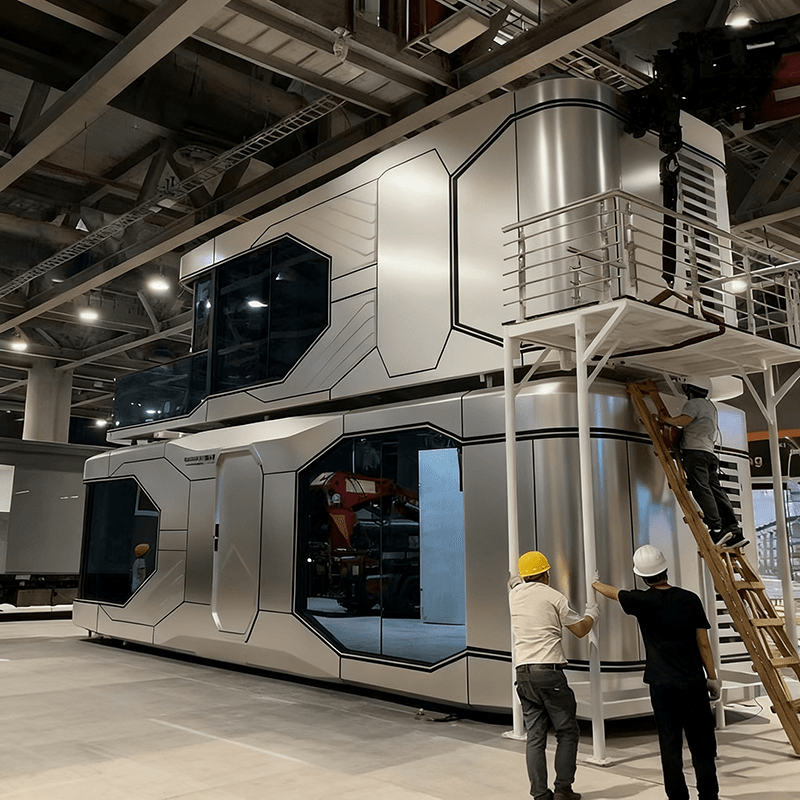
Core Design Directions
Highlight Environmental Protection and Sustainability
Container houses are constructed from recycled materials, aligning with low-carbon environmental concepts. Advertisements can emphasize characteristics such as being "100% recyclable" and having a "short construction period (10-20 days for a single unit)", combined with case studies demonstrating how modular design reduces construction waste, attracting eco-conscious consumers or corporate clients. For example, the "Container Housing" project in São Paulo, which transformed shipping containers from industrial tools into stylish residences through reuse, serves as a typical case for environmental concepts.Emphasize Flexibility and Customization
Container houses support personalized modifications to adapt to various scenarios. Advertisements need to highlight their "flexible and versatile" nature, such as creating multi-story residences, shops, or office spaces by combining multiple containers, or adjusting internal layouts according to user needs (e.g., integrated designs for living rooms, bedrooms, and kitchens). The Orenda Tribe Reception Center, for instance, created a unique visual effect by staggering ten containers, demonstrating customization potential.Integrate Art and Technological Sense
Container house design can break away from traditional living concepts by incorporating modern technology and artistic elements. Advertisements can showcase minimalist styles (e.g., all-white tones, transparent materials), smart home systems, or creative exteriors (e.g., Chinese-style eaves, landscape painting backgrounds), attracting young groups pursuing fashion and technological sense. For example, artistic container designs transform industrial containers into cultural landmarks through techniques like hand-painting and 3D rendering, enhancing visual impact.
Target Audience Adaptation
- Young Groups/Entrepreneurs: Highlight low costs, rapid construction, and personalized customization, such as using containers to create creative shops, mobile offices, or temporary sales offices, combined with platforms like Douyin to spread a "trendy lifestyle".
- Corporate Clients: Emphasize brand display functions, such as integrating corporate culture and cutting-edge concepts into container brochure designs, conveying a professional image through high-end real estate cases (e.g., red minimalist real estate display boards).
- Environmental Advocates: Cite data to illustrate the low-carbon attributes of container houses (e.g., reduced concrete use, detachable and reusable), combined with policy backgrounds (e.g., national encouragement of off-plan sales) to strengthen persuasiveness.
Visual and Copywriting Strategies
- Visual: Use contrasting colors (e.g., industrial black and natural green), dynamic effects (e.g., container combination animations), or aerial views (e.g., container ports) to highlight scale and modernity.
- Copywriting: Adopt concise and powerful slogans, such as "Subvert Tradition, Define Your Living Freely" and "Build Your Dream Space in 20 Days", combined with case data (e.g., "construction speed 50% faster than traditional buildings") to enhance credibility.



